Mid Drop Fade
Wavy Hair
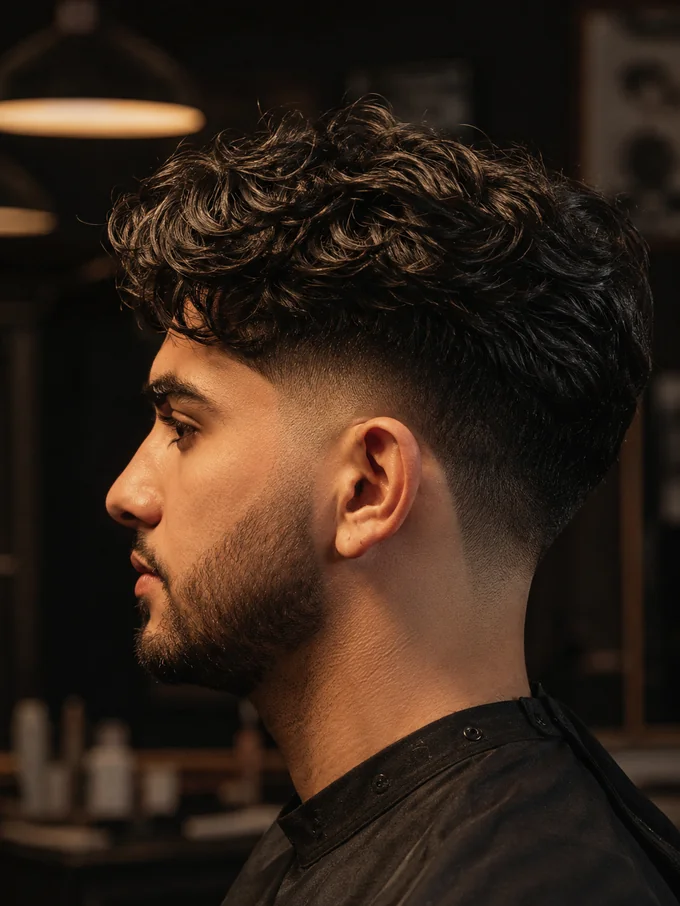
Wavy hair gives the top of a mid drop fade natural movement without much product. It's also the texture most likely to look flat for the first few days, and I want to explain why before you book, not after.
Does Wavy Hair Work With a Mid Drop Fade?
Yes. Wavy hair blends naturally with a mid drop fade because it already carries movement on top, so it needs less daily styling than straight hair does. Plan for one thing: it can look flatter than normal right after the cut while the wave pattern resettles.
Why it
works
I'd put wavy hair in the easiest middle ground between straight and curly hair for this cut. It already has enough natural movement to give the top texture and dimension, so it needs less product than straight hair and less daily effort than curly hair.
The drop line still reads clearly through wavy hair. The edge is softer than the sharp line you get with straight hair, which is usually what draws people to this pairing in the first place.
Day to day, the goal is a defined wave, not a loose one. A light sea salt spray or texturizing cream on damp hair, then air-dried or lightly diffused, brings out the pattern that's already there instead of forcing a shape that isn't.
Density changes how this reads. Thicker wavy hair holds visible movement even short. Finer wavy hair usually needs a touch more length on top, so the wave carries enough weight to clump instead of reading as frizz.
Why does it
look flat first?
A mid drop fade on wavy hair can look flatter or less defined right after the cut than it does a week later. Barbers and curl-care sites call this "curl shock" or "scissor shock." Cutting weight off the ends changes how the remaining hair hangs and clumps, and the wave pattern needs a few days to two weeks to settle back into its usual shape.
It's not damage, and it's not a bad haircut. The length you were used to had built up enough weight to pull the waves into their familiar pattern. A fresh cut resets that weight, and the shorter ends haven't caught up yet.
| Timeframe | What to expect |
|---|---|
| Day 1–2 | Waves look flatter or looser than usual. This is the point where most people worry the cut went wrong. |
| Days 3–7 | Natural oils redistribute and the cut ends settle. Wave definition starts coming back. |
| By week 2 | The wave pattern is back to normal, and the shape is fresher than before the cut. |
Cutting technique matters here too. If you want the waves to keep clumping the way they used to, ask your barber to skip heavy thinning shears and razor work on top. Both remove weight unevenly, and uneven weight is what turns waves into frizz.
If this is your first mid drop fade on wavy hair, give it the full week or two before judging the shape. "It doesn't look like my hair anymore" is a settling-window problem, not a cutting problem.
What's the
daily routine?
Here's the routine I'd run between cuts.
| Step | What to do |
|---|---|
| Wash frequency | 2 to 3 times a week, not daily. Washing every day strips the oils that help waves hold their shape. |
| Product | A dime-sized amount of sea salt spray or light curl cream, worked through damp hair with fingers. |
| Drying | Air dry, or diffuse on low heat if you're short on time. High heat loosens the pattern. |
| Layering | A spray plus a light cream holds up better than one heavy product. A single heavy pomade weighs the wave down and kills the definition. |
| Rebooking | 3 to 4 weeks, or as soon as the line starts to fuzz, whichever comes first. |
For a longer breakdown of upkeep between visits, see the full maintenance guide.
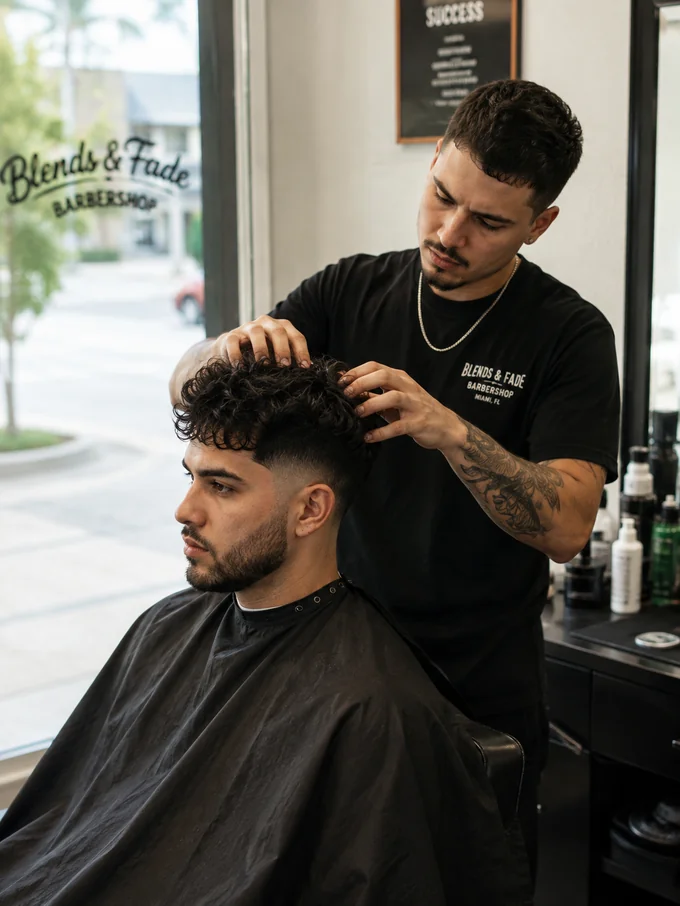
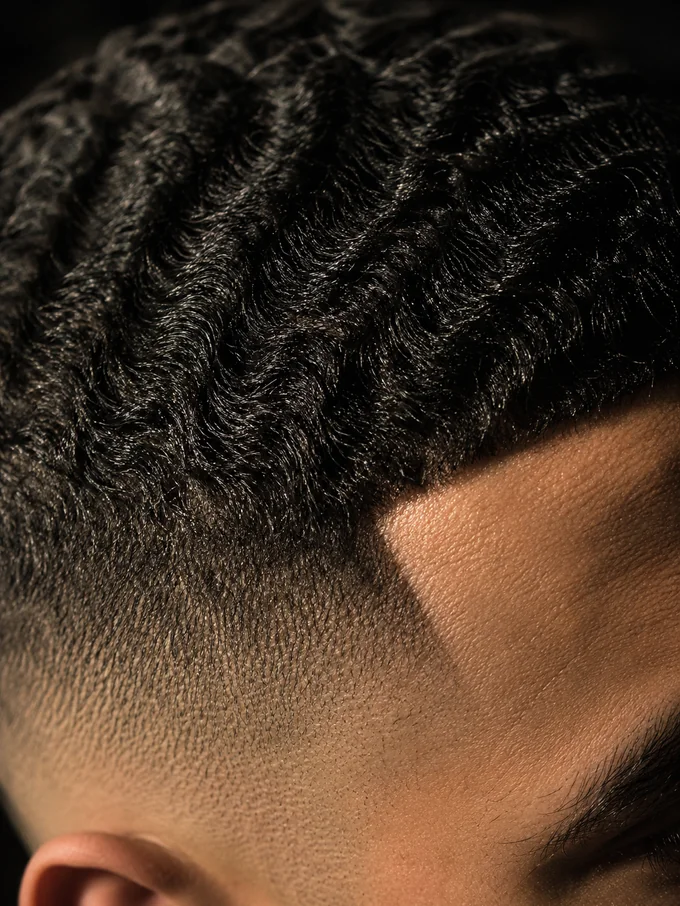
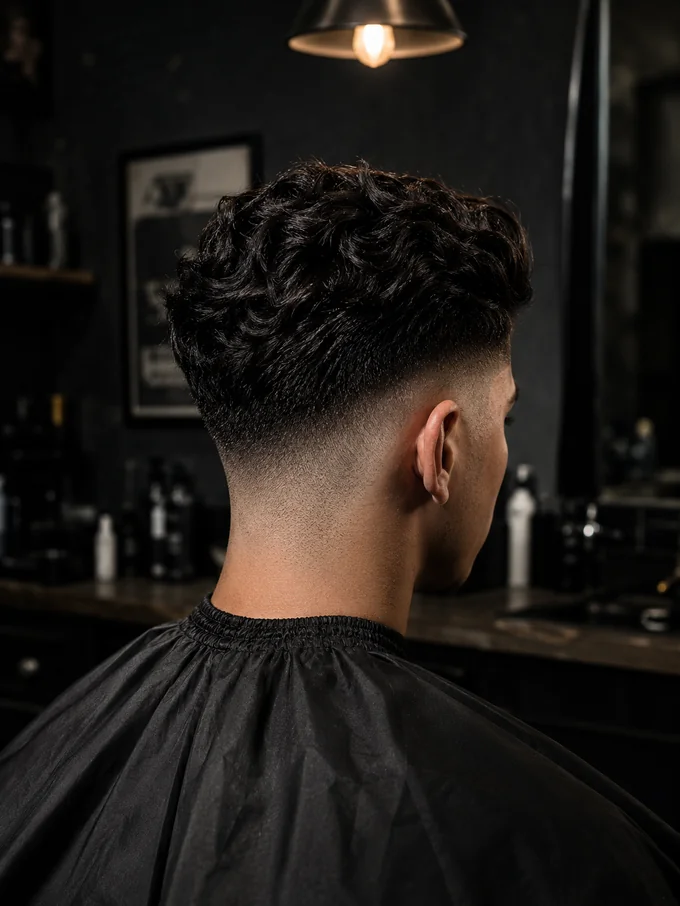
Mid Drop Fade Wavy Hair Gallery

Recommended variations
What to avoid
- Judging the cut too early, including against a barber's reference photo. If it looks flat on day one or two, give it a week. A reference photo shows a settled cut, weeks in, not a fresh one.
- Letting your barber thin or razor-cut the top without asking. Both remove weight unevenly and can turn clumped waves into frizz.
- Overbrushing. It pulls the wave pattern flat.
- Heavy, greasy product. Thick pomades weigh wavy hair into limp strands, no wave left.
- Skipping product entirely. Wavy hair left to air-dry with nothing in it tends toward frizz, especially in humid weather.
Frequently
asked
Why does my mid drop fade wavy hair cut look flat right after I get it done?
Does wavy hair work well with a mid drop fade?
Should I ask my barber to avoid certain cutting techniques on wavy hair?
Does wavy hair need a lot of product for this cut?
How often should I wash wavy hair with a mid drop fade?
What's the best top style for wavy hair?
What should I avoid with wavy hair?
Is wavy hair easier to maintain than curly hair?
Fade Line is independent and not affiliated with any barbershop chain or brand mentioned on this site. Updated September 2026.