Mid Drop Fade
vs Low Drop Fade
Same curve, same technique — the only thing that changes is where it starts. See both on the same head, and why one choice is easier to undo than the other.
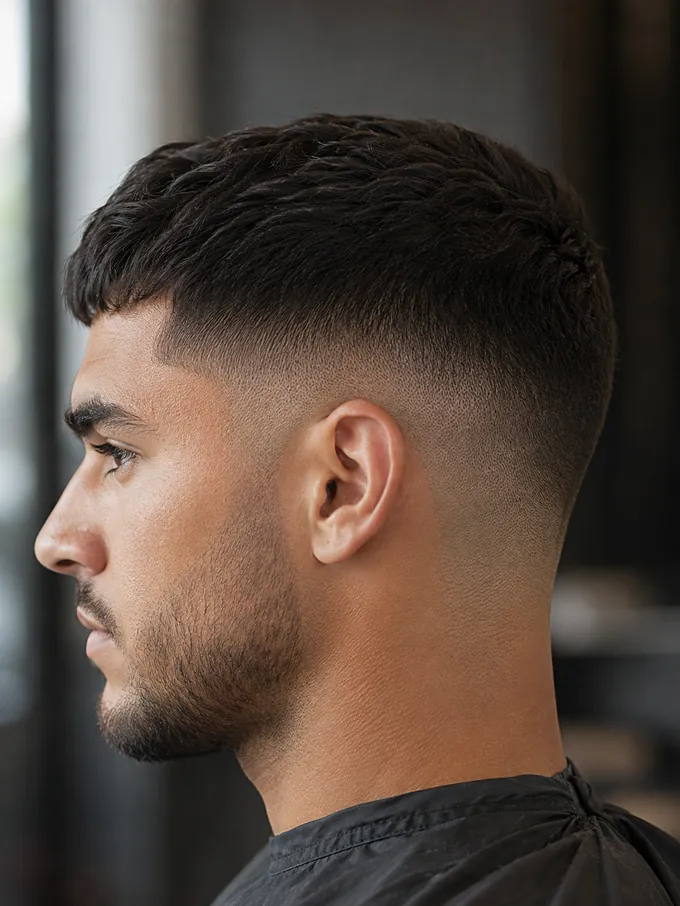
Mid drop fade vs low drop fade: the difference
A mid drop fade starts around mid-temple, roughly level with the top of your eyebrow. A low drop fade starts just above the ear. Same curve behind the ear, same blend, same guard progression, same finish at the bottom. The only variable is how far up the side of your head the fading begins.
That sounds minor. It isn't. Moving the start point up by a couple of inches roughly doubles the faded area, which changes how much scalp shows, how bold the cut reads, and how quickly it grows out of shape.
The quick version: mid is bolder and needs rebooking every 2–3 weeks. Low is quieter, safer in conservative workplaces, keeps more hair on the sides, and holds its shape for 3–4 weeks.
Mid drop fade vs low drop fade: where each starts
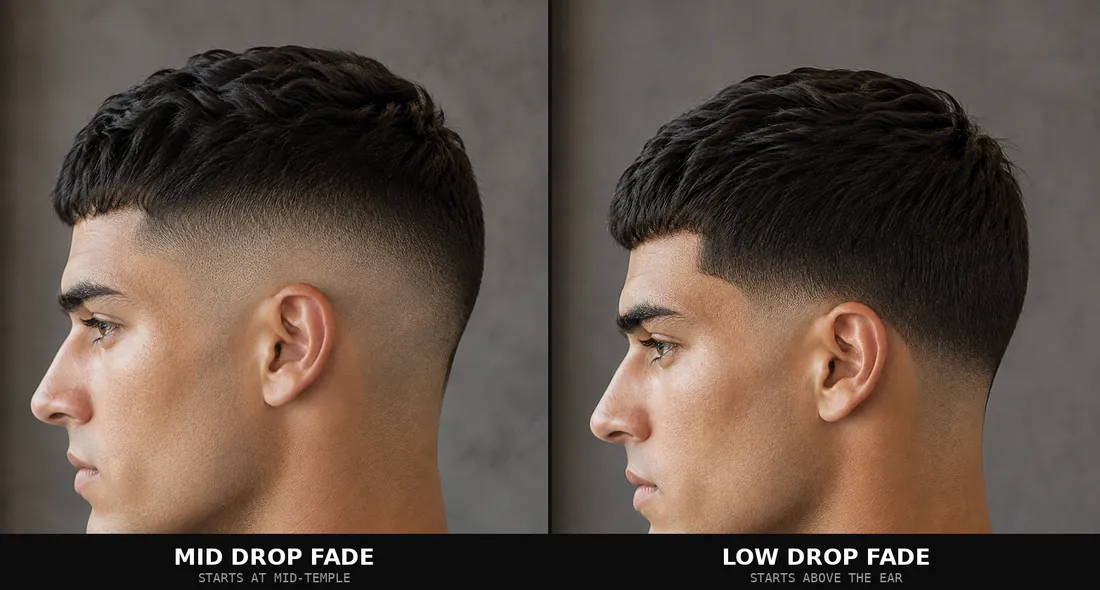
The drop is identical on both
A low drop fade is not a smaller drop. It's the same drop, starting lower.
This trips people up, and most comparison guides don't clear it up because they're comparing generic low and mid fades rather than drop fades specifically. The drop refers to the curve — the line bending downward behind the ear toward the nape. That curve is present, and equally pronounced, on both versions.
What changes is the starting point of the fade, not the shape of it. So if you like the sculpted curve of a mid drop fade but find it too bold overall, a low drop gives you exactly the same shape in a quieter package. You don't lose the thing that made you want the cut.
If you want to lose the curve, that's a different question — a taper has no drop at all, structurally.
Mid drop fade vs low drop fade compared
| Attribute | Mid Drop Fade | Low Drop Fade |
|---|---|---|
| Starts at | Mid-temple, level with the eyebrow | Just above the ear |
| Faded area | Most of the side of the head | Narrow band near the ear and nape |
| The drop curve | Present | Present, identical |
| Contrast | Strong and deliberate | Softer, more gradual |
| Scalp visible | Noticeably | Very little |
| Rebook every | 2–3 weeks | 3–4 weeks |
| Yearly cost at $40/cut | ~$680 before tips | ~$520 before tips |
| Grows out | Loses shape faster — more contrast to close | Gracefully; stays presentable longer |
| Fine or thinning hair | Contrast can highlight sparse sides | Better — preserves fullness on the sides |
| Conservative workplaces | Fine in most, bold in some | Safe essentially anywhere |
| Best face shapes | Round, square — adds height and definition | Long, heart — keeps width low down |
| Typically chosen by | Teens through thirties | Anyone wanting understated; skews older |
From every angle
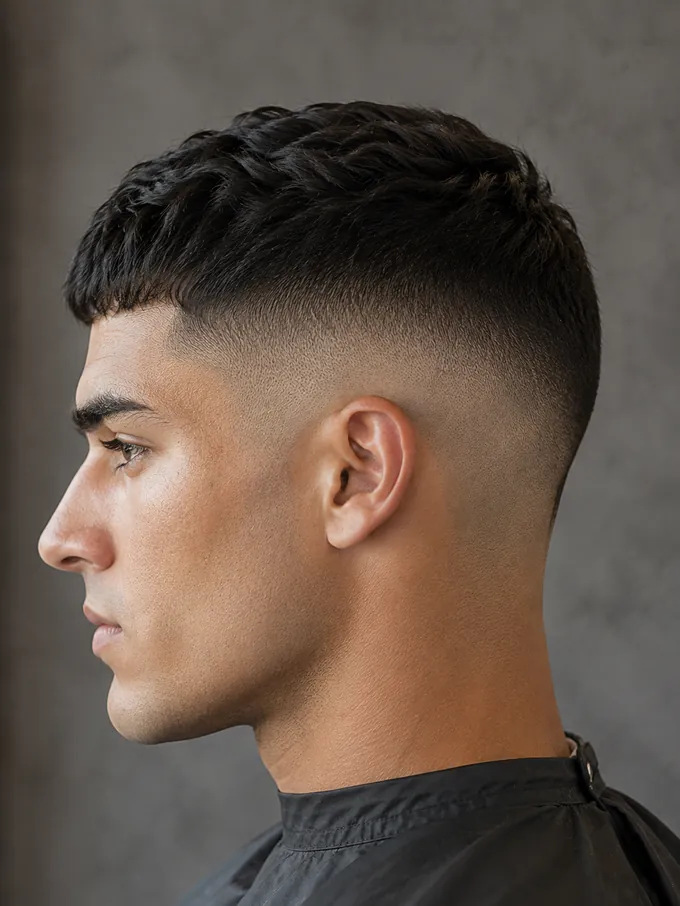
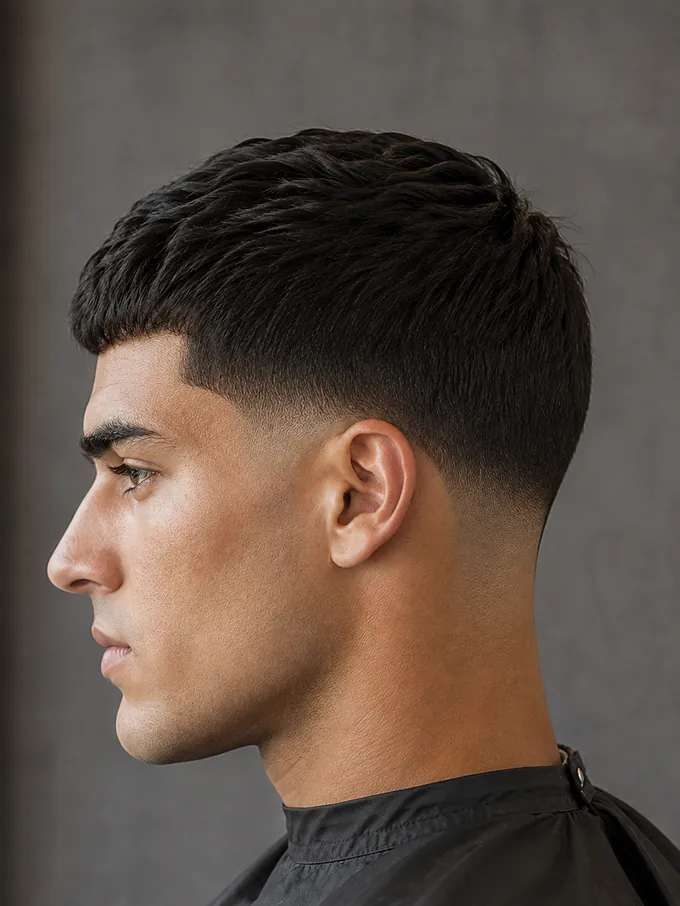
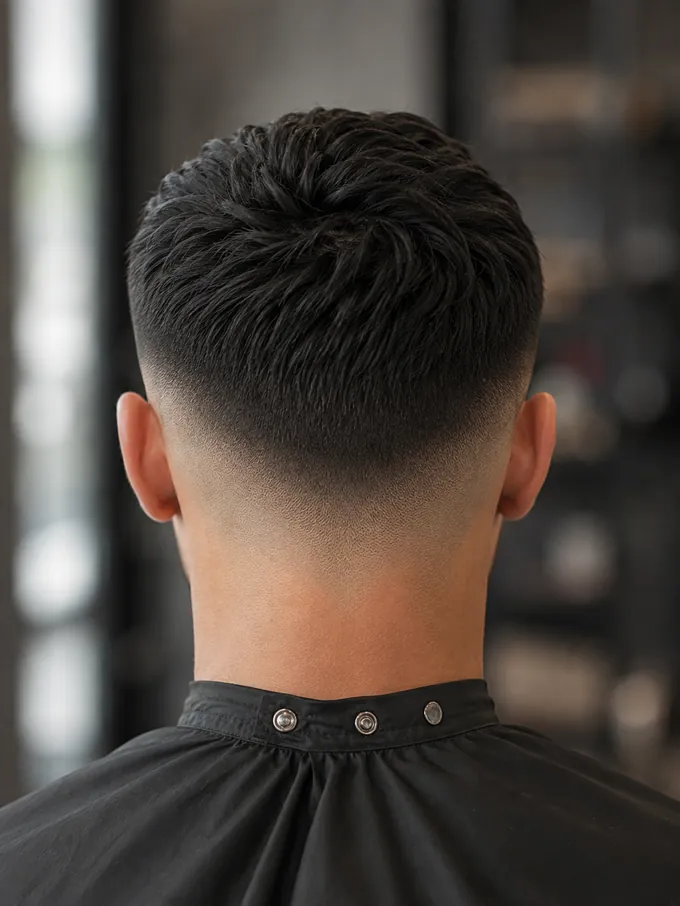
One of these is easier to undo
Going from low to mid takes one appointment. Going from mid to low takes about six weeks.
The reason is obvious once you see it: raising a fade means cutting more hair, which a barber can do immediately. Lowering one means the hair above the old fade line has to grow back before there's anything to fade into. Until then you're stuck with the higher version.
So if you're undecided, start low. If it feels too safe, your barber can take it up at the next visit and you've lost nothing. If you start with the mid and find it too much, you're living with it for a month and a half.
This is the single most practical piece of advice on this page, and it applies to high drop fades even more strongly.
Which height suits your face?
Round or square faces generally do better with the mid. Raising the fade removes width at the sides and draws the eye upward, which adds visual length to a face that's wide relative to its height. On a square jaw it also sharpens the angles, which is either what you want or exactly what you don't — the square face guide covers that choice.
Long or heart-shaped faces generally do better with the low. Both benefit from keeping width lower on the head. A mid fade strips that width away and pushes the visual weight upward, which lengthens a face that's already long, or emphasises a forehead that's already the widest point.
Oval faces can take either. There's no proportion needing correction, so it comes down to how bold you want to look — see the oval face guide for how to decide.
Which suits your hair?
Fine or thinning hair does better with the low. Keeping length on the sides preserves the appearance of fullness. A mid fade removes that coverage and the higher contrast draws attention to the sides, which is the last thing sparse hair needs.
Thick hair handles either, and often prefers the mid. Density can look bulky when it's all left on, and taking the fade higher removes weight that would otherwise flare out above the ears.
Curly hair is a genuine choice. A low drop keeps the curl pattern as the main feature with a tidy edge underneath. A mid drop frames the curls more aggressively and makes them read as a deliberate shape rather than just hair. Neither is wrong — the curly hair guide goes into it.
Mid drop fade vs low drop fade: which should you get?
Choose the mid drop fade if: you want the cut noticed, you have a round or square face, your hair is thick, and you're fine visiting a barber every 2–3 weeks.
Choose the low drop fade if: you work somewhere conservative, you have a long or heart-shaped face, your hair is fine or thinning, or you'd rather stretch to 3–4 weeks between cuts.
Choose the low if you genuinely can't decide. It's the reversible option. You can go higher next time in a single appointment; going lower means growing it out.
Still unsure? Try the fade finder quiz.
How to ask for each
For the mid drop fade
"Mid drop fade, a #1 into a #3. Start it at mid-temple, about level with my eyebrow, and drop the line down behind my ear to the nape."
For the low drop fade
"Low drop fade — start it just above my ear, not up at the temple. Keep the drop curve going down behind the ear, just lower overall."
If you want to test the water
"Let's go low this time. If I want it higher next visit we can take it up, right?"