Mid Drop Fade
Straight Hair
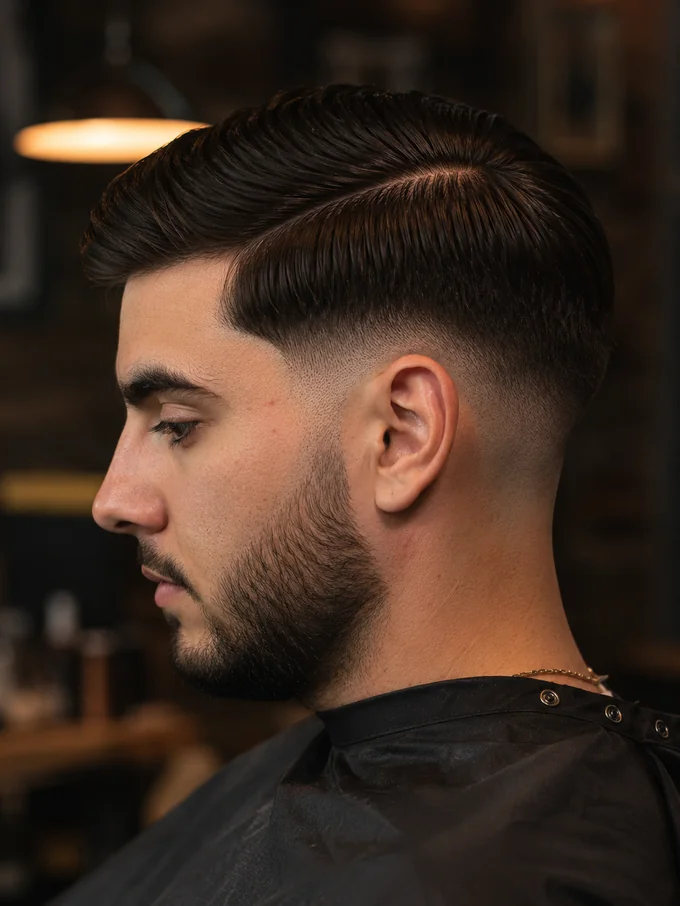
A mid drop fade straight hair pairing gives the drop line its cleanest possible read — and shows every flaw just as clearly, including a nape cowlick that curlier textures usually hide without anyone noticing.
Why it
works
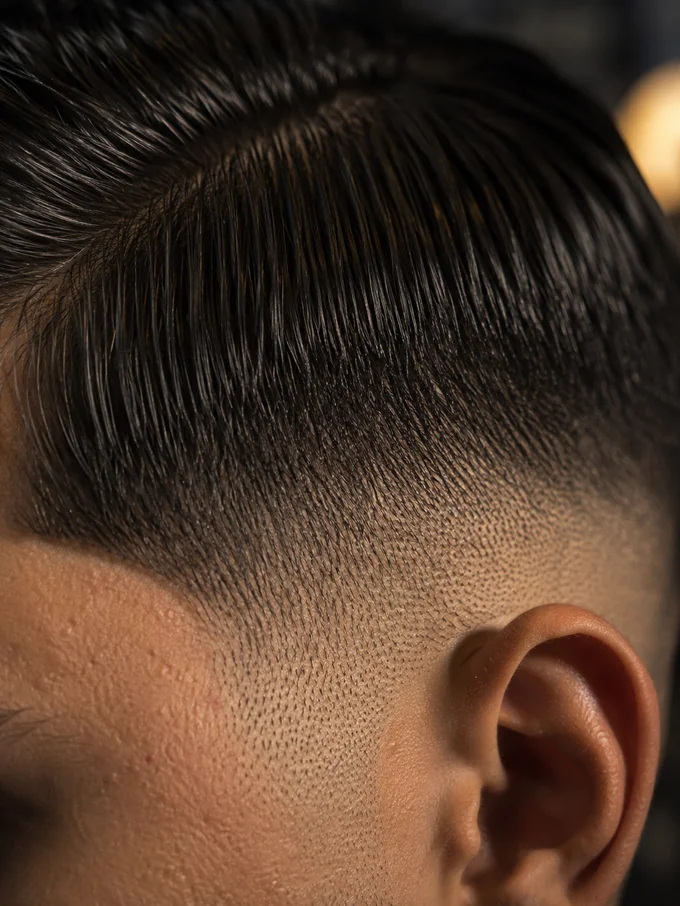
Hair texture changes how visible a drop fade's curve actually reads, and straight hair gives it the cleanest possible result. Because each strand falls in the same direction with no curl or wave interrupting it, the boundary between the longer top and the faded sides stays crisp rather than getting softened by texture, the way it would with curly or wavy hair.
That sharpness is exactly why barbers find straight hair easier to blend predictably. There's no unpredictable curl pattern to work around, so the drop point and the curve toward the nape come out looking the same every time you sit in the chair.
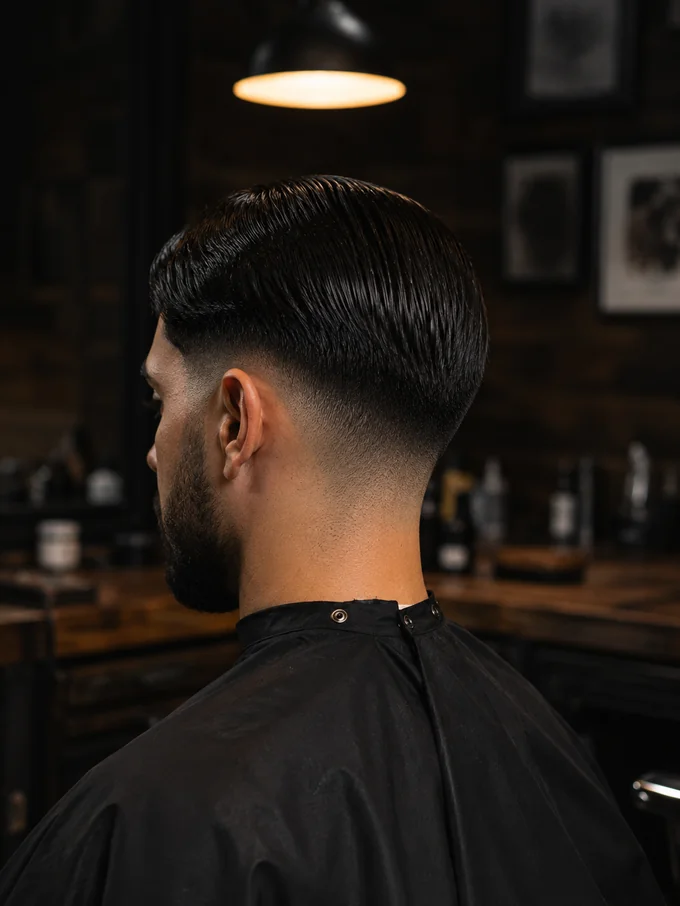
It's also why a mid drop fade straight hair cut tends to photograph so well from the side. The clean line the drop creates behind the ear has nothing competing with it, so the silhouette reads clearly even in a quick phone photo — part of why this pairing shows up constantly in barbershop reference galleries.
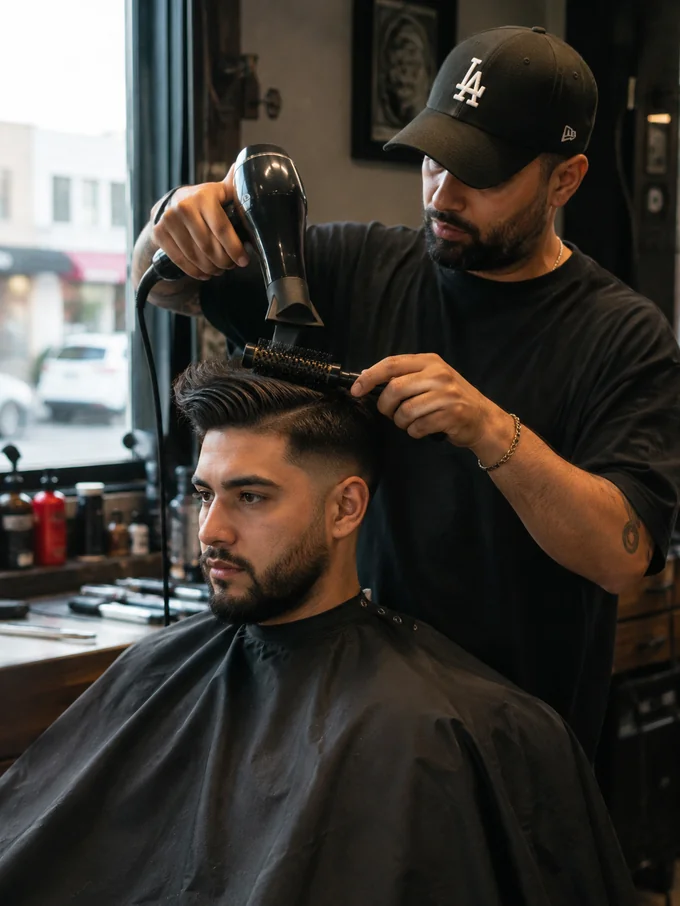
The tradeoff is that straight hair doesn't hold volume on its own the way curlier textures do. Anything you want lifted, like a quiff or a side part with real height, is going to depend more on product and blow-drying technique than on the hair's natural behavior, so it's worth budgeting a few extra minutes for styling in the morning.
Density matters too. A mid drop fade straight hair cut on thick, dense hair holds shape with less product than the same cut on fine or thinning straight hair, which tends to look its best a touch shorter on top so it doesn't fall flat by midday.
The nape
cowlick problem
Here's the flip side of straight hair being the cleanest-reading texture: it's also the least forgiving. A lot of people have a whorl, or cowlick, somewhere at the back of the head where hair grows in a small spiral instead of a single direction — and on curly or wavy hair, that spiral mostly disappears into the existing texture. On straight hair, it doesn't hide at all. It shows up as a flick, a gap, or a stubborn piece that won't lie flat no matter how much product goes on it.
This matters more for a mid drop fade straight hair cut specifically than it does for a level fade, because the drop curves down and finishes at its lowest point right around the nape — exactly where nape cowlicks are most common. A level fade that stays higher up the head can sit above the cowlick entirely. A drop fade's whole design brings the fade line right through that zone.
The fix isn't complicated, but it does need to be requested by name. Ask your barber to check for a cowlick at the nape before finishing the taper, and to cut the direction of the taper with the cowlick's natural spiral rather than straight across it. A barber who knows to look will usually spot it in seconds; one who doesn't will cut a technically clean line that still won't lie flat once you're styling it at home.
This is worth mentioning even if you've never had trouble before. Growth patterns can shift slightly as hair thins or as styling habits change over the years, and a cowlick that was easy to manage at 20 can become more noticeable at 30 or 40 as the surrounding hair loses some of its density. If a mid drop fade straight hair cut that used to sit perfectly starts flipping up at the nape for no obvious reason, this is usually why.
Mid Drop Fade Straight Hair Gallery
Recommended variations
Straight hair holds a comb-over's line exceptionally well, with no flyaways to fight.
With the right product and a blow-dry, straight hair can still hold a clean, structured quiff.
A crisp, straight hairline pairs naturally with hair that already falls in one consistent direction.
What to avoid
- Skipping product entirely. Straight hair can look flat and lifeless without at least a light pomade or texturizing cream to add some grip.
- Letting it grow out unmanaged. Straight hair shows shagginess faster than curlier textures, since there's no curl to disguise extra length.
- Overloading on heavy product. Too much pomade weighs straight hair down instead of adding texture, leaving it greasy rather than styled.
- Ignoring a nape cowlick until it's already cut wrong. Flag it before the taper is finished — trying to fix a cowlick-fighting cut after the fact with product alone rarely works as well as cutting with the grain from the start.
- Drying hair without any root direction. Letting straight hair air-dry flat means it dries in whatever shape gravity gives it, which is rarely the shape you actually wanted.
- Using the same brush technique on the cowlick as everywhere else. The nape area often needs the round brush angled differently than the rest of the head, since it's fighting a spiral rather than just gravity.
For actual volume, the technique matters more than the product. Apply a lightweight mousse or volumizing spray to damp, towel-dried hair — not fully dry hair, since product absorbs poorly once hair is already dry. Use a round brush to lift the roots against the direction they naturally fall, blow-dry that section while holding the tension, then finish with a few seconds of cool air to lock the shape in place before moving to the next section. Skipping the cool-shot step is one of the most common reasons volume from a fresh blow-dry falls flat within an hour.