Mid Drop Fade
For Teens
A mid drop fade for teens works, but school rules, a tight budget and breakouts along the hairline all change what you should ask for.
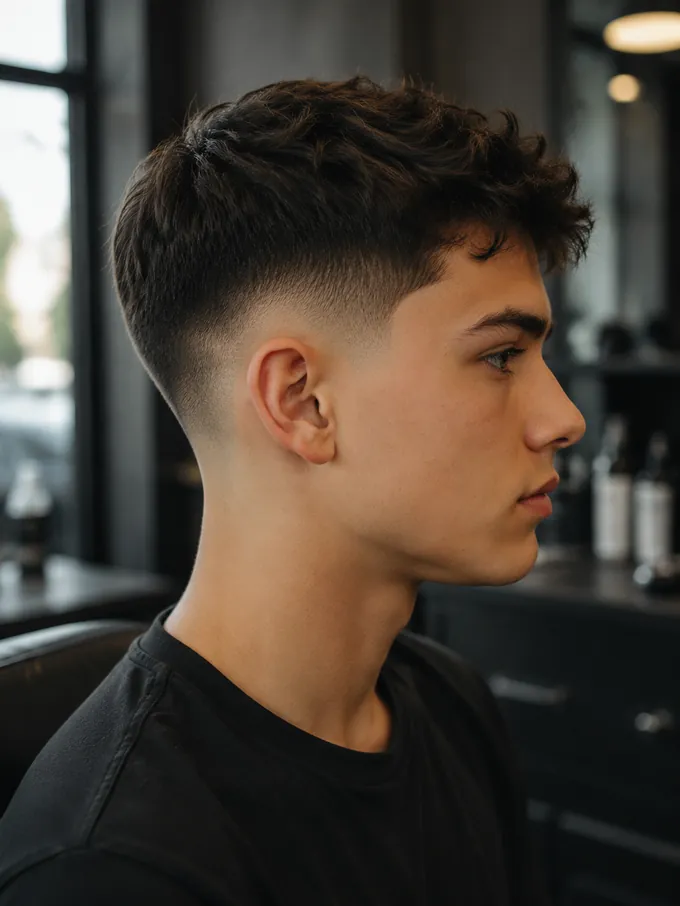
Is a mid drop fade good for teens?
A mid drop fade for teens is one of the safer modern cuts you can pick. It looks current, it suits most hair types, and it passes almost every school dress code as long as you keep the contrast moderate.
The version that causes problems is a skin fade with hard contrast. It looks sharp for about five days, then grows out patchy, and if you can only get to a barber every three or four weeks, you spend most of that time wearing the awkward stage. Some schools also draw the line at very high contrast or shaved designs.
The practical pick: a mid drop fade finished at a #1 guard rather than skin. Nearly the same look, far more forgiving between cuts, and no dress code argument.
Your haircut might be causing breakouts
If your forehead or hairline has got worse since you changed your hair, the two are probably connected. Barbers see this often enough that it's a known pattern, and no fade guide mentions it.
Three things do it. Hair sitting on your forehead traps sweat and oil against the skin. Heavy styling products, gels, thick pomades, transfer onto the forehead and block pores. And sport plus a warm classroom means more sweat sitting under all of it for hours.
What actually helps: keep the fringe off your forehead rather than forward, use a light matte clay instead of gel and keep it away from the hairline, wash your face after sport rather than after school, and don't sleep with product still in.
This matters more for a fringe style than a quiff or a swept-back top, which is worth knowing before you choose. If breakouts are already bad or painful, that's worth raising with a pharmacist or doctor rather than only changing your hair.
Will a mid drop fade for teens pass at school?
Dress codes vary, but the pattern across most schools is consistent, they object to extremes, not to fades themselves.
| Version | Usually fine | Why |
|---|---|---|
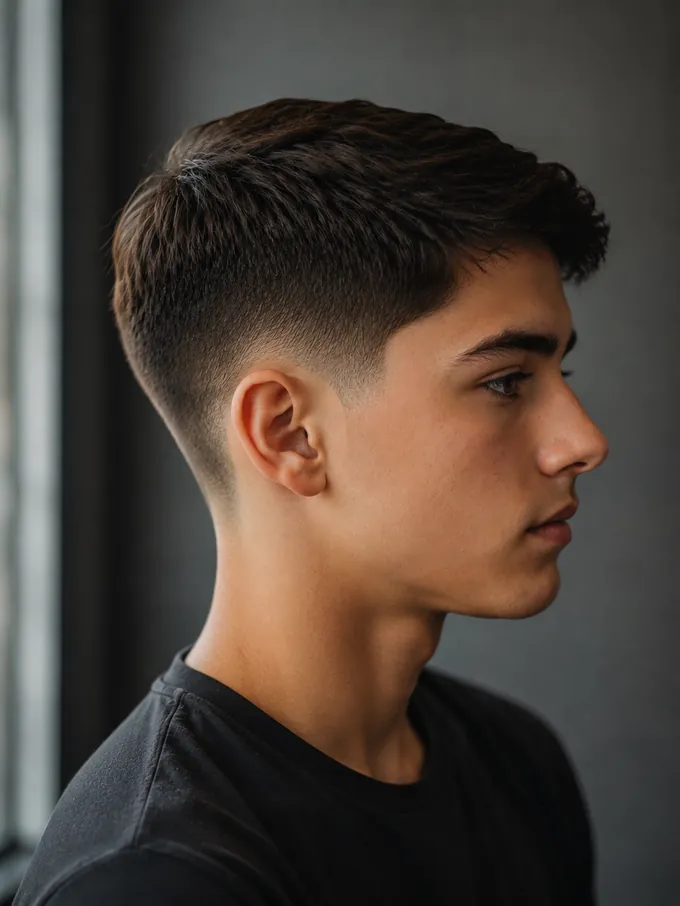
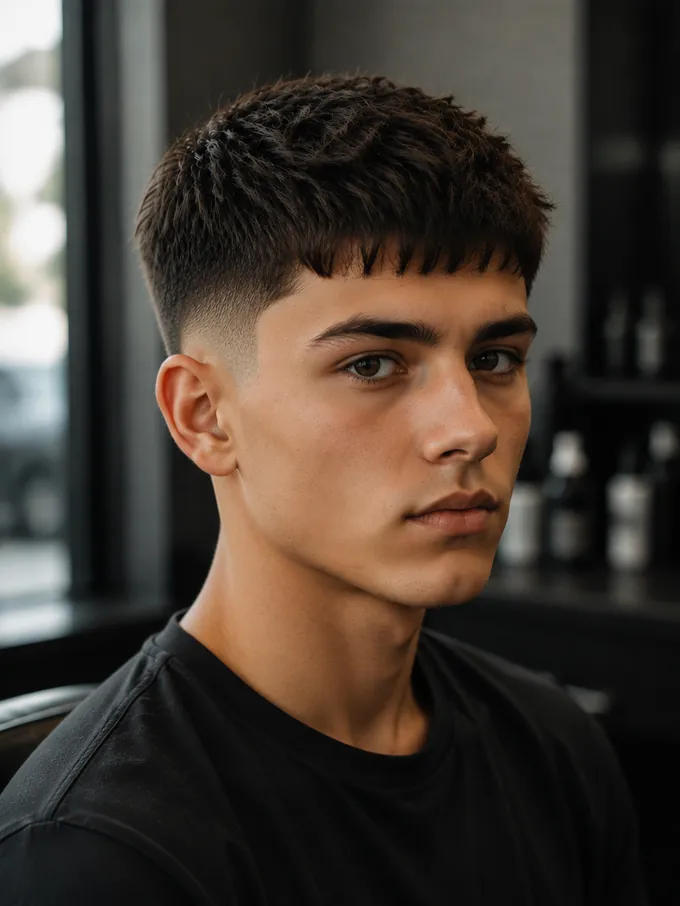
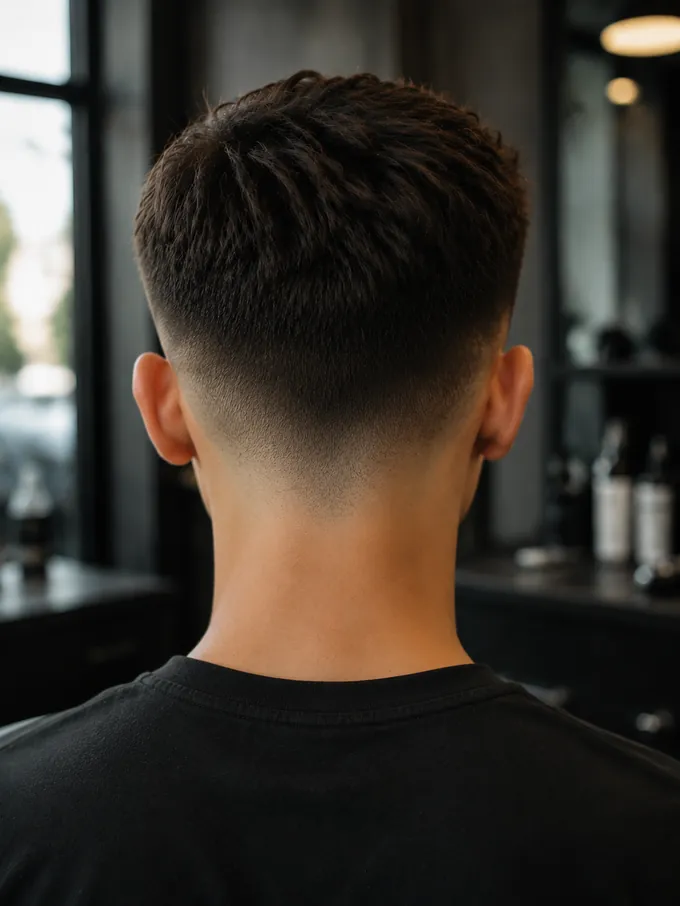
| Mid drop fade, #1 guard bottom | Yes | Clean and tidy with no bare scalp. The safest version by a distance. |
| Mid drop fade with a textured crop | Yes | Reads as a neat, conventional haircut. Passes inspection almost everywhere. |
| Low drop fade | Yes | Even more conservative. See the low drop comparison. |
| Mid drop skin fade | Sometimes | Some schools allow it, some class it as extreme contrast. Worth checking first. |
| Shaved lines or designs | Usually not | The most commonly banned detail across school dress codes. |
| Very high fade with a tall top | Sometimes | Depends how strict the school is about "extreme" styles. See high drop. |
Mid drop fade for teens: three versions
What it costs and how to make it last
A basic cut usually runs about $25 to $45. A drop fade is often more, sometimes $45 to $65, because the curve takes longer. If you're paying out of your own money, that adds up fast at a fortnightly schedule.
Stretch the interval instead of skipping cuts. A guard-length finish stays presentable for 3 to 4 weeks where a skin fade looks rough after two. That change alone roughly halves what you spend in a year.
Clean your own neckline between visits. Five minutes with a trimmer on the fuzz below your natural hairline buys you an extra week. Don't touch the blend itself, the maintenance guide covers what's safe.
Book a standing appointment if you find a barber you like. Some shops give regulars a small discount, and it stops you drifting to five weeks and needing a full rebuild.
What to say if you're doing this yourself
-
1
Name the fade level and the guard number
"A little off the sides" gives the barber too much freedom and you'll get something different every visit. "Mid drop fade, number one into a number three" gives them the actual instruction.
-
2
Say the word "drop" out loud
Otherwise you'll likely get a level fade, which looks similar from the front but isn't what you asked for. If they don't use the term, say you want the line to curve down behind your ear instead of staying flat.
-
3
Show a side-profile photo
Not a front-facing one, the drop is invisible from the front. Save one to your phone before you go. There are reference photos in the barber guide.
-
4
Speak up while they're still cutting
If it's going shorter than you wanted, say so straight away. It feels awkward and it's completely normal, barbers would much rather hear it than have you leave unhappy. Once the edges are done, it's too late.
-
5
Ask what guards they used, and save it
Put the numbers in your phone before you leave. Next time, or at a different shop, you can get the same cut without explaining it all again.
Washing, product and sport
Wash two or three times a week, not daily. Teenage scalps often produce more oil, so the instinct is to wash constantly, but that strips the natural oils and your scalp compensates by producing more. Two or three times, with a clarifying shampoo if you use a lot of product.
Use less product than you think. A pea-sized amount of matte clay does the job. More makes hair look greasy, and greasy hair near a fresh fade makes the whole cut look older than it is.
If you play sport, plan around it. Helmets and headgear flatten a styled top, so there's no point putting product in before a match. Rinse and restyle after rather than trying to make it survive.
Don't sleep with product in. It transfers to your pillow, builds up on your scalp, and contributes to the breakout problem above. The products guide covers what to use and how much.
Common mistakes
- Copying a photo without checking your hair type. The person in the photo may have thicker or straighter hair than you. Ask your barber whether it'll work on yours before they start, not after.
- Going skin because it looks sharpest in photos. Photos are taken on day one. Ask yourself what it'll look like at week three, because that's most of the time you'll be wearing it.
- Stretching to five or six weeks to save money. Your barber ends up rebuilding rather than refreshing, which takes longer and looks less consistent each time.
- Using gel because it holds hardest. Hard hold with high shine looks dated now and worsens the hairline breakout issue. A light matte clay is the better tool.
- Not saying anything when it goes wrong. The most common regret. Speaking up mid-cut is normal, expected, and the only moment it can be fixed.
Barber scripts
School-safe version
"Mid drop fade, number one into a number three, not down to skin. Start it around mid-temple and drop the line behind my ear. Textured crop on top."
If you want it sharper
"Mid drop skin fade, blending up into a number two. Keep the drop curving behind the ear. Leave about two inches on top."
If you're not sure what suits you
"I want a mid drop fade, what would you do with my hair type and face shape?"