Mid Drop Fade vs
Mid Taper Fade
One shows skin and needs rebooking every 2–3 weeks. The other keeps its shape for 6. See both on the same head, then decide.
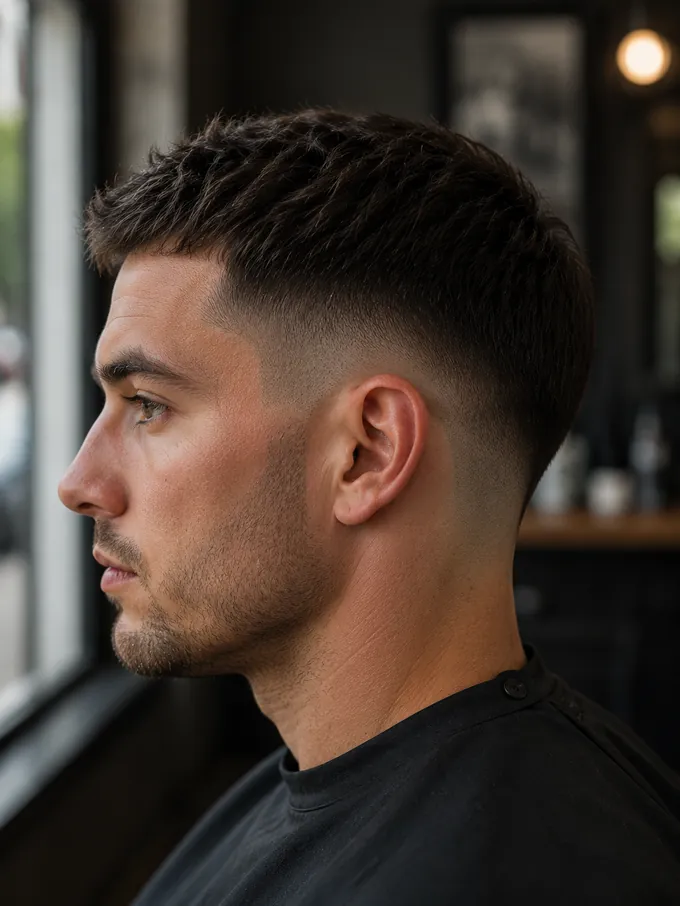
Mid drop fade vs mid taper fade: the difference
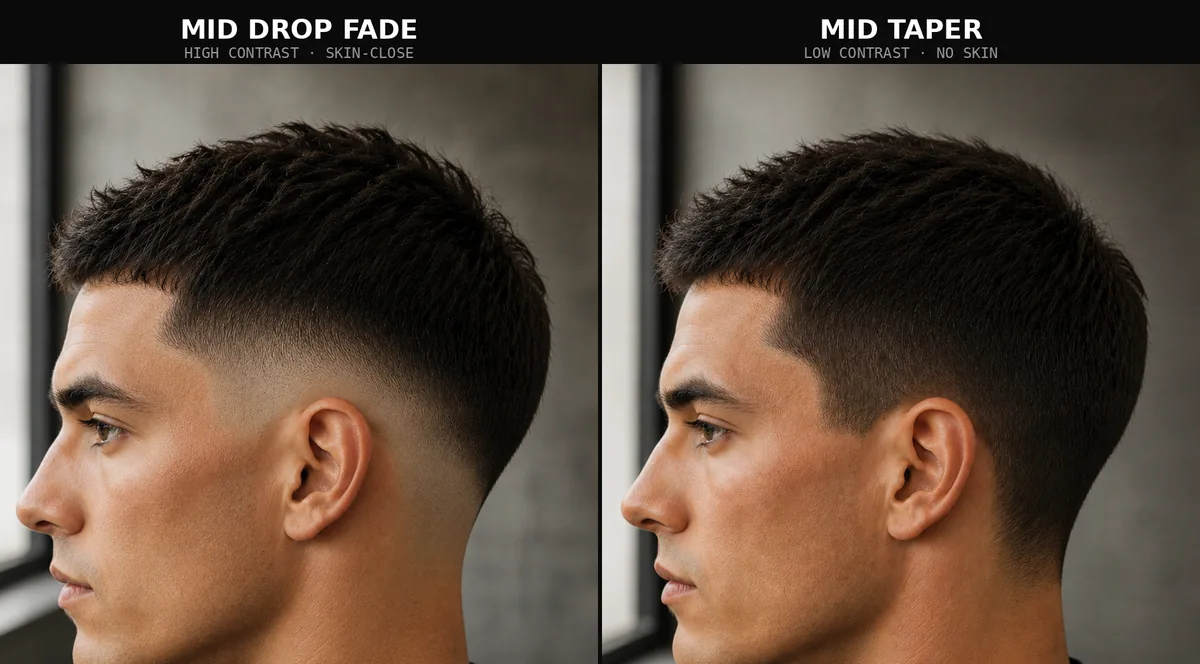
That's the whole distinction, and everything else follows from it. A mid drop fade takes the sides down to skin or near-skin, high up the head, with a curved line behind the ear. A mid taper keeps hair the whole way, shortening gradually and only at the edges, sideburns and neckline.
Contrast is what separates them. A fade is designed to be seen; the gap between short and long is the point. A taper is designed not to be noticed; it just looks like well-cut hair.
The practical consequence: a fade needs rebooking every 2–3 weeks because growth closes that contrast fast. A taper holds its shape for 4–6 weeks because there's no contrast to lose. Over a year that's roughly double the visits and double the cost.
Mid drop fade vs mid taper fade, side by side
Is "mid taper fade" even a real thing?
Strictly speaking, "taper fade" is a contradiction, and that's exactly why people search for it. A taper keeps length; a fade removes it to skin. Put the words together and you're describing two opposite finishes at once.
In practice, barbers use "taper fade" as a loose middle ground: a cut that fades, but stops short of skin and stays fairly low on the head. Think of it as the softest end of the fade family rather than a true taper.
This matters when you're booking. If you ask for a "mid taper fade," different shops will give you different results, because the term has no fixed definition. Describing what you want, "keep some length on the sides, no skin, just clean it up at the edges," gets you a consistent result anywhere. Our barber guide covers the exact wording.
Where does the "drop" fit in?
A taper has no drop. That's not a style preference, it's structural.
The drop is a curved line that starts at mid-temple and travels down behind the ear to the nape. A drop only exists because there's a visible boundary between two lengths for it to trace. Take away the contrast and there's no line to curve.
So when you compare a mid drop fade against a mid taper, you're not choosing between two versions of the same shape. You're choosing between having a defined shape on the side of your head and not having one. Every competitor comparison treats this as a matter of degree; it isn't.
If you like the drop specifically, the curve, the sculpted look, a taper won't give you a softer version of it. It'll give you a different haircut. A low drop fade is the actual "softer version" you're probably looking for.
Mid drop fade vs mid taper fade compared
| Attribute | Mid Drop Fade | Mid Taper |
|---|---|---|
| Shortest length | Skin or a #0–#1 guard | Never reaches skin; typically #1–#2 at the lowest |
| How high it goes | Starts around mid-temple, well up the head | Stays at the edges, sideburns and neckline only |
| Contrast | High and deliberate | Low; often barely noticeable |
| The drop curve | Yes, the defining feature | None. There's no line to curve |
| Rebook every | 2–3 weeks | 4–6 weeks |
| Yearly cost at $40/cut | ~$680 before tips | ~$360 before tips |
| Reads as | Modern, sharp, intentional | Classic, understated, professional |
| Conservative workplaces | Fine at low contrast; bold versions can be much | Safe everywhere, always |
| Thinning hair | Contrast can highlight sparse areas | More forgiving, keeps coverage |
| Hair texture | Thicker, coarser hair shows off the contrast best | Finer, thinner hair suits the gentler transition |
| Barber skill needed | High; the curve is the hardest part | Moderate; more forgiving of small errors |
| Best face shapes | Round, square, oval | Long, heart, keeps width at the sides |
The detail that gives it away
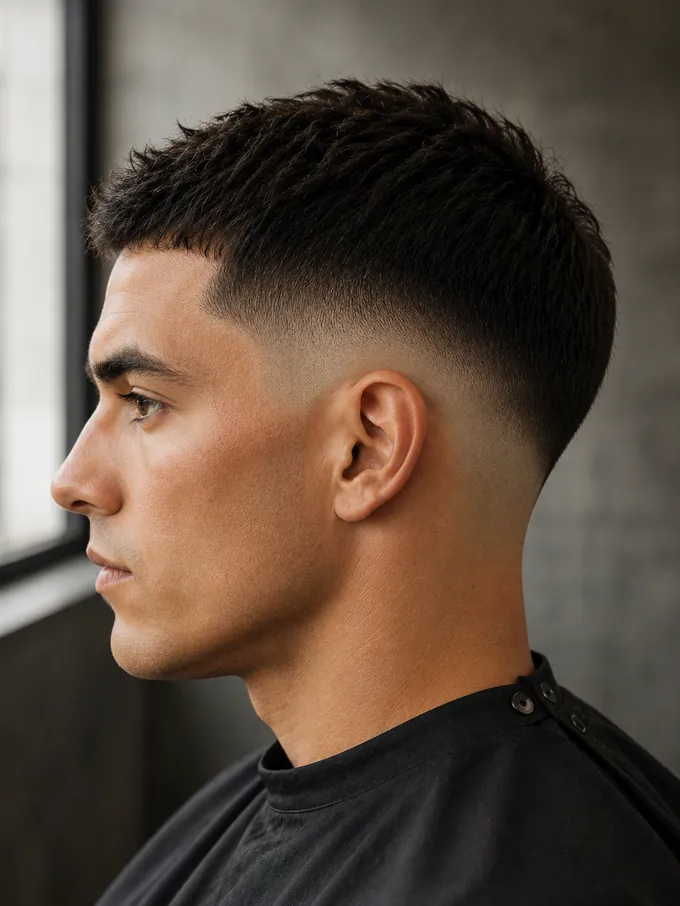
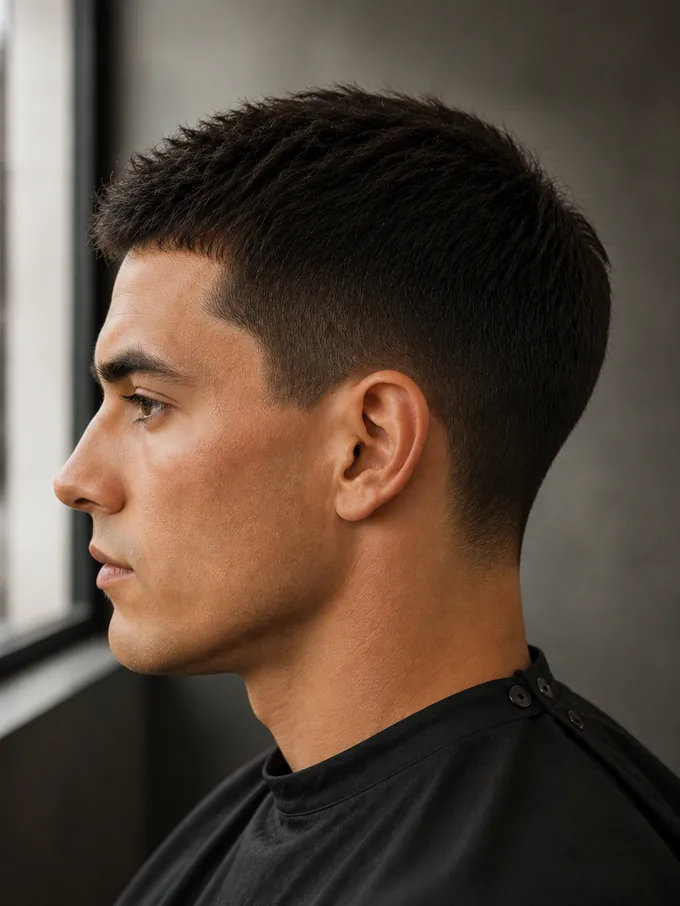
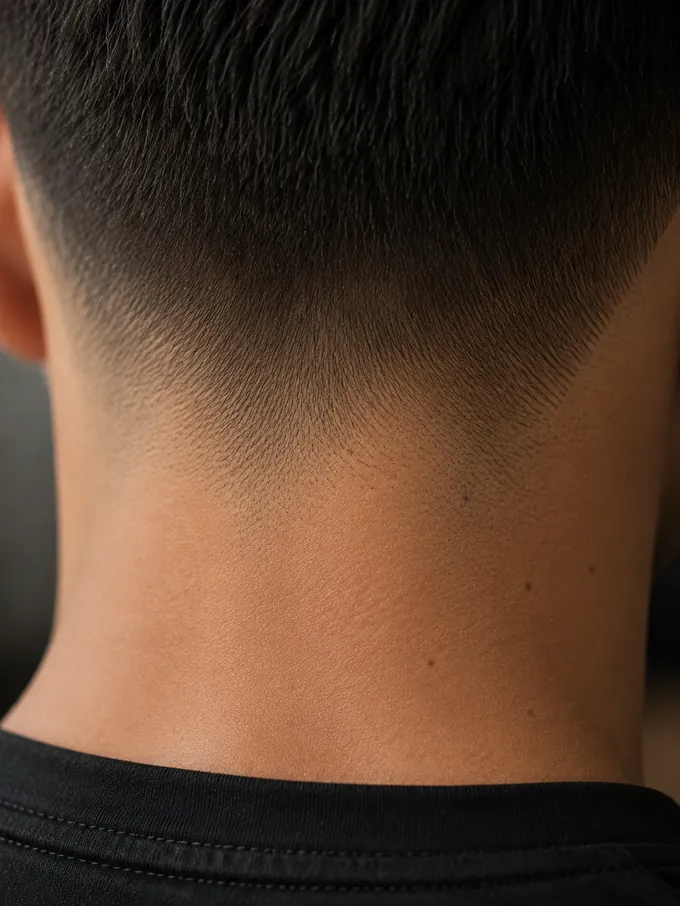
How a mid drop fade vs mid taper fade grows out
Mid drop fade
Mid taper
Which one costs less to keep?
A mid taper costs roughly half as much per year to maintain. At $40 a visit, a mid drop fade on a three-week schedule runs about $680 a year before tips. A taper at 4 to 6 weeks runs around $360. Same barber, same price per cut, the difference is entirely how often you need to go.
That's the strongest practical argument for a taper, and it's why it's the swap we recommend on the cost page for anyone trying to spend less without accepting a worse haircut.
The counter-argument is simple: if the drop is what you actually want, a taper doesn't deliver it at any price. Paying twice as much for the cut you like beats saving money on one you don't.
Which should you get?
Choose the mid drop fade if: you want the cut to be noticed, you're happy visiting a barber every 2 to 3 weeks, you have decent density on the sides, and you like a defined, sculpted shape.
Choose the mid taper if: you work somewhere conservative, you'd rather go to the barber monthly than fortnightly, your hair is thinning at the sides, or you want the haircut to look like hair rather than a statement.
Choose a low drop fade if: you want the drop curve but a softer version of it. This is the middle ground most people are actually looking for when they land on this page.
Still deciding? Try the fade finder quiz.
How to ask for each one
For the mid drop fade
"Mid drop fade, a #1 into a #3. Start it around mid-temple and drop the line down behind my ear to the nape, not level all the way around."
For the mid taper
"A taper rather than a fade, keep the length on the sides, no skin anywhere. Just tighten it up at the sideburns and the neckline."
If you're not sure which you want
"How often do you think I'll need to come back for each? I'd rather go every four weeks than every two."