Mid Drop Fade
Square Face
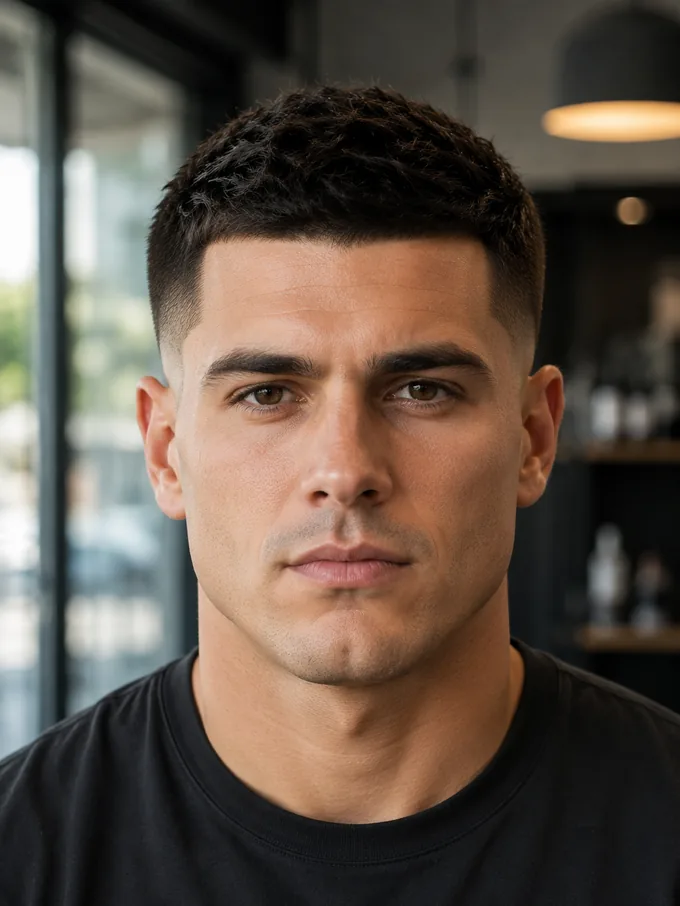
A mid drop fade square face pairing gives you a choice no other shape gets: lean into the angles, or soften them. The drop height and the top do that work.
Why it
works
The mid drop fade square face combination starts from an unusual position. A square face already has strong, even angles — a wide forehead, a defined jaw, and minimal curve anywhere. There's no length or width to correct here, so the fade isn't doing corrective work the way it is for rounder shapes. The jaw is already the anchor other face shapes have to work to create.
A drop point that sits at a moderate height, roughly mid-temple, works best. Going too low stacks extra visual weight right where the jaw is already strongest, making the whole look feel heavier and more blocky than intended.
How tight you take the sides matters just as much as where the drop starts. A mid-level fade leaves a little softness at the temples so the jaw isn't competing with razor-sharp sides. A high skin fade does the opposite and pushes the look harder and more chiselled — which is either exactly what you want or exactly what you don't, depending on which direction you're going.
Is your face square or rectangle?
Square and rectangle faces share the same angular jaw, but the styling advice splits. Pull your hair back, face a mirror, and check three things:
- Forehead, cheekbones, and jawline are all roughly the same width
- The jawline looks angular and defined rather than curved
- Face length is close to face width
All three, and you're square — this page applies. If the first two match but your face is noticeably longer than it is wide, that's rectangle, and adding height on top is the one thing you'd want to avoid. The long face guide is the closer fit there. If the jaw curves rather than angles, check round instead.
Sharpen or soften?
Square is the only face shape that gets a real choice here. Most mid drop fade square face guides assume you want to soften the jaw, but plenty of guys want the opposite. Decide which before you sit down, because the two directions call for different cuts.
Lean into the angles
Go higher and tighter. A skin-level fade with a crisp line-up and a short, structured top puts the jaw fully on display. Spiky or point-cut texture works here too, since the movement is vertical rather than softening.
Best if you like the jaw and want the haircut to amplify it rather than balance it.
Soften the angles
Keep the drop moderate and the fade mid-level rather than skin-close, so a little weight stays at the temples. Then let the top do the work: texture, a side sweep, or natural wave pattern breaks up the hard lines below.
Best if the jaw already reads as strong and you want the overall look less blocky.
Recommended variations
Vertical lift plus movement. The single most reliable option for softening, and it works from either direction.
Changes the angle across the forehead. Keep it swept and textured, never a blunt horizontal line.
The most natural softening agent there is. Curved lines above a straight jaw, with no styling effort needed.
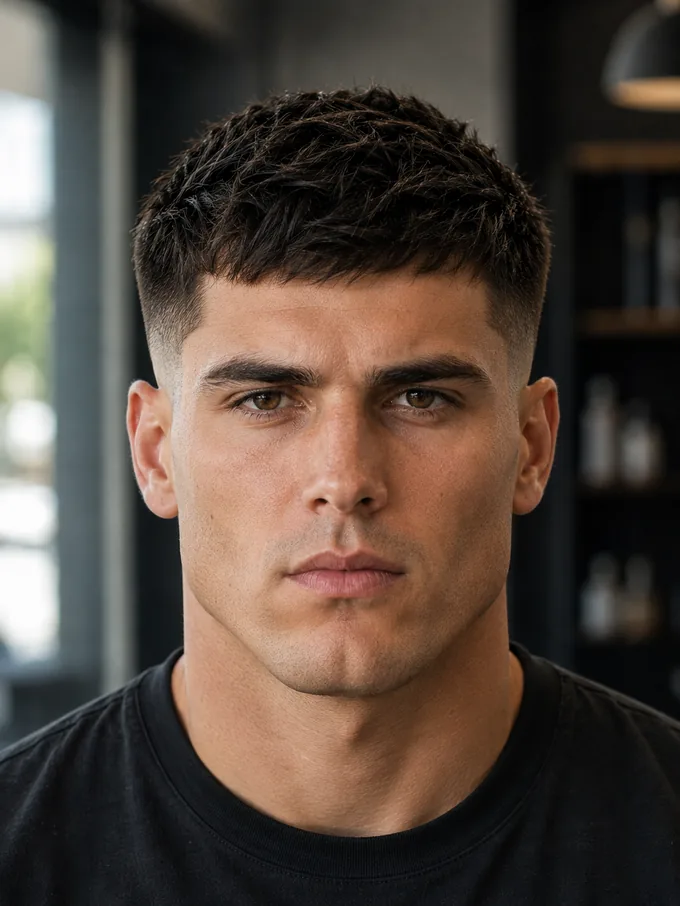
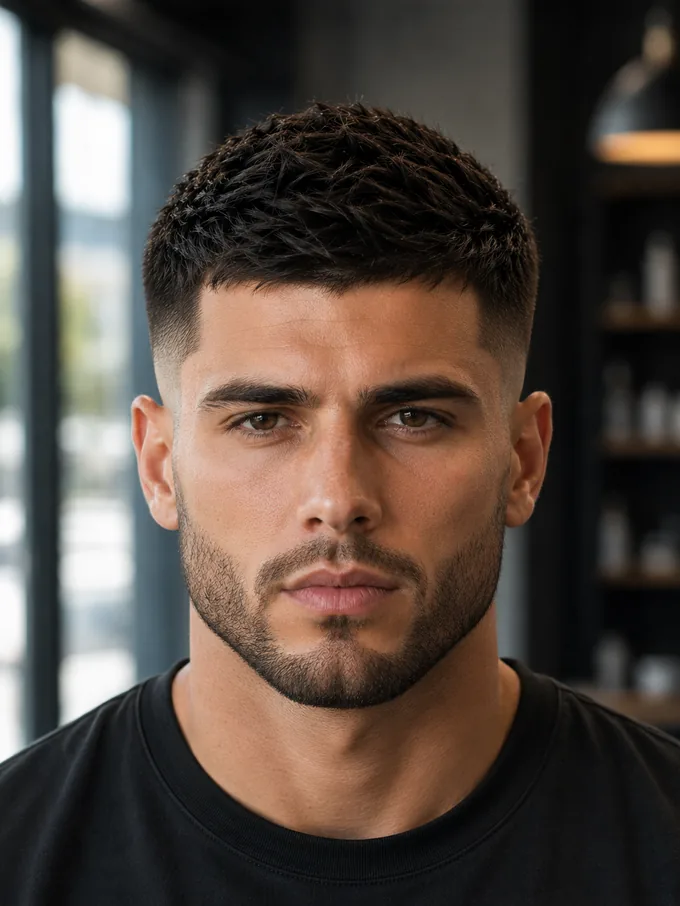
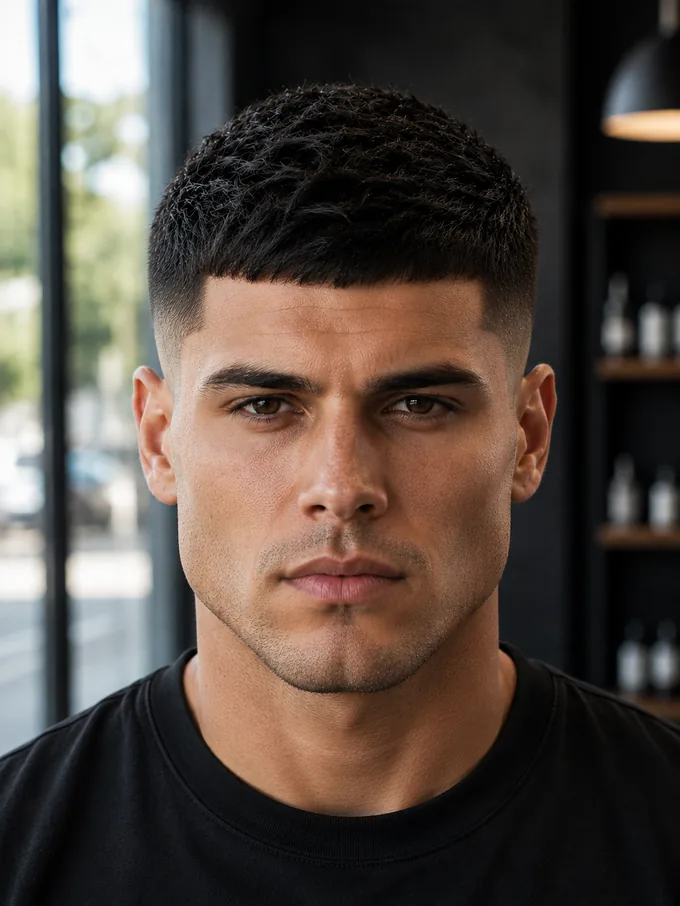
Mid drop fade square face gallery
How to shape the beard
A beard on a square face can support the jaw or make it look heavier, and the difference comes down to the edges.
Soften the corners, don't square them off. A beard carved into hard 90-degree angles at the jaw doubles the boxiness you already have. A short boxed beard with slightly rounded edges complements the jaw's strength instead of competing with it.
Plan the beard with the fade, not as a separate service. The sideburn transition, cheek line, and neckline all need to match where the drop finishes. When the fade and beard are planned together, the drop line flows straight into the beard fade. When they're not, you get two competing lines on the same side of the head. See the beard pairing guide for how that blend works.
Keep the cheek line intentional. Left to grow naturally it can widen the face at cheek level, which is the one place a square face doesn't need more width.
What to avoid
- A drop that sits too low. Starting the curve too close to the jaw adds bulk exactly where the face is already strongest, making it look heavier.
- A flat or boxy top. Stacking a square silhouette on top of a square jaw is the most common misfire. Some height or texture is what keeps it from reading as blocky.
- A thick, blunt horizontal fringe. Dragging hair straight across the forehead to hide the jaw usually just makes the whole cut look heavier. Sweep it or texture it instead.
- Side panels left square and bulky. Width at temple and cheek level without any height widens the face. The sides need to stay controlled between cuts, not just at the cut.
- An overly hard, straight line-up — unless you're deliberately sharpening. A razor-straight hairline doubles down on angularity; a very slightly softened edge reads more natural if softening is the goal.
- Ignoring the profile view. A cut can look balanced head-on and boxy from the side. Check the temple and neckline shape in profile before you leave the chair.
Common mistakes
Not telling the barber which direction you want. This is the big one for square faces specifically. "Mid drop fade" alone doesn't say whether you want the jaw played up or toned down, and the same cut name produces very different results depending on which the barber assumes.
Trying to hide the jaw with length. Longer hair with no direction, dragged forward or down, tends to make the cut look heavier rather than softer. Movement softens a square face. Volume without direction doesn't. Our barber communication guide covers how to phrase this.
Treating the beard as a separate decision. The beard line and the fade line meet on the same side of your head. Booking them as one plan rather than two is what keeps them from clashing.
Copying a reference photo from a different head shape. Square faces vary in how wide the head itself is. A cut that looks sharp on a narrow head can look boxed-in on a wider one, even with the same jaw.
Myths vs facts
Myth: A square face always needs softening.
Fact: Softening is one of two valid directions. Plenty of guys with strong jaws deliberately sharpen instead, with a tighter fade and a structured top. Neither is more correct.
Myth: A high skin fade suits a square jaw best because it looks sharp.
Fact: It suits the sharpening direction. If you want the look less blocky, a mid-level fade leaving some softness at the temples works better.
Myth: A fringe will cover and soften a strong jaw.
Fact: A blunt fringe pulled straight down usually adds weight instead. A side-swept or textured fringe changes the angle across the forehead, which is what actually softens.
Myth: A buzz cut is a bad idea with a square face.
Fact: It removes every distraction and leaves the jaw as the dominant feature, which often looks better than people expect. It just needs an even scalp and a hairline you're comfortable with.
Pros and cons for square faces
Pros
- The jaw provides structure the cut can build on, rather than having to create it
- Works in two directions, so you're not locked into one look
- Pairs cleanly with a beard when the two are planned together
- Forgiving on hair type, since texture on top is the main lever
Cons
- Easy to end up blocky if the top is left flat or the sides get bulky
- Needs a clear brief, since the same cut can sharpen or soften depending on execution
- Side weight between cuts shows faster than on softer face shapes
- Beard and fade have to be coordinated, which not every shop does by default