Mid Drop Fade Mullet
Growth Timeline
A mid drop fade mullet isn't a single haircut you ask for and walk out with. It's a length you grow into over months while your barber keeps the sides faded on schedule, and most guides skip the part where that transition actually happens.
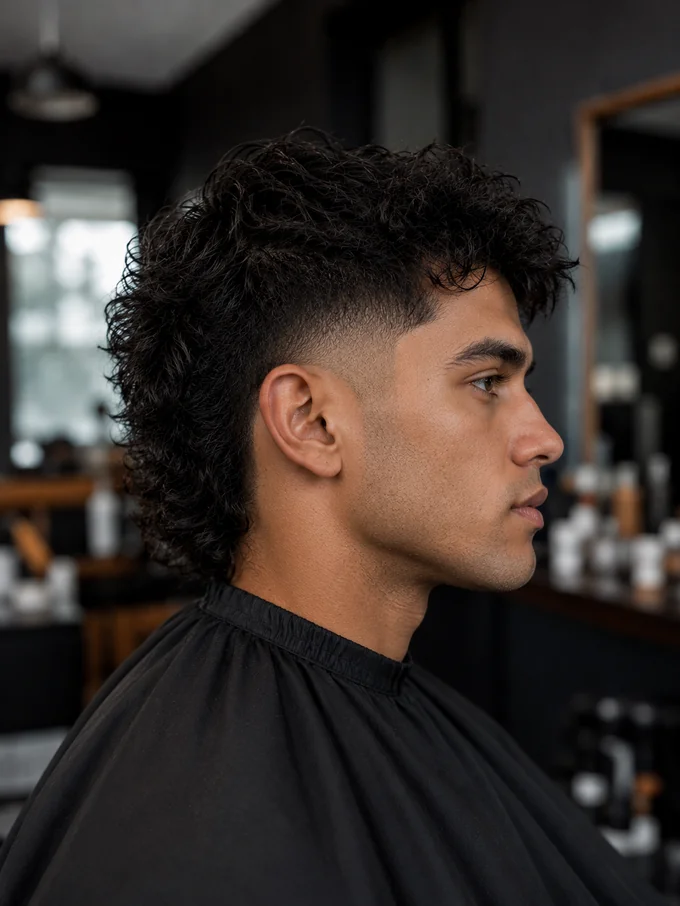
Mid Drop Fade Mullet Pairing
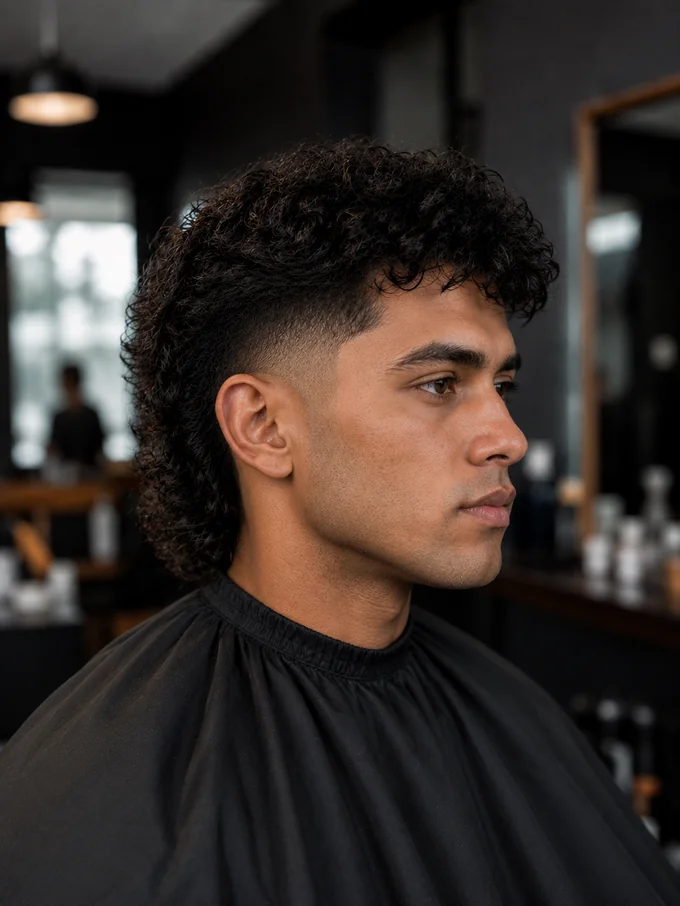
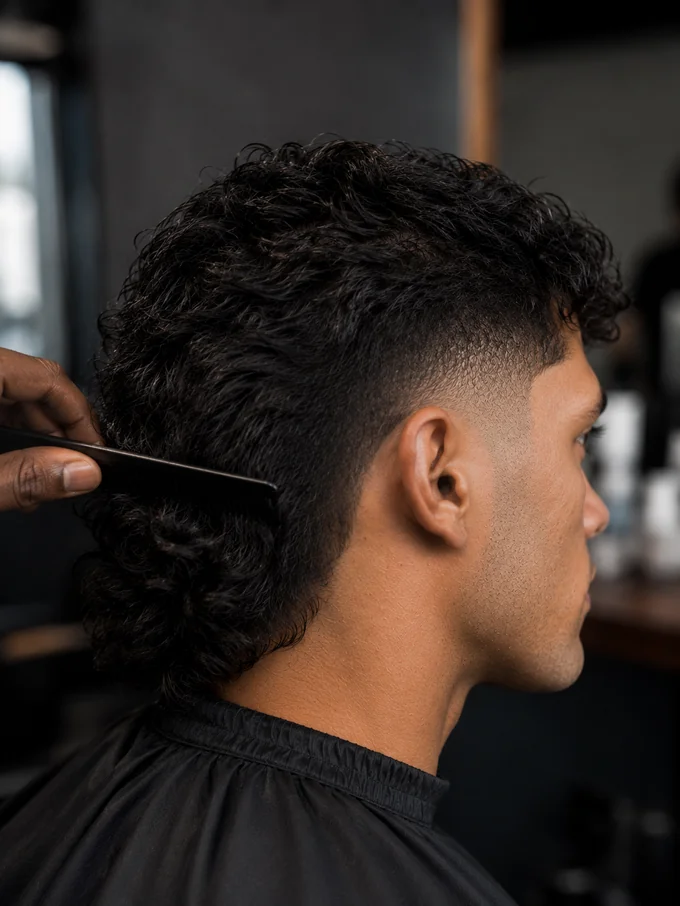
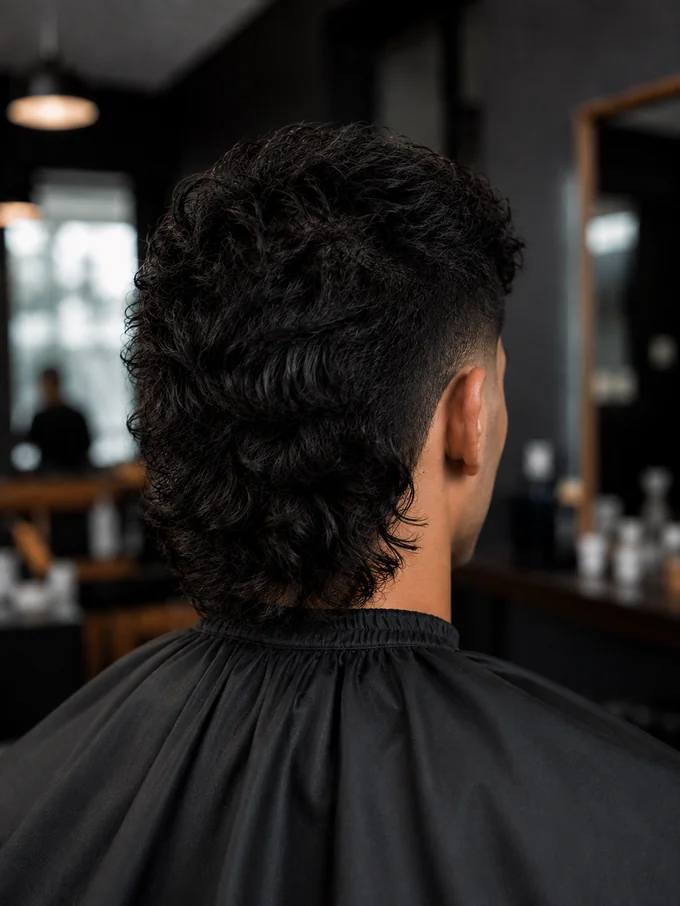
A mid drop fade mullet leans fully into contrast rather than trying to blend everything into one smooth shape. The sides fade down and curve behind the ear just like any other mid drop fade, but the top and back are left noticeably longer, creating a deliberate short-to-long transition instead of a single consistent length. It's one of the few sub-styles that changes the growing schedule more than it changes the cutting technique.
What separates a clean mullet from a haircut that just looks unfinished is how that transition is handled. The crown area, where the short sides meet the longer back, needs to be blended carefully, or the cut reads as an awkward growing-out phase rather than an intentional style. A skilled barber tapers this zone gradually rather than leaving an abrupt step between the fade and the length.
Texture plays into how dramatic the mullet looks. Straighter hair tends to hang and show off the length at the back more obviously, while wavy or curly hair adds volume and can make the longer section look fuller without needing as much length to read clearly as a mullet, worth keeping in mind if you're coming from a curly mid drop fade.
Face shape is worth a quick thought too. The added volume and length at the back can balance out a longer face by adding width at the back of the head, while a rounder face usually does better with the contrast kept a bit more moderate, rather than going for maximum length right away.
If you already wear a mid drop fade, you're closer to this look than you might think. The sides don't change at all. Your barber keeps fading them exactly the way they already do. The only thing that changes is what happens on top: instead of trimming the crown and back down every visit, you leave them alone and let them grow.
Hair type changes how the whole timeline plays out. Straight hair shows its true length the whole way through, so growth is easy to track by eye, what you see is what you've got. Wavy hair adds a bit of visual volume without changing the timeline much. Curly hair is the one that catches people off guard: curls shrink as they dry, sometimes by 30 to 50% depending on curl type, so the back can look shorter than it actually is for most of the growth period. If you're growing a curly mid drop fade into a mullet, expect the "mullet-ready" stage to arrive a few weeks later than it would on straight hair, even with the same actual growth rate.
Mid Drop Fade Mullet Gallery
The growth timeline
Here's what a mid drop fade mullet actually takes to grow, stage by stage, based on how most barbers manage the transition. Hair grows roughly half an inch a month, so exact timing depends on your starting length and personal growth rate, but the stages happen in this order regardless.
| Stage | Timeframe | What to do |
|---|---|---|
| Starting point | Week 0 | Keep the fade on its normal 2 to 3 week schedule. Tell your barber to stop cutting the crown and back, let them grow untouched from here. |
| Early growth | Weeks 2 to 5 | The hardest stretch. The back is longer than a fade but too short to read as intentional. Keep the sides tight to hold contrast while the back catches up. |
| Establishing shape | Weeks 6 to 9 | Back reaches roughly ear-to-collar length. This is when the crown transition needs real attention, ask your barber to start tapering it now, not once it's fully grown in. |
| Mullet-ready | Weeks 10 to 14+ | Enough length at the back for the contrast to read as deliberate rather than accidental. The fade keeps its normal schedule; the back gets shaped, not shortened. |
Timings are general guidance, hair density, growth rate, and starting length all shift these ranges.
The weeks 6 to 9 stage is where most guys give up and cut it all off, because the back looks like it's just growing out badly rather than turning into anything. That's exactly the point where the crown blend matters most, since a barber who tapers that zone early keeps the cut looking shaped throughout the transition instead of only at the finish line.
Mistakes during the grow-out
- Cutting the back "just a little" to neaten it up. Any trim during weeks 2 to 9 resets the clock on reaching mullet-ready length. If it needs shaping, ask for a dusting of split ends only, not a length cut.
- Letting the fade grow out along with the back. Skipping fade touch-ups during the growth period is the single fastest way to lose the contrast that makes a mid drop fade mullet read as intentional rather than just long hair.
- Waiting until week 12 to ask about the crown blend. By then there's a sharp step between the short sides and the long back that's much harder to soften than if it had been tapered gradually from week 6 onward.
- Judging the cut at week 4. This is the least flattering stage of the entire timeline, too long for a fade, too short to look like a mullet. Comparing yourself to a finished 4-month mullet at this stage sets up a discouraging comparison that isn't useful yet.
- Ignoring curl shrinkage if you have curly or coily hair. Measuring progress by how the back looks dry can make it seem like growth has stalled, when it's actually shrinkage. Check length wet, stretched out, if you want an accurate read.
Signs you're actually on track
- ✓The sides still look sharp between fades. If the fade line is holding up on its normal schedule, the contrast is doing its job even while the back is still short.
- ✓You can tuck the back behind your ears by week 6 to 8. That's a rough marker that you're approaching the establishing-shape stage, even if it doesn't look like a mullet yet from the front.
- ✓Your barber mentions the crown blend without you asking. A barber who's paying attention will bring up tapering the transition zone around week 6 on their own, a good sign they're managing the grow-out deliberately.
- ✓It looks worse before it looks better, on schedule. The weeks 2 to 9 dip is expected, not a sign something's gone wrong. If it's tracking with the timeline above, it's working.
Styling & maintenance tips
- 1Commit to the full timeline before you start. A mid drop fade mullet looks worst in the middle of growing out, knowing that in advance makes weeks 2 to 9 much easier to sit through.
- 2Ask for the crown taper at week 6, not week 12. Blending the transition early keeps the cut looking shaped the whole way through, not just once the back is fully grown.
- 3Use a texturizing spray or matte paste, not a slick pomade. A mullet generally looks better with some natural movement than a glossy, controlled finish. See the full product routine for options.
- 4Keep the fade on its usual 2 to 3 week schedule throughout. The back length can go much longer between trims since the goal is to preserve it, not maintain a fixed shape. General maintenance timing still applies to the sides.
- 5Trim split ends at the back occasionally without cutting length. A light dusting keeps the ends healthy while preserving the length you've spent months growing.
- 6Decide your exit point before you're mid-growth. If it's not working by week 9, it's easier to commit to a shorter comb-over or quiff than to keep pushing through a length that isn't reading right.
- 7Take a photo every couple of weeks. The change is gradual enough that it's hard to judge day to day. A running photo log makes it much easier to see that the timeline is actually on track, especially through the slow-looking weeks 2 to 9 stretch.