One Haircut.
Done Properly.
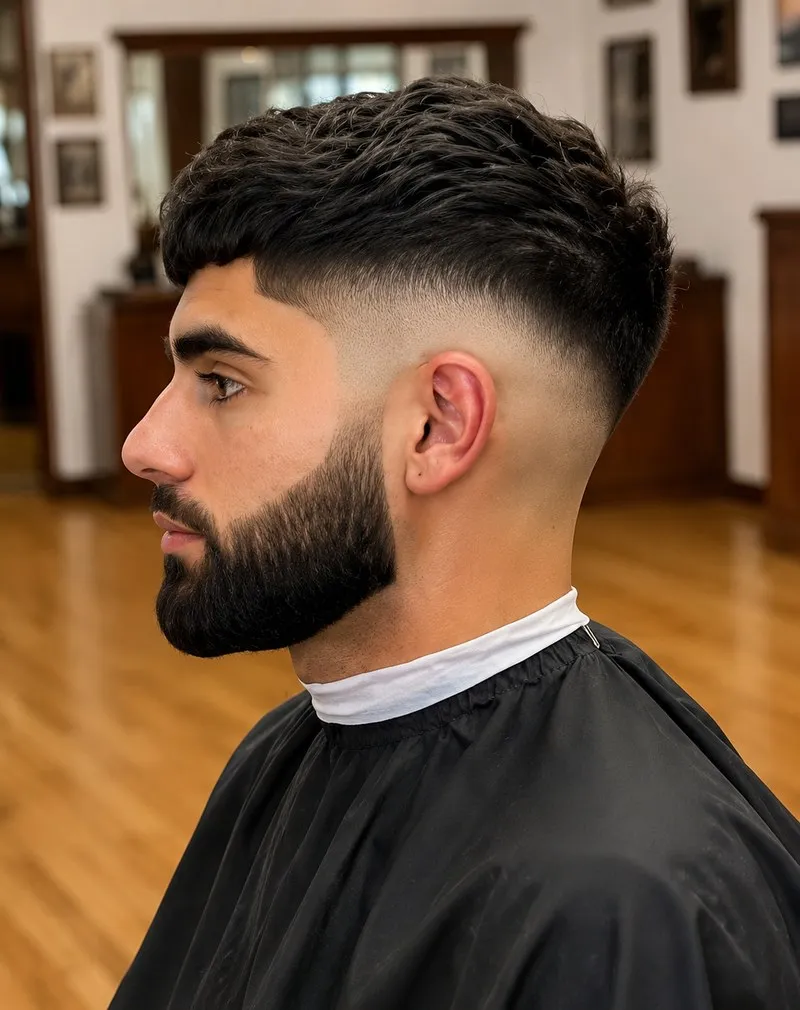
Fade Line exists to answer one specific question well: what does a mid drop fade actually look like on different faces, hair types, and styling choices — not just in theory, but in practice.
One Haircut, Covered Properly
Most grooming sites treat every fade as roughly interchangeable, covering dozens of styles in a sentence or two each. Fade Line takes the opposite approach: it covers one specific haircut — the mid drop fade — in real depth, across every face shape, hair type, and styling pairing that actually comes up in a barber's chair.
That narrower focus is deliberate. A mid drop fade looks meaningfully different on a round face versus a long one, on straight hair versus curly hair, and paired with a quiff versus a bald top. Most general haircut sites don't have the space to get into that level of detail. This one does.
How We Build Each Guide
-
1
Start from real barbering technique
Every guide is written around how the haircut is actually cut and blended, not just how it looks in a single photo. The goal is advice you can repeat to a barber and get the right result.
-
2
Source genuine reference photos
Photos are chosen specifically to match the topic of each page — the right drop height, the right top style, the right hair type — rather than reused generically across unrelated pages.
-
3
Write for the specific combination, not generically
A face-shape page, a hair-type page, and a sub-style page each get their own dedicated reasoning rather than recycled, interchangeable text.
-
4
Review and update regularly
Grooming trends and product recommendations shift over time. Pages are reviewed periodically and updated rather than left static once published.
What You'll Find on This Site
-
A
Face shape and hair type guides
Dedicated breakdowns of how a mid drop fade looks and works on round, oval, square, heart, and long faces, plus straight, wavy, curly, and textured hair.
-
B
Comparison pages
Side-by-side breakdowns of the mid drop fade against six related styles — low and high drop fades, mid fade, mid taper fade, burst fade, and skin fade.
-
C
Sub-style pairings
Twelve guides covering how the fade pairs with different top styles and contexts, from a beard or quiff to kids', teens', and bald-fade versions.
-
D
Practical how-to guides
Advice on talking to your barber, maintaining the cut, DIY upkeep at home, product choices, and what affects the price.