Mid Drop Fade
Bald Fade
A mid drop fade bald fade takes the curve all the way to bare skin. That means the sharpest fade on this list also comes with the most exposed skin to actually take care of.
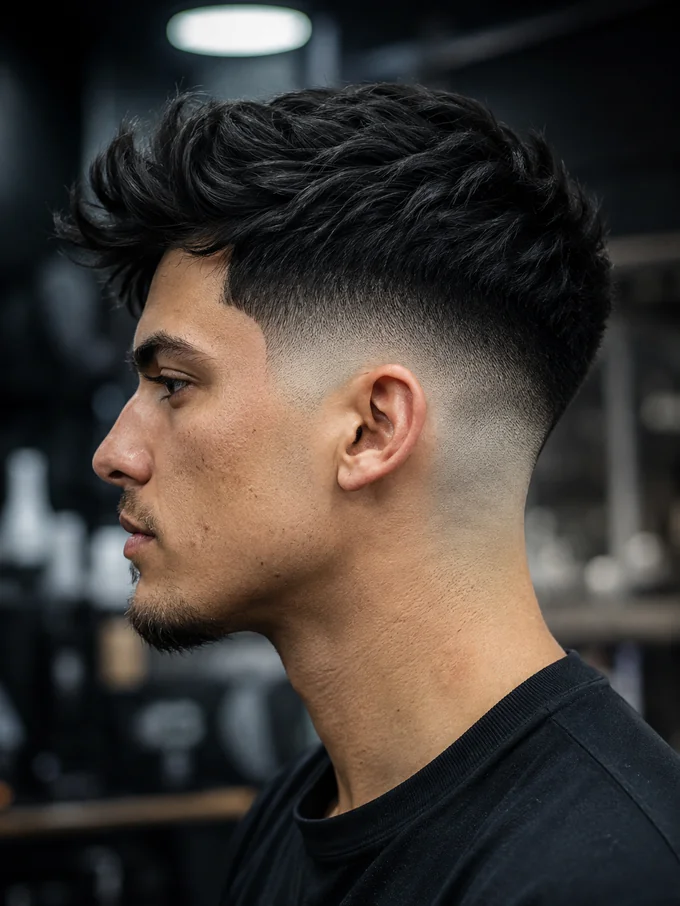
Mid Drop Fade Bald Fade Pairing
A mid drop fade bald fade pushes the curve all the way down to actual bare skin at the bottom, rather than stopping at a very short length. The drop still curves behind the ear the same way it does on every other version of this haircut, but the endpoint is as close and as bare as it gets, no length left, no shadow of stubble, just skin.
This pairing is usually matched with a short, evenly buzzed top rather than anything with real length, since the whole point is maximum contrast and a clean, low-maintenance finish from top to bottom. It's one of the lowest-effort styles on this list day to day, there's no styling required for the top, and the fade itself does all the visual work.
It's also a popular option for anyone dealing with thinning hair or an uneven hairline, since keeping everything uniformly short minimizes the visual difference between thicker and thinner areas. A bald fade doesn't hide thinning hair exactly, but it does make it far less noticeable than longer styles that rely on length and volume to look full.
This is also one of the more universal options on the list when it comes to face shape, since it's about contrast rather than length or volume doing any shaping work. It tends to pair especially well with strong, defined facial features, since there's nothing on top competing for attention with the jawline or beard.
It also tends to be the fade guys switch to as a fallback when other styles stop cooperating, a bad cut, a busy few months of skipped touch-ups, or simply wanting the lowest-maintenance option possible. Because there's no length to grow out unevenly and no part or texture to maintain, it's one of the easiest styles to reset into from almost any other cut on this list.
The skin, not just the cut
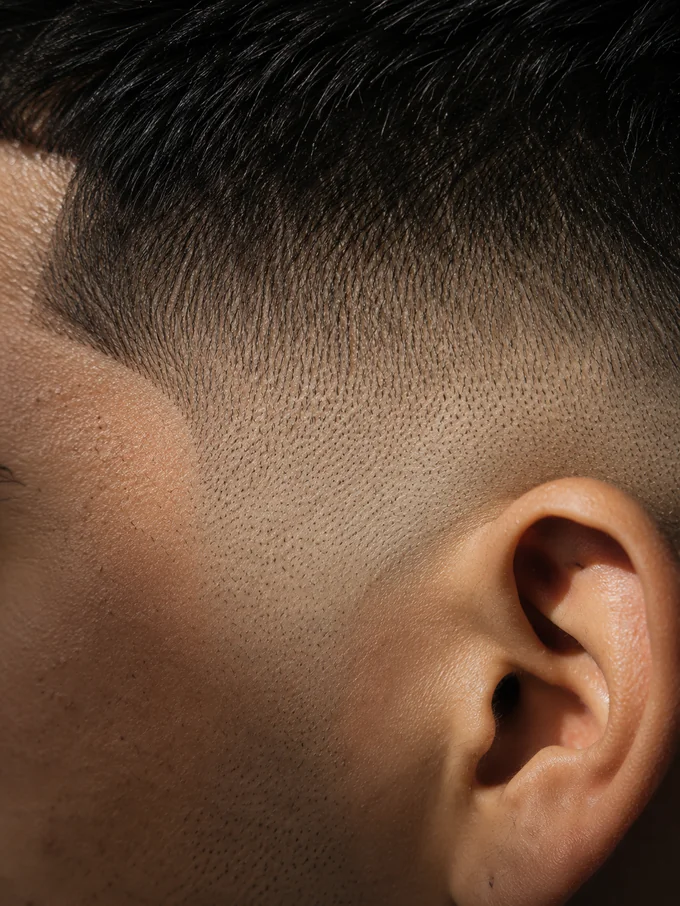
Every guide to a mid drop fade bald fade talks about the style. Almost none mention that going all the way to bare skin means that section of your scalp is now exposed the same way your face is after a shave, and it can react the same two ways a shaved face does: razor burn, or razor bumps.
Razor burn
A red, blotchy rash that shows up soon after cutting. Usually caused by friction or a dull blade. Typically clears on its own within 2 to 3 days.
Razor bumps
Small, pimple-like inflamed follicles, often from hair cut too close, curling back into the skin as it regrows. Takes longer to clear, sometimes a week or more.
Coarse or curly hair carries a real, well-documented extra risk here. Hair that curls naturally is more likely to curl back into the skin after a close razor cut, a condition called pseudofolliculitis barbae, the same thing that causes bumps on a shaved face, just at the fade line instead. If you've dealt with bumps shaving your face or neck before, expect the same tendency at the bald section of the fade.
Straighter hair generally has an easier time here, since it grows back out of the follicle in a straight line rather than curling. That doesn't mean straight-haired guys never get irritation, friction and dull blades cause plenty of it on their own, but the curl-specific bump risk is mostly a non-issue for straight or slightly wavy hair types.
None of this means a mid drop fade bald fade is off the table if you're bump-prone. It just means the razor technique matters more than the style itself. A few things make the biggest difference:
- 1Ask for a single pass with the grain. Going over the same section repeatedly, or shaving against the direction of growth, is what causes most bumps and burn, one clean pass beats three aggressive ones.
- 2A sharp blade matters more than a close one. A dull blade drags and tugs instead of cutting cleanly, which irritates the skin far more than a fresh, sharp blade at the same closeness.
- 3Ask your barber to map your growth pattern once. The scalp often changes direction around the crown and behind the ears, a barber who knows this ahead of time can adjust the angle instead of fighting it mid-cut.
- 4If bumps keep showing up, ask for a close clipper finish instead of a full razor. A very short guard gets 95% of the bald-fade look with a fraction of the irritation risk, since the hair isn't cut flush against the skin.
Healing time matters for scheduling, too. Ordinary razor burn usually settles within two to three days on its own. Actual bumps take longer, often a week or more, because each one is an inflamed follicle working through its own small healing cycle, not just surface irritation. If a touch-up is due before that clears, it's worth telling your barber to work around the irritated area rather than shaving straight back over it, since re-shaving inflamed skin is one of the most common ways a minor issue turns into a recurring one.
This isn't a reason to avoid the style if you've had bump trouble before. It's a reason to have the conversation with your barber before the first cut rather than after the third irritated one, most barbers who do a lot of bald fades have a go-to adjustment for bump-prone skin, but only if they know to look for it.
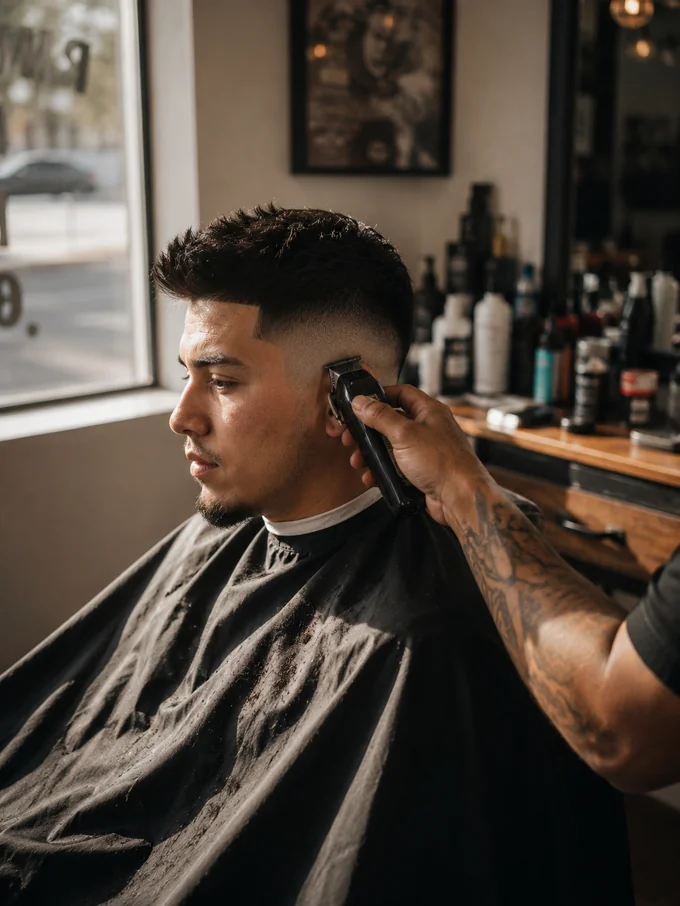
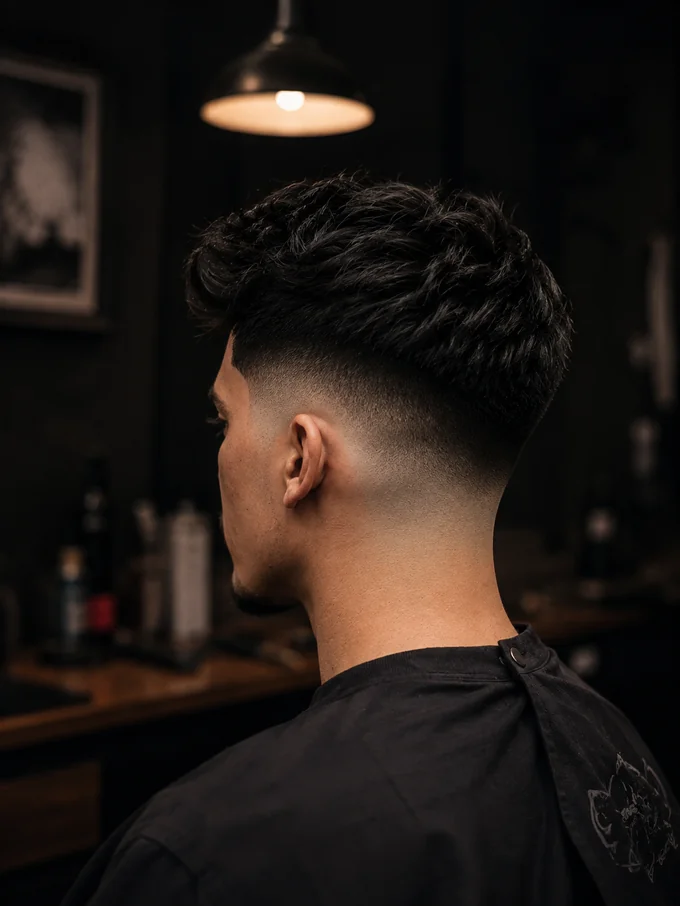
Mid Drop Fade Bald Fade Gallery
Styling & maintenance tips
- 1Moisturize the scalp daily, not just after cuts. Bare skin dries out faster than skin with hair covering it, a fragrance-light, alcohol-free moisturizer keeps it from flaking or feeling tight.
- 2Protect exposed skin from the sun. The bald sections of the fade are just as exposed to sunburn as the rest of your scalp, so sunscreen or a hat matters more here than with other styles.
- 3Keep the top buzzed at a consistent guard length. An even length across the top is what gives the bald fade its clean, uniform look, uneven length undercuts the whole effect.
- 4Book touch-ups every 1 to 2 weeks. Bald areas show regrowth the fastest of any style on this list, see the general maintenance guide for what that means for the rest of the cut.
- 5Don't shave over irritated skin. If bumps or burn show up, let that section heal before the next cut goes right back over it, repeated shaving on inflamed skin is what turns a few days of irritation into a recurring problem.
- 6Flag your hair type before the first cut. If you know you're prone to razor bumps on your face or neck, mention it to your barber before the razor touches the fade, it changes how they approach the closest section.