Mid Drop Fade
Maintenance Guide
A mid drop fade has a shelf life of about three weeks. Here's what happens week by week, what you can fix at home, and what you have to leave alone.
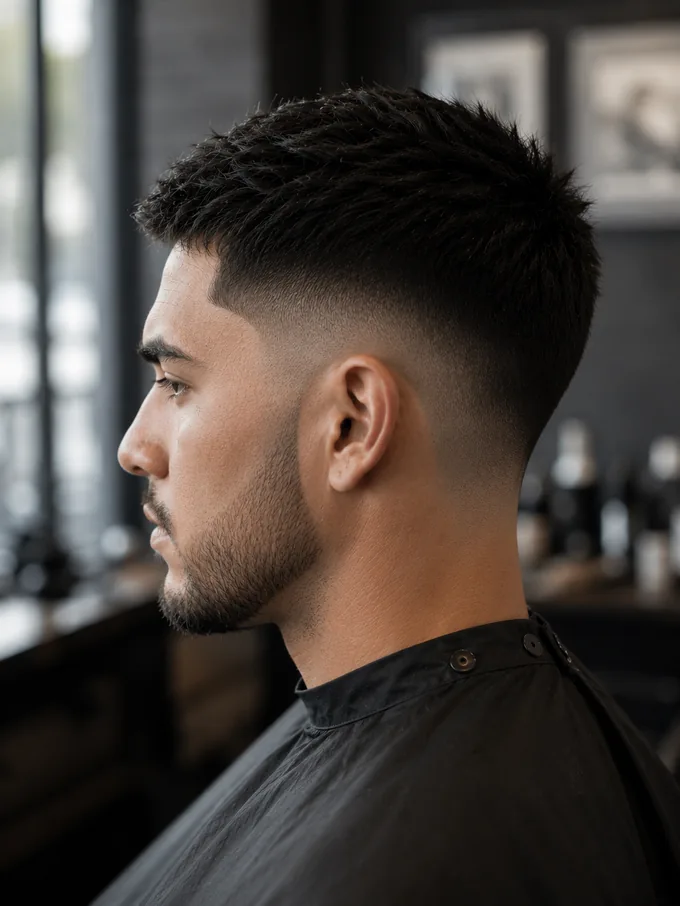
A fade has a window, not a lifespan
Mid drop fade maintenance starts with one fact: hair grows roughly half an inch a month. On the top of your head that's barely noticeable across three weeks. On a faded side where the shortest point is a millimetre or two, the same growth changes everything, because a fade is built entirely on the difference between two lengths, and growth closes that gap fast.
That's why a fade looks incredible for the first week and progressively less deliberate after. It isn't a sign of a bad cut. It's arithmetic.
Mid drop fade maintenance is really two separate jobs. One is slowing that visual decline, mostly through what you do to the neckline and edges. The other is keeping the cut looking clean day to day, which is about washing, product and scalp rather than length. Both matter, and neither takes much time.
Mid drop fade maintenance, week by week
Peak sharpness
The drop curve is at its most defined and the contrast between the sides and top is at maximum. If you're photographing the cut for reference, and you should, this is the window.
The edges go first
Before the fade itself changes, the neckline, sideburns and hairline start losing their crispness. This is the earliest point where a five-minute trimmer touch-up makes a visible difference, and it's the single highest-value thing you can do at home.
The contrast starts closing
Growth at the shortest point means the gap between the bottom of the fade and the top of the sides narrows. The drop curve behind the ear softens, still visible, but no longer sharp. Most people don't consciously notice this; they just feel the cut looks less good than it did.
Bulk builds above the ears
The side panels thicken and the silhouette starts widening. On a mid drop fade this is more noticeable than on a level fade, because the curve depends on a clean gradient to read at all. Book your appointment during this window.
It's a short haircut now, not a fade
The blend has effectively closed. The cut still looks tidy, but the drop that defined it is gone. Stretching past this point means your barber is rebuilding the fade each visit rather than refreshing it, which costs you time in the chair and consistency in the result.
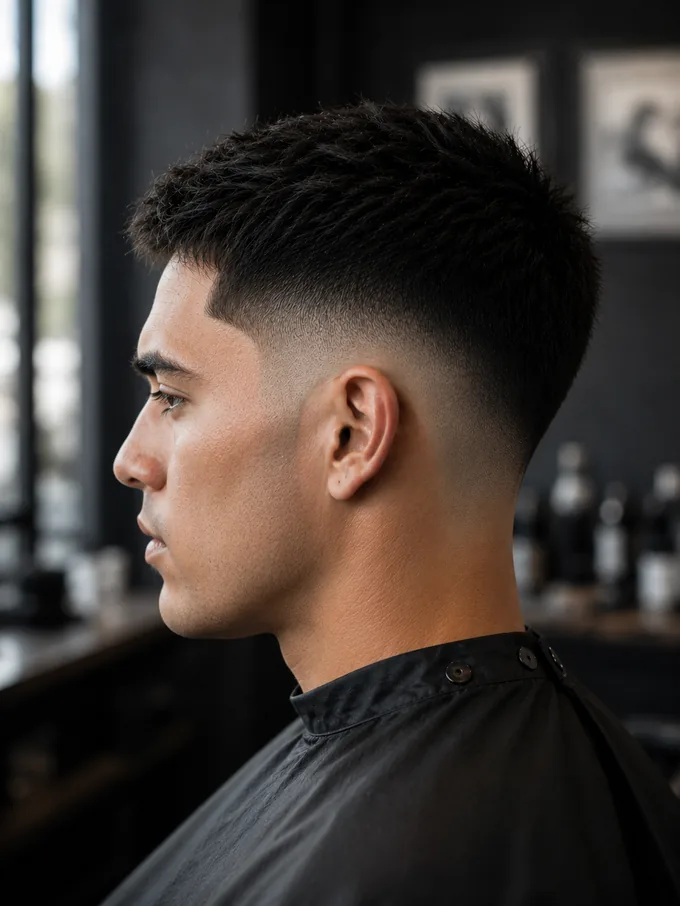
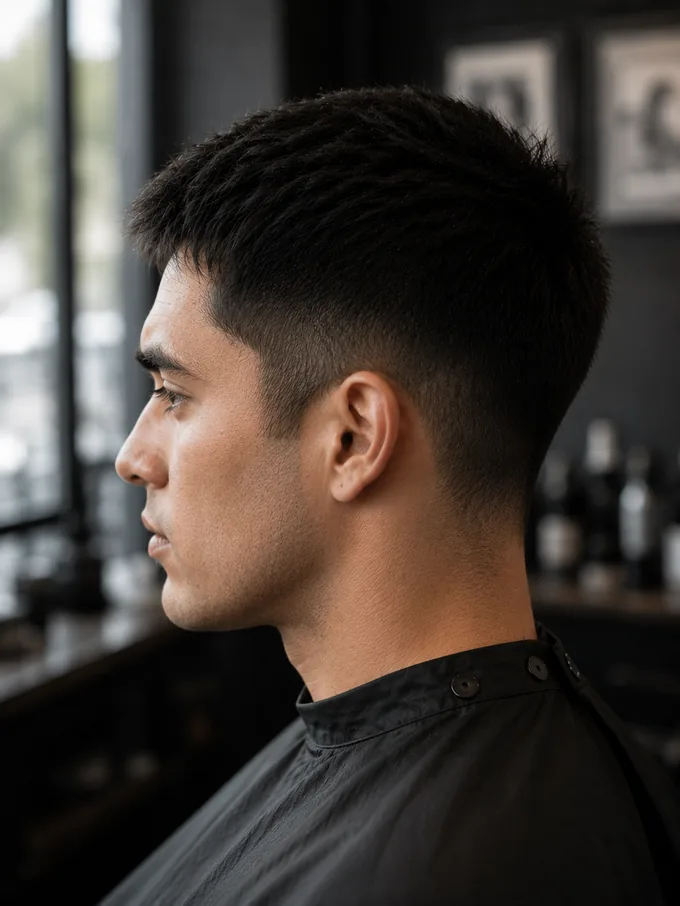
Fresh cut versus week three
The change is easiest to see in profile, where the drop line lives. From the front, a three-week-old fade and a fresh one look far more similar than they actually are.
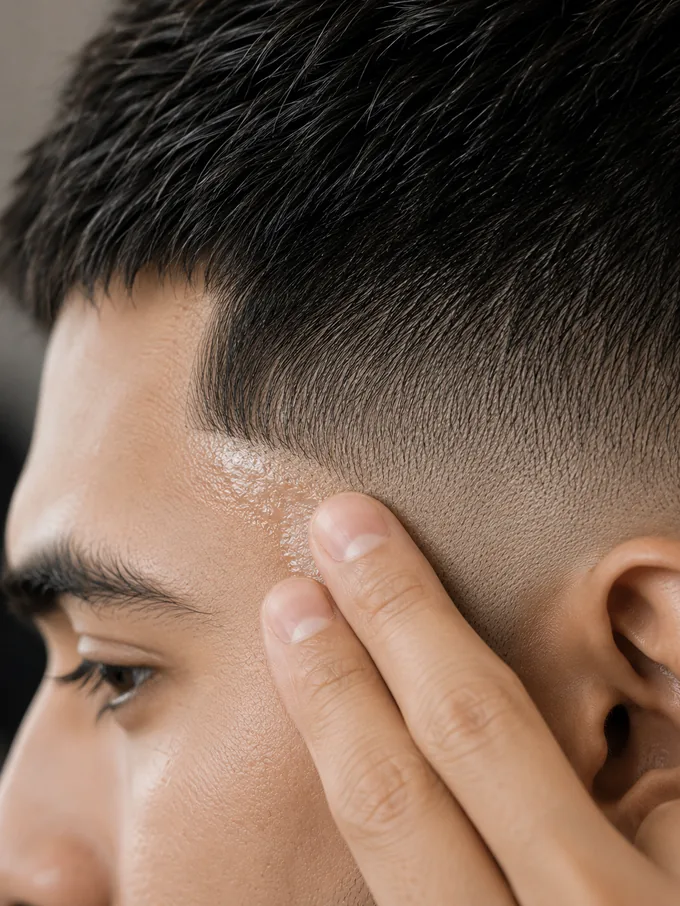
The three areas you can touch
-
1
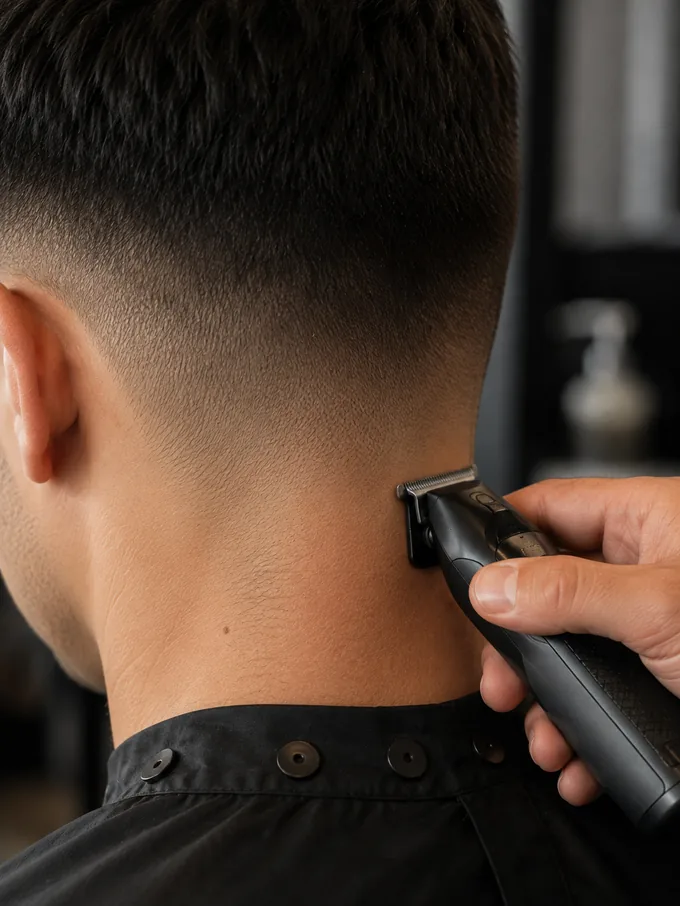
The neckline, below the natural hairline only
Use a trimmer with no guard or the lowest one, and remove only the obvious fuzz that has grown in below where your barber set the line. Do not raise the line, that's the mistake that compounds, since each pass creeps higher and by the third one your neckline is an inch above where it started. Go slowly, use two mirrors, and stop early if you're unsure.
-
2
Sideburns
Keep them level with each other and square them off at the same length your barber left them. Uneven sideburns make an otherwise fine fade look sloppy, and they're the easiest thing on this list to get right.
-
3
The front hairline, lightly
Stray hairs at the temples and above the forehead can be tidied, but resist recreating a sharp edge-up yourself. A razor-sharp line done badly is far more obvious than a slightly soft one, and it grows back itchy.
What not to touch
- The blend itself. The gradient between guard lengths is the part that takes barbers years to learn. Attempting it at home almost always leaves a visible line, and then your next appointment starts with a repair.
- The drop curve behind the ear. This is the hardest part of the cut to execute and the easiest to ruin. You cannot see it properly on yourself, whatever mirror setup you use.
- Raising the neckline. Cleaning below the line is maintenance. Moving the line is a haircut, and it only goes one direction.
- The top length, if you're growing it out. Trimming the top to "tidy it up" undoes weeks of growth in a minute. If it feels shapeless mid-cycle, that's normal.
- Anything at all, the day before a big event. If it goes wrong there's no time to fix it. See the DIY guide for what's genuinely doable at home and what isn't.
The daily mid drop fade maintenance routine
Wash two to three times a week, not daily. Daily washing strips the natural oils and dries out a scalp that's already more exposed than usual near a fade. Washing too rarely lets product and oil build up, which makes hair sit heavy and blurs the definition at the edges. Two to three is the range most people land in; more if you train or sweat heavily.
Conditioner on the top only. Keep it off the faded sides and scalp, where it builds up and makes short hair lie flat and look dull. The top is where it does something useful.
Massage the scalp while you wash. Thirty seconds with your fingertips. It clears buildup more effectively than water alone and supports healthy regrowth, which matters for how evenly the fade grows back in.
Moisturise the hairline a few times a week. This one is underrated and takes about thirty seconds. Dry, ashy skin around the hairline and faded area makes a cut look rough even when the blend is technically still clean, and it shows most on darker skin tones and in cold or dry weather. A light hair lotion or scalp oil fixes it. Avoid heavy oils, which sit on the surface and attract lint. The products guide covers what works.
Go light on styling product. More product does not equal more definition. It makes the faded area look greasy and the cut look older than it is. If you use a lot, add a clarifying shampoo once a week to clear residue.
Sleep and the morning reset
A fade can look rough at 8am purely because of how you slept, and people often mistake that for the cut going off early.
Don't sleep with product still in. It transfers to your pillow, redistributes unevenly through the night, and builds up on the scalp. Rinse it out or wash before bed on heavy-product days.
Satin or silk pillowcases reduce friction. Cotton drags on hair and can flatten one side of the cut into a shape that's hard to reset. This matters more for textured and curly hair than straight.
Brush it back into shape before adding anything. Most morning problems are solved by a brush and a little water, not by more product on top of yesterday's.
How often to rebook
| Your version | Rebook every | Why |
|---|---|---|
| Mid drop, skin-level at the bottom | 1–2 weeks for constant sharpness, 3 at the outside | Skin-level has the most contrast to lose. Growth shows within days. |
| Mid drop, guard-length bottom | 2–3 weeks | Starts softer, so it declines more gradually. The standard schedule for this cut. |
| Mid drop taper rather than fade | 4–6 weeks | A taper has no hard contrast line to close, so it stays looking intentional far longer. |
| Fast-growing or thick hair | Subtract about a week | Growth rates vary by roughly a third either side of the half-inch-a-month average. |
Common mistakes
Waiting until it looks bad to book. By then you're at day 21 and your barber is rebuilding rather than refreshing. Book the next appointment before you leave the chair, or at the two-week mark at the latest.
Trying to fix the blend the night before an event. The most common way a decent fade becomes a bad one. If it needs work that close to something important, a barber visit is the only safe option.
Blaming the barber for normal grow-out. A fade softening at two weeks is the cut behaving exactly as it should. What isn't normal is a visible line in the blend on day one, that's worth raising, and quickly.
Over-washing because it feels greasy. Greasiness near a fade is usually product buildup, not oil. A clarifying wash once solves it; washing daily makes the underlying dryness worse.
Not photographing the fresh cut. Take a side profile in the first few days. It's the reference you'll want next time, and it's the clearest way to show a new barber exactly what you're after. The barber guide covers how to use it.