Mid Drop Fade
Haircut
Everything you need to know about the mid drop fade, what it is, how barbers cut it, who it suits, and how to ask for it correctly.

- The drop fade curves downward behind the ear instead of staying level. That curve alone is what separates it from a regular fade.
- It works with any hair type, and pairs especially well with a beard fade.
- Expect a touch-up every 2 to 3 weeks to keep the blend looking sharp.
- Style it 10 different ways on top, from a buzz cut to a pompadour, plus dedicated guides for a mullet, bald fade, and more.
What is a
mid drop
fade?
The mid drop fade sits between a low fade and a high fade in where it starts, but what actually defines it is the curve. Instead of fading in a straight, level line around the head, the taper begins at mid-temple height and drops as it travels back, finishing at its lowest point at the nape of the neck.
That drop is the signature detail. On a regular mid fade, the line stays level all the way around. On a mid drop fade, it bends downward behind the ear, which adds shape and contrast without needing a sharp part or design. It's become one of the most requested fades in barbershops because it works on almost any hair type and pairs cleanly with a beard, since the lowest point of the drop tends to line up with where a beard fade naturally starts.
Because the drop height and curve angle can be adjusted, the same basic cut can look subtle and professional or sharp and aggressive depending on how a barber blends it, which is why it shows up across so many variations. See the full mid drop fade styles guide for every top-style pairing, from beard pairings to pompadour tops to clean line-ups.
How it's cut
Consultation & sectioning
The barber checks hair growth pattern, density, and head shape, then decides where the drop point should sit based on your face shape and how much contrast you want.
Set the baseline
A trimmer or foil shaver sets the lowest point if you're going skin-level, or a closed-lever #0 to #0.5 if you want a softer finish. The baseline is kept even from the start, since chasing an uneven line upward is what causes most bad fades.
Mark the drop line
Starting at mid-temple, the barber runs a #1 guard with the lever open to establish the highest point of the fade, then guides that line downward and back, setting the curve that makes this style distinct.
Blend the taper
The barber erases the hard baseline using lever control and half guards, then climbs through #1.5 and #2 as the fade moves upward. Each section is blended so no visible line remains between guard changes.
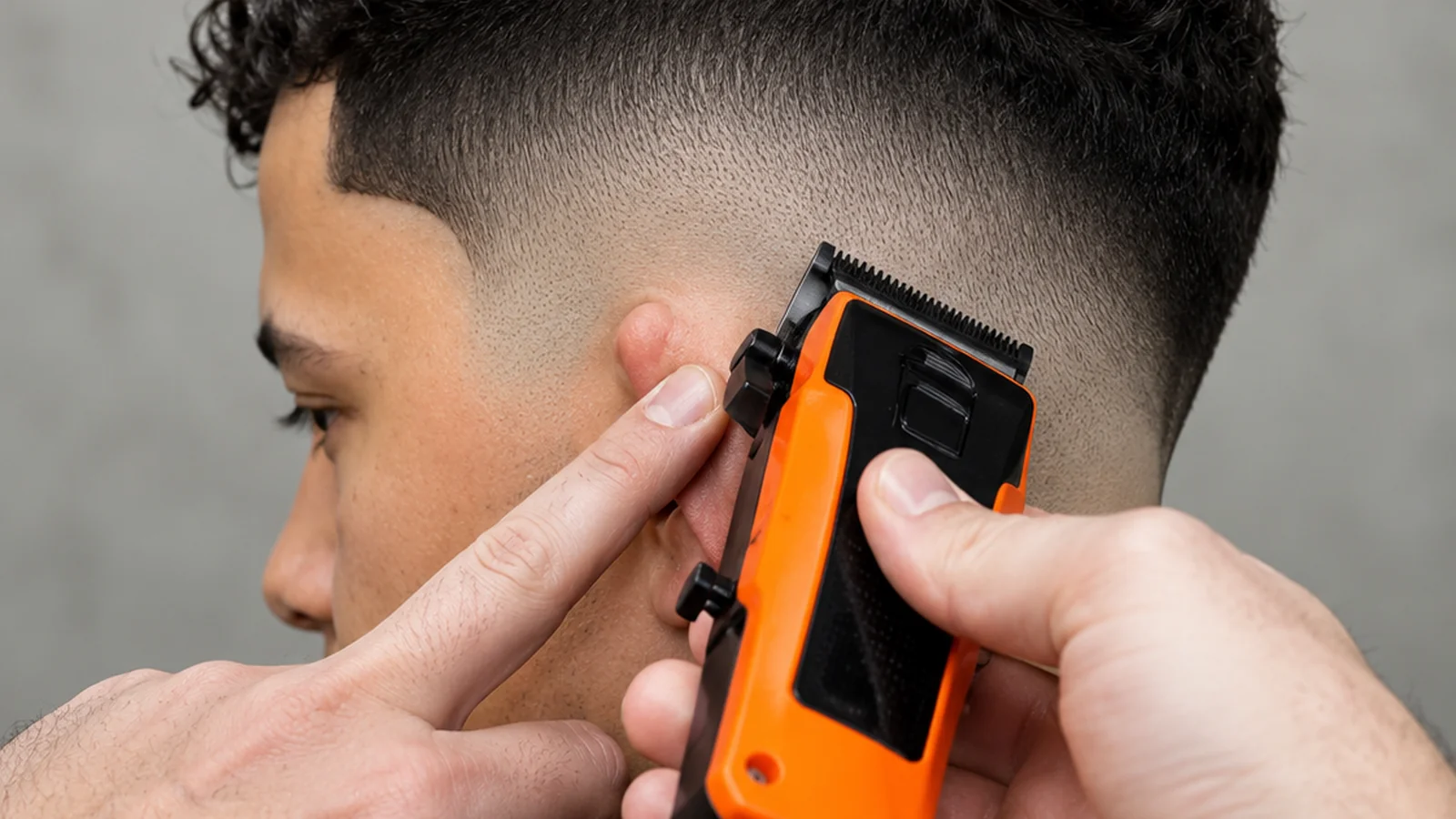
Drop into the nape
The curve continues past the ear and finishes at its lowest point at the nape, which is what separates this from a fade that stays level all the way around the head.
Finish & style the top
With the fade blended, the barber moves to the top, texturizing, point cutting, or scissor work depending on whether you're going for a quiff, comb-over, textured crop, or another top style.
Who it suits
By face shape
The drop height changes how the cut frames your jawline, which is why the right starting point depends on your face shape. Round faces usually want a higher drop for added length, while square faces can take a lower, subtler curve. Oval, heart-shaped, and long faces each have their own best-fit version, see the full breakdown for each.
By hair type
The fade itself works the same regardless of texture, it's the sides and back, not the top. Straight, wavy, and curly hair all take the drop cleanly, and it's especially popular for textured and afro hair, where the contrast against the curl pattern on top makes the drop line stand out even more. Curly and coarse textures do take longer in the chair, since the barber works in smaller sections and often uses a comb to guide the clippers.
Who should avoid it
- Very fine or thinning hair at the temples. The drop line has less density to work with there, and can look patchy rather than sharp.
- Strong cowlicks or growth patterns right behind the ear. These can fight the direction of the curve and take real skill to blend around cleanly.
- Anyone chasing the lowest possible maintenance. The curved line shows regrowth faster than a level fade, and still needs the same 2 to 3 week schedule to stay sharp.
- First time going to a new barber with no reference photo. The drop is easy to misjudge without a clear visual to work from, more so than a simple level fade.
Mid drop fade styles
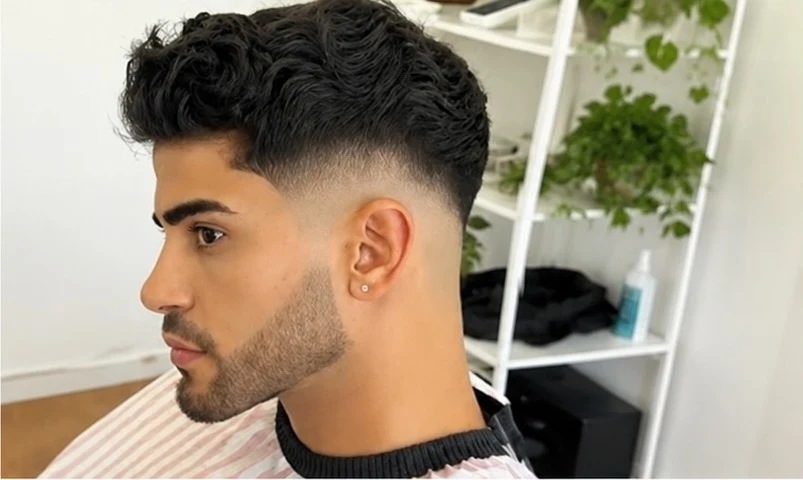
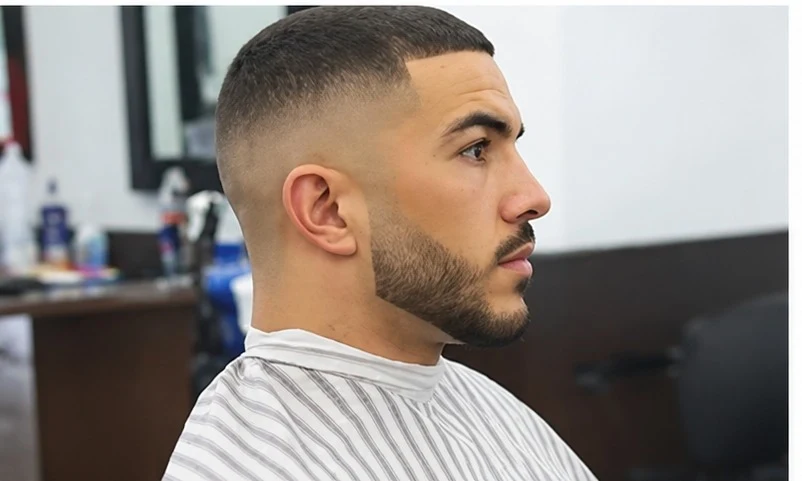
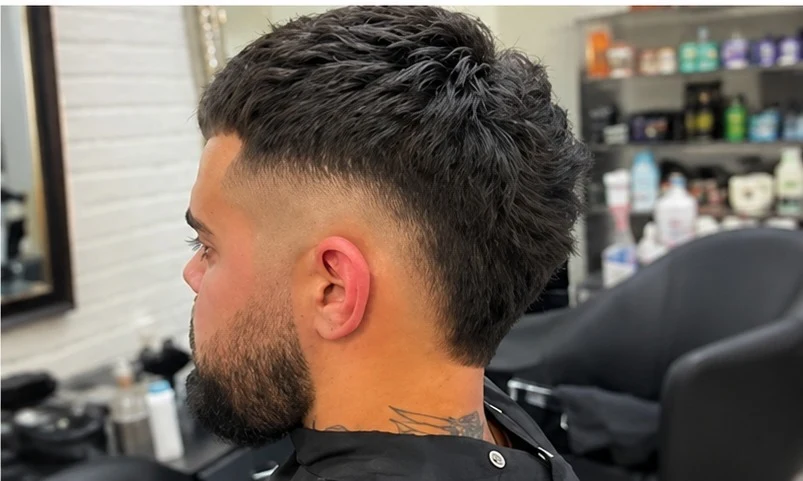
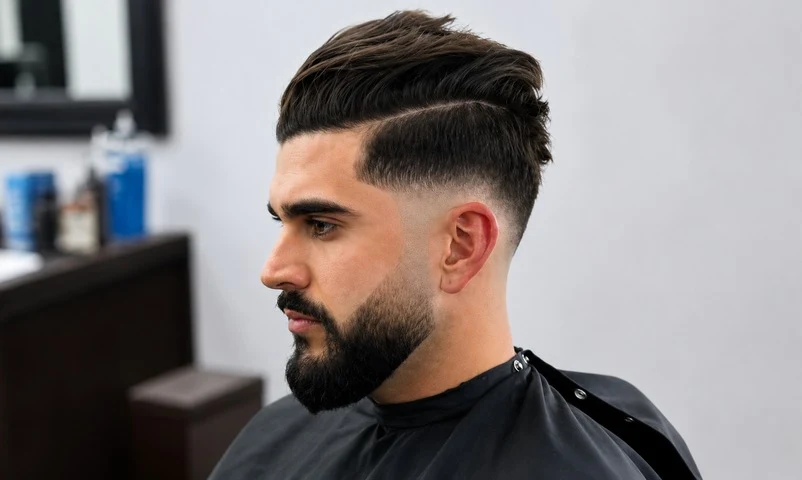
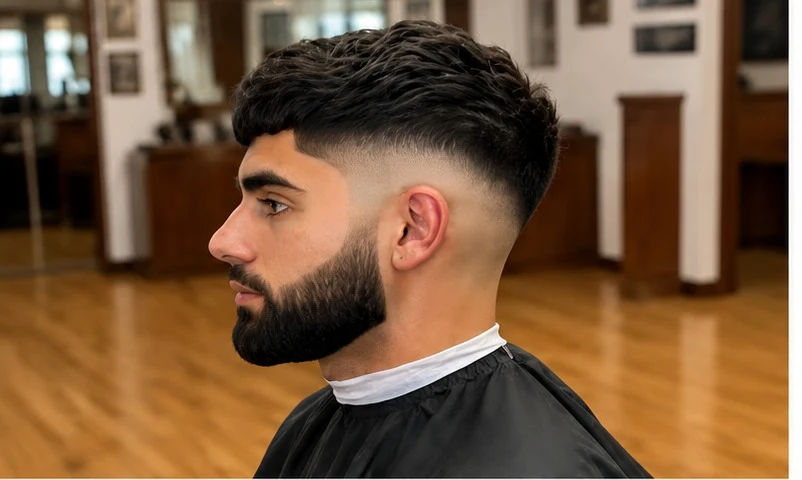
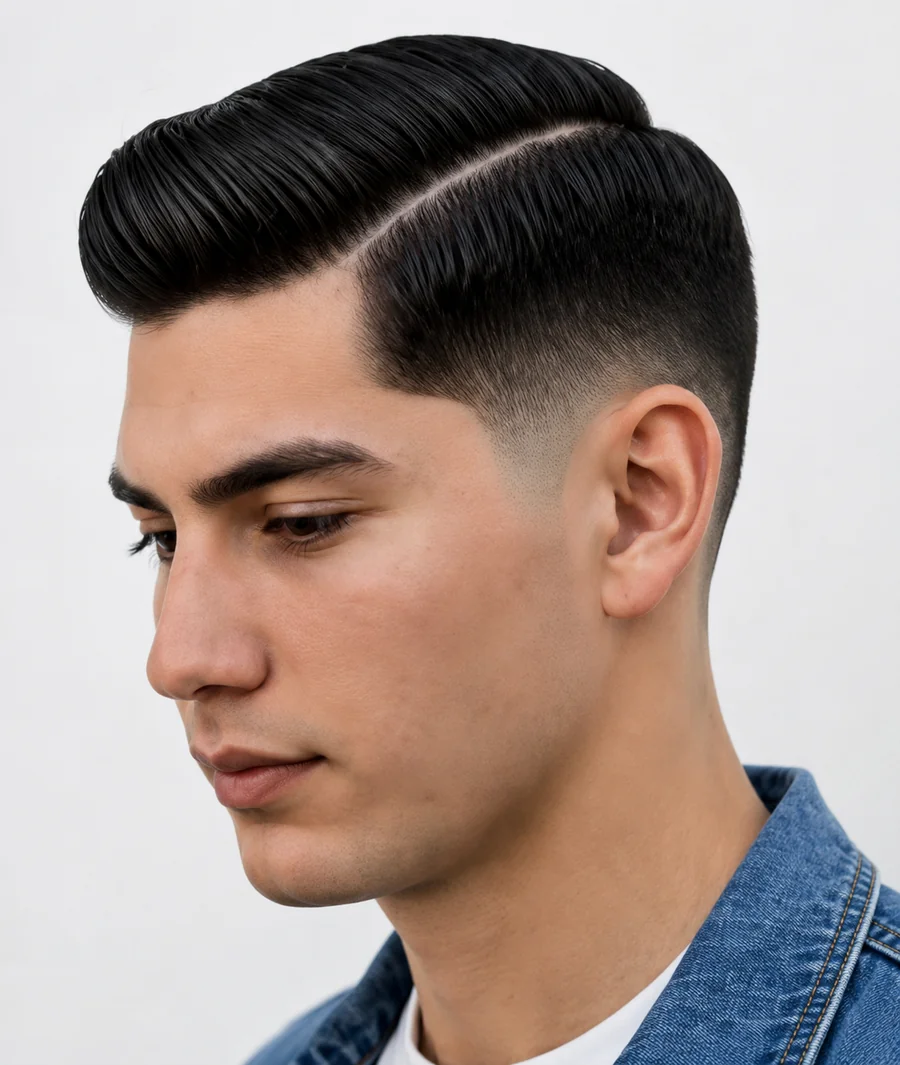
Mid drop fade sub-styles
Common mistakes
Going to a barber unfamiliar with drop fades specifically. A straight, level fade and a drop fade use a similar base technique, but the curve takes more practice to blend cleanly. Ask if the barber has done drop fades before, not just fades in general.
Not bringing a reference photo. Drop height and curve angle are easy to describe differently than what you picture. A photo removes the guesswork.
Waiting too long between touch ups. Because the drop line is curved rather than straight, it shows regrowth faster than a level fade. Stretching past 3 weeks is when the blend starts looking uneven rather than just a bit longer.
Ignoring your natural growth pattern. Cowlicks and hair whorls near the temple and behind the ear can distort how the drop sits. A good barber checks this during consultation, not after the clippers are already out.
Myths vs facts
Myth: A drop fade only works with short hair on top.
Fact: The drop only affects the sides and back. The top can be short, long, curly, or styled into a quiff, pompadour, or fringe. It is one of the most flexible fades for top length specifically.
Myth: It is the same as a burst fade.
Fact: A burst fade curves in a circular shape specifically around the ear. A drop fade is a longer, straighter diagonal line from mid temple down to the nape. They look similar at a glance but are cut differently.
Myth: You need thick hair for it to look good.
Fact: It works on fine and thick hair alike. Thinner hair may show the blend line slightly more, which is actually why an experienced barber matters more than hair density here.
Myth: It is a high maintenance haircut.
Fact: It needs the same 2 to 3 week schedule as any short fade. It is not more work than a standard fade, just a different shape.
Pros and cons
Pros
- Adds shape and contrast without needing a hard part or design cut
- Works with any hair type and most face shapes
- Pairs naturally with a beard fade
- Flexible with top length and styling, from buzzed to long and textured
Cons
- Grows out faster than a level fade since the curved line shows unevenness sooner
- Harder to execute well than a basic fade, so barber experience matters more
- Not the easiest to maintain fully at home between visits, especially the curve itself
Is a mid drop fade right for you?
Choose a mid drop fade if: you want more shape than a basic fade, you are comfortable with a barber visit every 2 to 3 weeks, and you like the option to pair it with a beard or a variety of top styles.
Consider a low drop fade instead if: you want a subtler, lower maintenance version of the same idea.
Consider a standard mid fade instead if: you prefer a completely level line with no curve, or want the simplest possible cut to explain to any barber.
Mid drop fade vs other fades
| Style | Key difference | Contrast | Best for |
|---|---|---|---|
| Low drop fade | Starts lower, drops less dramatically, a subtler taper overall. | Conservative, low-contrast looks | |
| High drop fade | Starts higher up, often near the crown, for a more dramatic drop. | Maximum contrast and edge | |
| Mid fade | Stays level all the way around, no curve or drop at all. | Clean, classic, no-fuss styling | |
| Mid taper fade | Tapers gradually rather than fading sharply to the skin. | Softer, more natural blend | |
| Burst fade | Curves around the ear in a circular burst instead of a straight drop. | Rounded, ear-focused shape | |
| Skin fade | Fades all the way down to bare skin rather than a short guard length. | Sharpest possible contrast |