Mid Drop Fade
For Kids
A mid drop fade for kids looks great, but it's cut in the two spots children hate being touched, and it needs redoing more often than most parents expect.
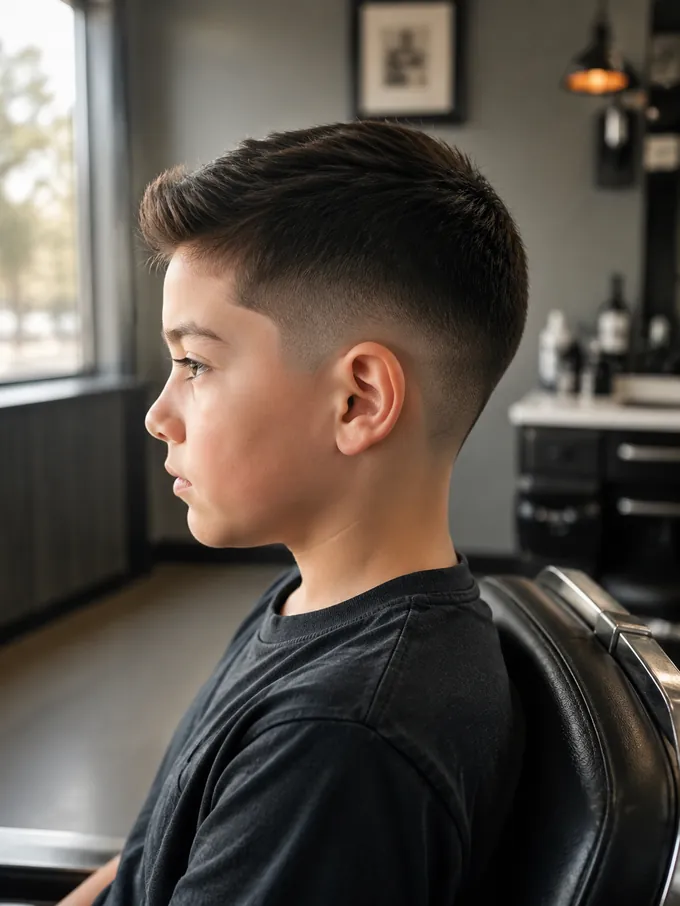
Is a mid drop fade good for kids?
A mid drop fade for kids is a smart, tidy cut that suits most hair types and passes school dress codes at guard length. The two things that decide whether it works are practical, not stylistic.
First, sitting still. The drop curve is cut behind the ear and down to the nape, the two areas children are most ticklish. It takes longer than a basic trim and requires a fairly still head for the fiddly part.
Second, the schedule. Most parents plan haircuts every 4 to 6 weeks. A fade wants every 2 to 3. A skin finish looks patchy inside two weeks. If a monthly visit is realistic and fortnightly isn't, ask for a lower, softer version, details below.
Why this cut is harder for a child than most
The area around the ears and the back of the neck is a common trouble spot for young clients: it tickles, the clippers are loud right next to the ear, and a child can't see what's happening.
A mid drop fade is cut almost entirely in that zone. The curve behind the ear is the hardest part of the haircut, it needs a still head, and it's the last bit a barber can rush. That's a genuine consideration that no style gallery mentions.
It's not a reason to avoid it. A barber comfortable with children will generally work the ticklish areas early, before attention runs out, rather than saving them for the end. It's worth choosing a barber who does that instinctively.
And if it goes badly, a good barber will stop rather than force it. A calm partial haircut you finish another day beats a complete one with tears, and it's worth knowing you're allowed to leave halfway.
Which mid drop fade for kids fits your schedule
Pick based on how often you'll genuinely get to the barber, not on which photo looks sharpest.
| Version | Stays tidy for | Best if |
|---|---|---|
| Mid drop skin fade | About 1 to 2 weeks | Rarely the right call for a child. Grows out patchy fast and often breaches school rules. |
| Mid drop fade, #1 bottom | 2 to 3 weeks | You can commit to roughly fortnightly visits and your child sits well. |
| Low drop fade, #2 bottom | 3 to 4 weeks | Monthly visits. Still has the drop curve, much softer contrast. The best all-round choice for most kids. |
| Drop taper | 4 to 6 weeks | You realistically manage every six weeks. No skin, no hard contrast, grows out gracefully. |
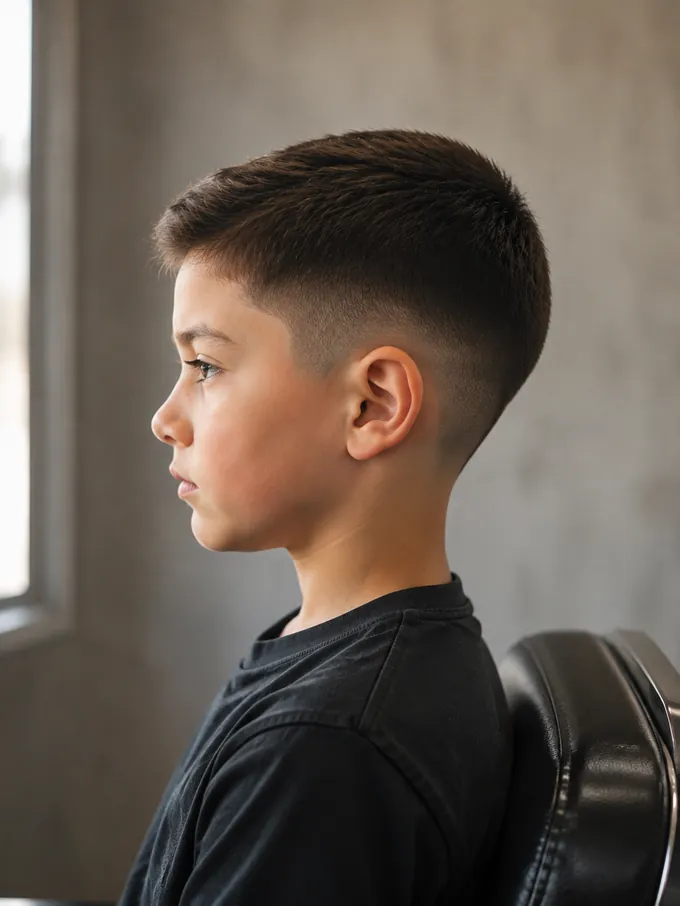
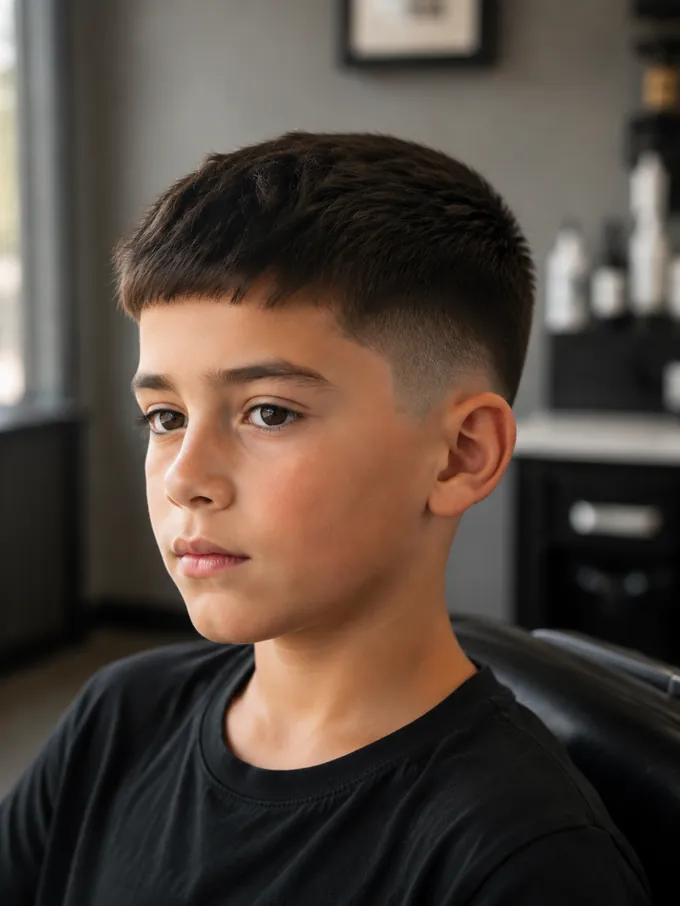
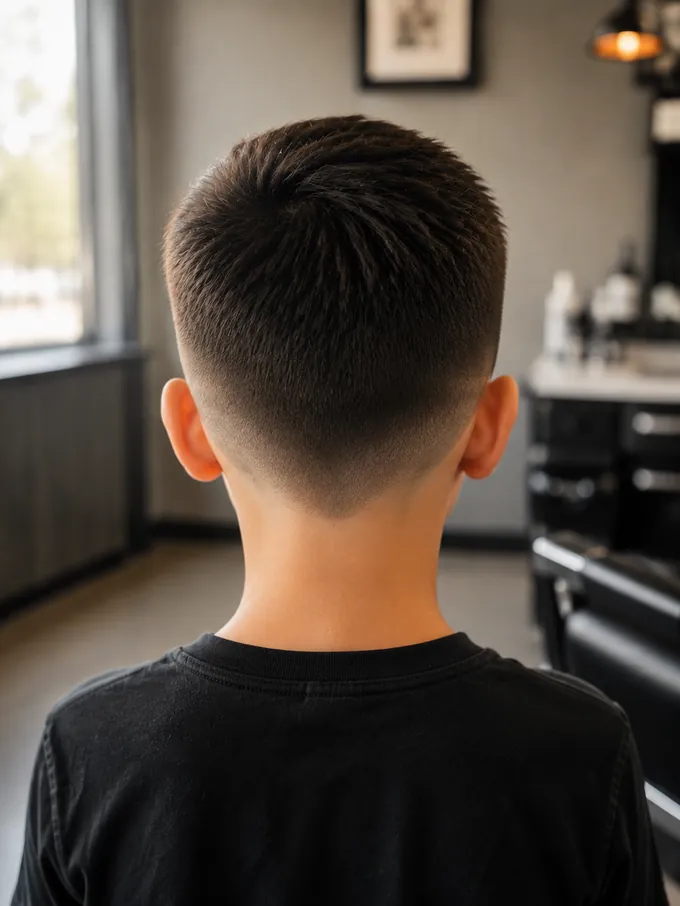
Mid drop fade for kids: three versions
How to make the visit go well
-
1
Book after a nap and a snack
Sounds obvious, gets forgotten. A tired or hungry child has no patience for the fiddly part, and the fiddly part is exactly what this cut needs. Mid-morning or early afternoon beats end of day.
-
2
Let them meet the clippers first
Ask the barber to switch them on across the room, then let your child feel them running against their palm before they go near their head. It turns a scary noise into something ordinary.
-
3
Keep the build-up low-key
Mentioning it casually the day before works better than making it an event. Enthusiastic "it'll be so new and different!" often lands as "something unfamiliar is about to happen," which is the opposite of reassuring.
-
4
Let them choose the photo
Showing them two or three options and letting them pick gives a child some control over something being done to them, which tends to make the visit go more smoothly.
-
5
Ask the barber to do the ears and neck early
This is the single most useful thing you can request for this cut specifically. Saying it out loud costs nothing and gets the ticklish part done while patience is still available.
-
6
Sit them on your lap if they're small
Completely normal for younger children, the barber capes you both. Most kids move to the booster seat by their second or third visit.
What it needs at home
Almost nothing, and that's the main argument for it. At guard length with a short top, there's no styling required, it looks the same whether your child touches it or not, which matters at 7am on a school morning.
Skip styling product entirely for younger children. It isn't needed on a short top, it transfers onto pillows and foreheads, and it's one more thing to argue about. If the top is longer, a pea-sized amount of light cream is plenty. If your child has curly or coily hair, the curl pattern changes how the fade reads, see the curly hair guide for specifics.
Wash two or three times a week unless they're filthy. Daily washing dries out the scalp, and near a fade dry skin shows up as flakes against short dark hair.
Watch the neckline, not the fade. The first thing to look untidy is the fuzz below the natural hairline. That's the bit you can tidy at home with a trimmer between visits, never the blend itself. The maintenance guide covers what's safe to touch.
Common mistakes parents make
- Asking for a skin fade because it photographs well. Photos are day one. By week two it's patchy, and many schools object to the contrast. Guard length is nearly the same look with none of the problems.
- Saying "don't move or she'll cut you." Said to keep a child still, it does the opposite, it introduces the idea that the haircut is dangerous. It's one of the most common things parents get wrong.
- Booking a general barber rather than one used to children. Patience matters more than skill here. A barber who is good with kids and average at fades beats a brilliant technician who rushes a wriggling child.
- Pushing through a bad appointment. Forcing a distressed child to finish teaches them that haircuts are something to dread, which costs you every future visit. Stopping early is a legitimate outcome.
- Choosing a fade you can't keep up. An overgrown fade looks scruffier than a longer cut that was never faded. Match the version to your actual schedule, not your intended one.
- Making them feel bad about a cut they don't like. If it went wrong, it isn't their fault, they may simply have been frightened. It grows back.
What to say to the barber
The standard request
"Mid drop fade, number one into a number three, not to skin. Start around mid-temple, drop the line behind the ear. Short and tidy on top, nothing that needs styling."
If your child is nervous
"He's a bit nervous, could you show him the clippers first, and do around the ears and neck early while he's still settled?"
If you can only get here monthly
"We can only come every four to six weeks, what would you recommend that still looks tidy at the end of that?"