Mid Drop Fade
Styles
The fade only shapes the sides and back. What you do on top is a separate decision, here's every option, what it needs, and exactly what to say in the chair.
Quick
answer
Mid drop fade styles cover a lot more ground than people expect, since the fade itself only shapes the sides and back. Pick based on how much daily effort you want, a buzz cut needs the least, curls and waves work with your natural texture, and a slick-back, quiff, or pompadour needs length, product, and a few minutes each morning.
The question that comes up most once someone understands what a mid drop fade actually is isn't "what is it," it's "okay, but what do I do with the top." This page breaks down each option so you can walk into the chair knowing exactly what to ask for.
Which Style Should You Actually Pick?
Growing a beard?
Any of these pair with one, but the beard line needs cutting in the same session as the fade, not treated as separate. See the beard section for details.
Hair fine or thinning on top?
A quiff or pompadour shows scalp fastest, since both need lift and separation that thin hair struggles to hold. A buzz cut is the opposite bet, cutting it short on purpose reads as deliberate rather than patchy, which is why a lot of guys with thinning hair choose it outright. Curls, waves, or a shorter line-up top land in between.
Not sure yet?
Start with the section below that matches your current hair length, that usually narrows it to two or three realistic options.
With a Beard
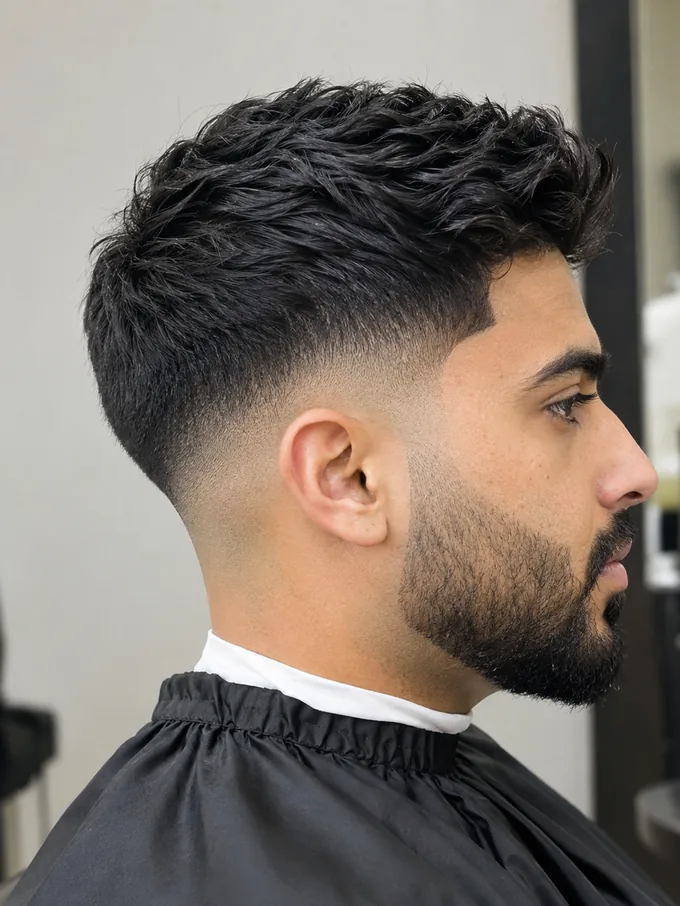
The fade's curve behind the ear gives a beard line something to continue into, instead of fighting a flat, level line the way it would with a standard fade.
The most common mistake, even from decent barbers, is treating the fade and the beard as two separate steps in the same visit. Clippers move side to side across the sideburn for the fade, then downward along the jaw for the beard, and when the direction doesn't match where the two meet, a visible stripe shows up. Ask for them to be blended together in the same pass, not touched up separately afterward.
Face shape matters less here than with other pairings since the beard itself does most of the shaping work. On a round face especially, a well-tapered beard adds enough definition along the jaw that the fade's job is really just to stay out of the way rather than do any corrective work of its own.
"Blend the fade and beard line in the same pass, and match the beard's cheek line to the fade's curve instead of cutting it straight across."
Quiff
This one puts the volume at the front while the sides stay closely faded with nothing competing for attention.
"Quiff" means different things to different barbers, which is the actual problem with this pairing more often than the cut itself. Some read it as a small upward flick at the front, others read it as a full pompadour-adjacent sweep. Bring a photo. It's the single fastest way to avoid leaving the chair with something closer to a pompadour than what you asked for.
This works best with medium to thick hair since a proper quiff needs enough density to hold its shape without constant product touch-ups through the day.
"I want a quiff, not a pompadour," and show them a reference photo before they start cutting length.
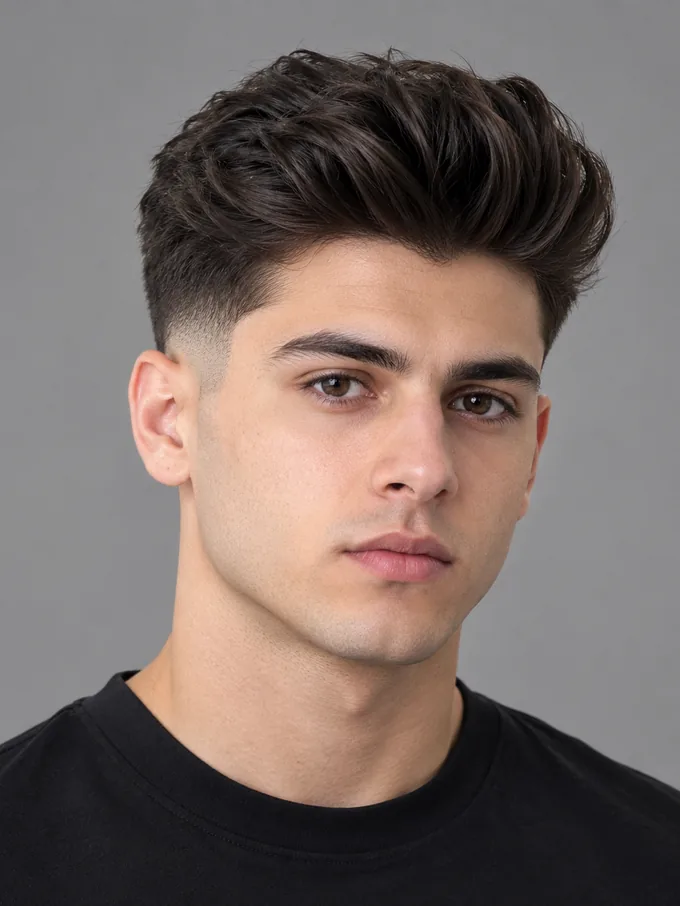
Pompadour
The pompadour is the quiff's bigger sibling, more volume, more length, more of a statement.
On its own, a pompadour can read a bit retro. The mid drop fade underneath fixes that, a tightly curved drop on the sides makes it read current instead of throwback.
This needs medium to thick hair to hold real height, and it needs daily styling, a blow dryer and a strong-hold product, not just combing it up and hoping it stays. If you're not willing to spend a few minutes on it most mornings, a line-up or comb-over will suit your routine better.
"Leave several inches of length at the front for a pompadour, and keep the fade tight enough to contrast with that height." Exact length depends on your hair's density and growth, your barber can tell you what's realistic for yours.
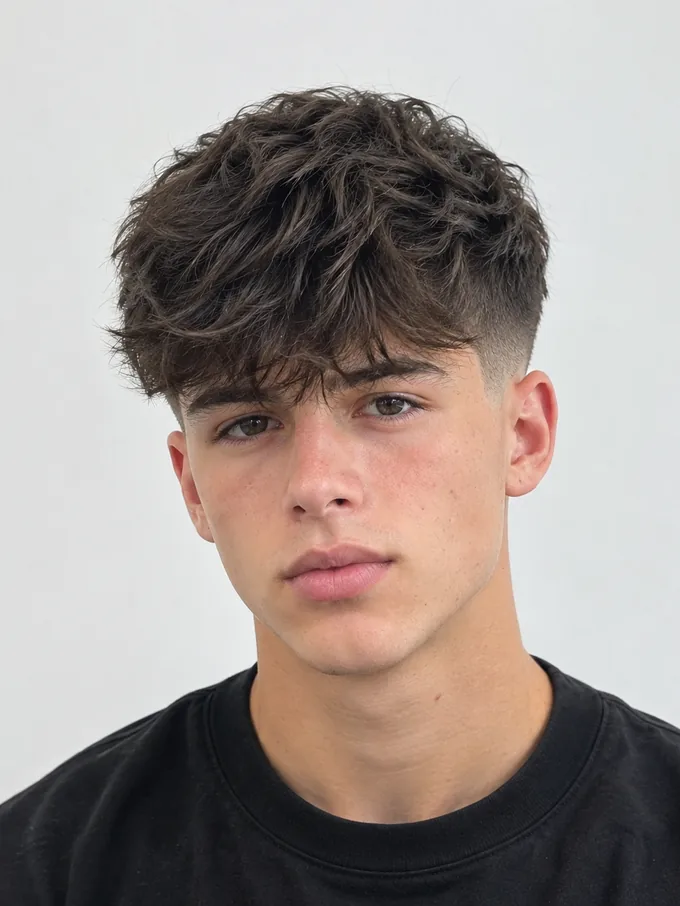
Fringe
This one sends the top in the opposite direction of a quiff or pompadour, hair swept forward instead of up and back, settling just above or across the brow.
This is the lowest-maintenance of the longer-top styles since it doesn't fight gravity the way a quiff does. Wavy or curly hair breaks the fringe up into a softer, more textured shape. Straight hair gives a sharper, more deliberate line.
"Leave the front section long enough to fall forward past the brow, and keep the fade curve tight behind the ear so the two contrast clearly."
Curls
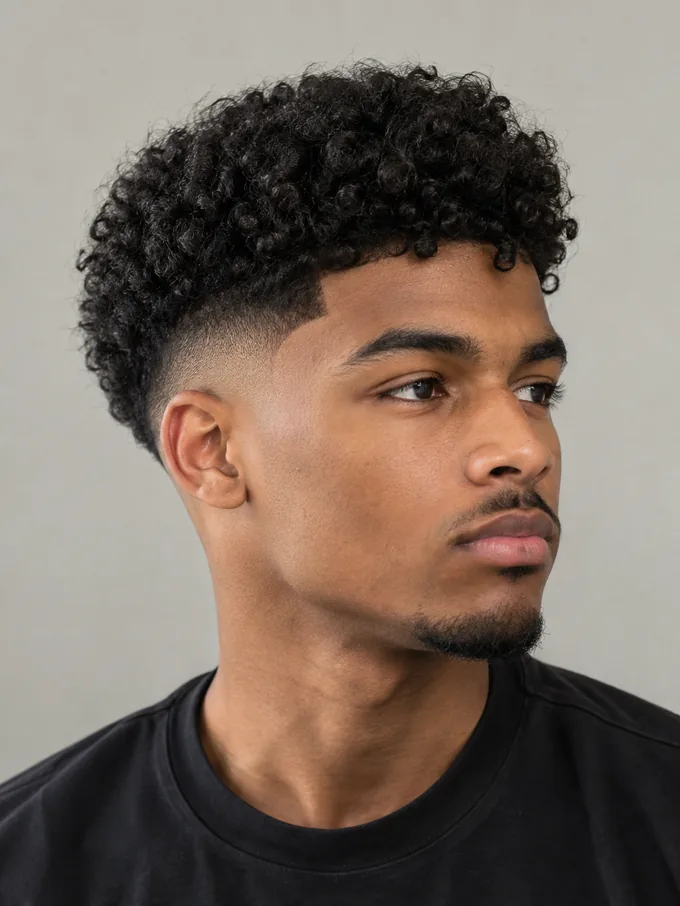
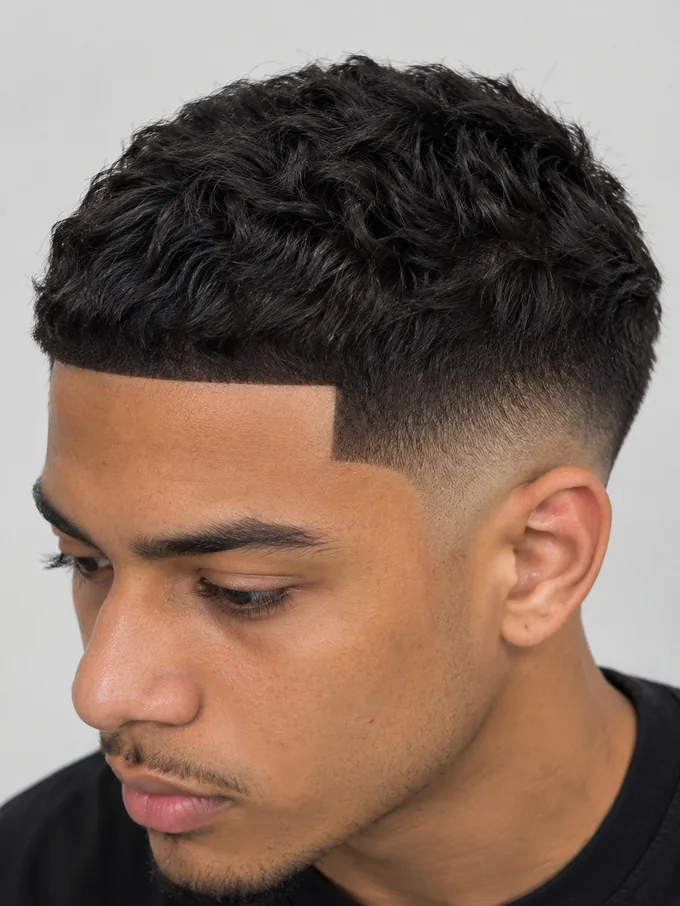
If your hair is naturally curly, this is likely your easiest option, it works with what you already have instead of asking you to fight it every day.
The short, faded sides give curls room to be the visual focus instead of competing with bulk everywhere. The tradeoff is the drop line reads a little softer through curly hair, since the curl pattern blurs sharp edges naturally. Length matters more here than with other textures, cut too short and curls lose shape entirely, ending up as fuzz rather than defined curls.
"Leave more length on top than you would for straight hair, curls need room to actually curl."
Waves
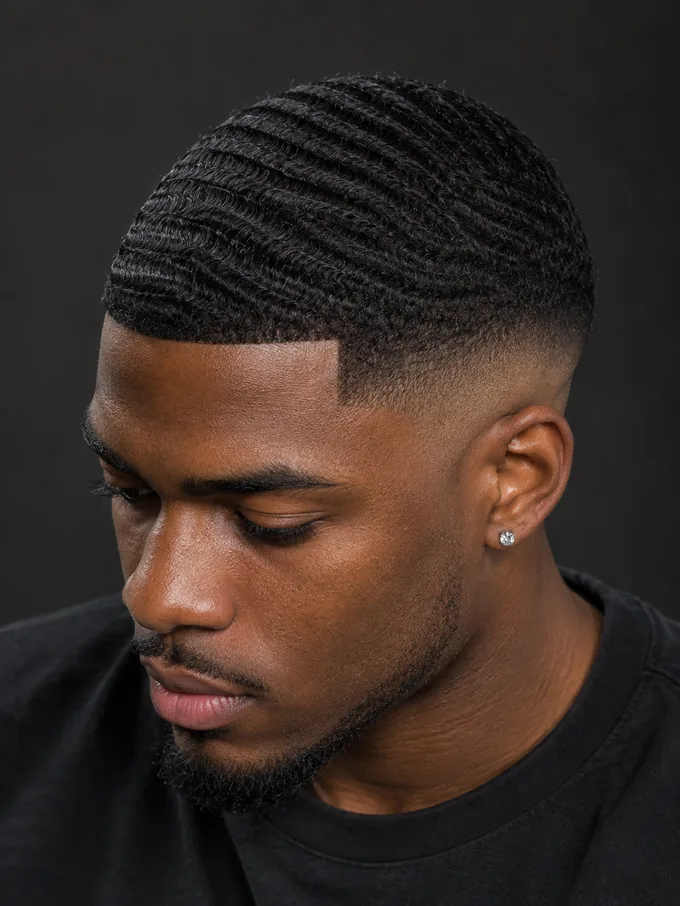
Waves take real ongoing effort to build, and that's worth understanding before you commit to them.
The rippled pattern isn't something a barber cuts in during one visit, it builds up over weeks through consistent brushing, usually with a durag at night to hold the pattern while you sleep. The haircut just provides the short, even length the pattern needs to actually show. What the fade contributes here is contrast, it keeps the sides clean so the wave pattern on top reads more defined against them.
If you're not already brushing regularly, expect a few weeks before this looks like the wave photos you've seen, not an overnight result from one haircut.
"Keep the sides tight and out of the way, I'm building a wave pattern on top and need the length there left alone."
Comb-Over
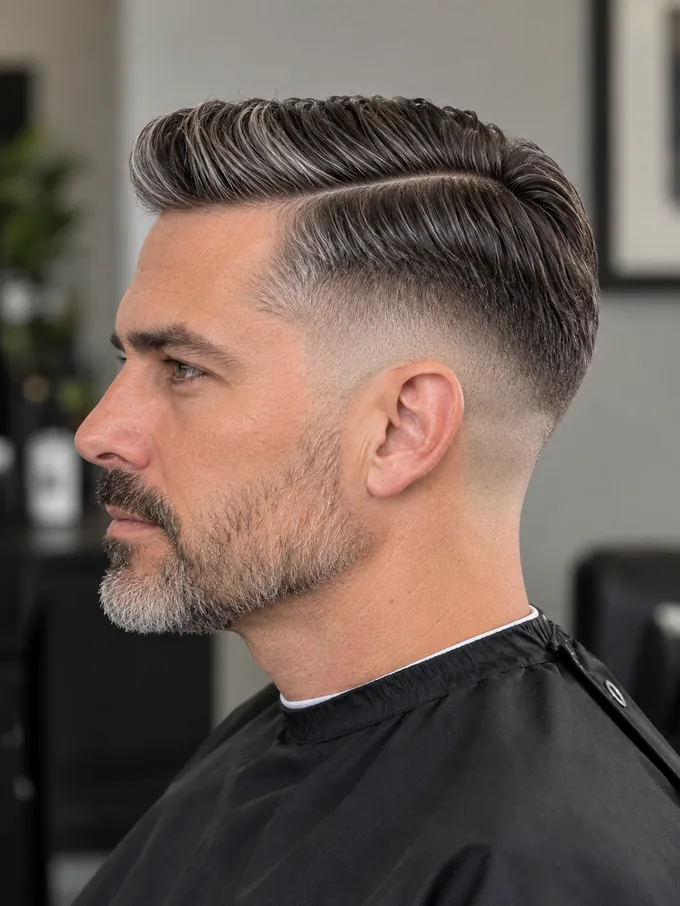
Low daily effort, sharp look, works in almost any professional setting, the comb-over with a hard part is a classic pairing for a reason.
A hard part is a shaved line separating the comb-over from the fade, and it sharpens the whole look considerably, though it needs touch-ups roughly as often as the fade itself to stay crisp. Without the hard part, this is genuinely one of the lowest-maintenance styles here, a comb and a small amount of product most mornings is usually enough.
"A comb-over with a hard part, keep the part line clean and matched up with where the fade starts."
Line-Up
A line-up is really a finishing detail more than a top style of its own, front hairline, temples, sideburns, cut with a trimmer or straight razor rather than blended like the fade itself.
It pairs with almost any of these top styles, a quiff, curls, a fringe, which is why it's worth its own decision rather than an afterthought. A sharp line-up keeps a cut looking freshly done for days, even after everything else has softened.
"Add a line-up along the front hairline and temples, sharp edge, not blended."
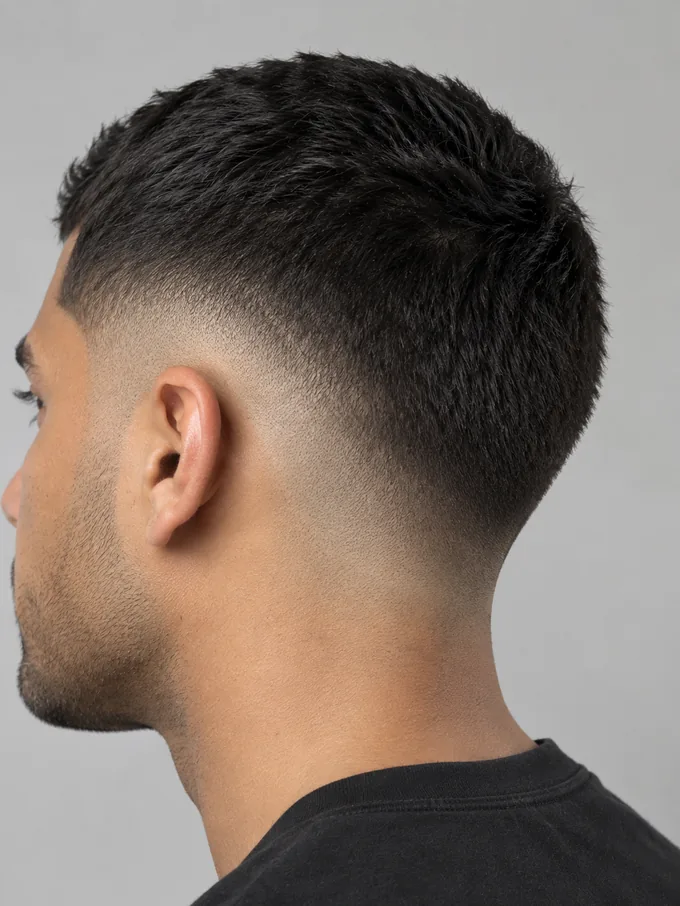
Buzz Cut
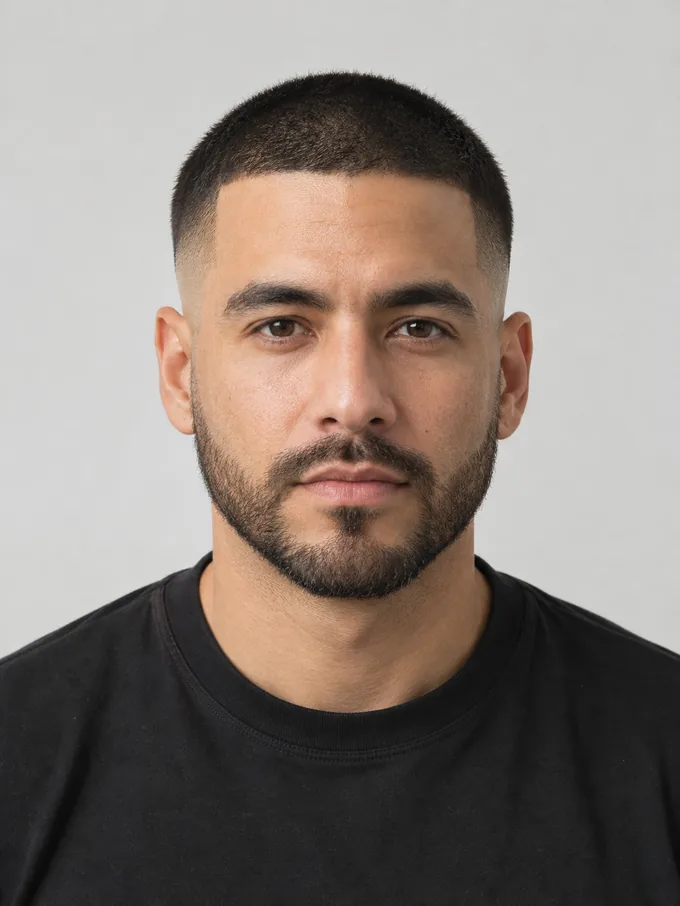
An even, short length across the top with the mid drop fade doing all the visual work on the sides, this is about as low-effort as this cut gets.
There's nothing to style day to day beyond a quick towel-dry. The tradeoff is the fade itself has to be cut cleanly, since there's no length on top to distract from an uneven blend. This is also the most forgiving option if you have a nape cowlick or a stubborn growth pattern, since there's nothing long enough on top for it to disrupt.
"A short, even guard length on top, a 2 or 3 depending on how much length you want, with the mid drop fade blending in cleanly at the sides."
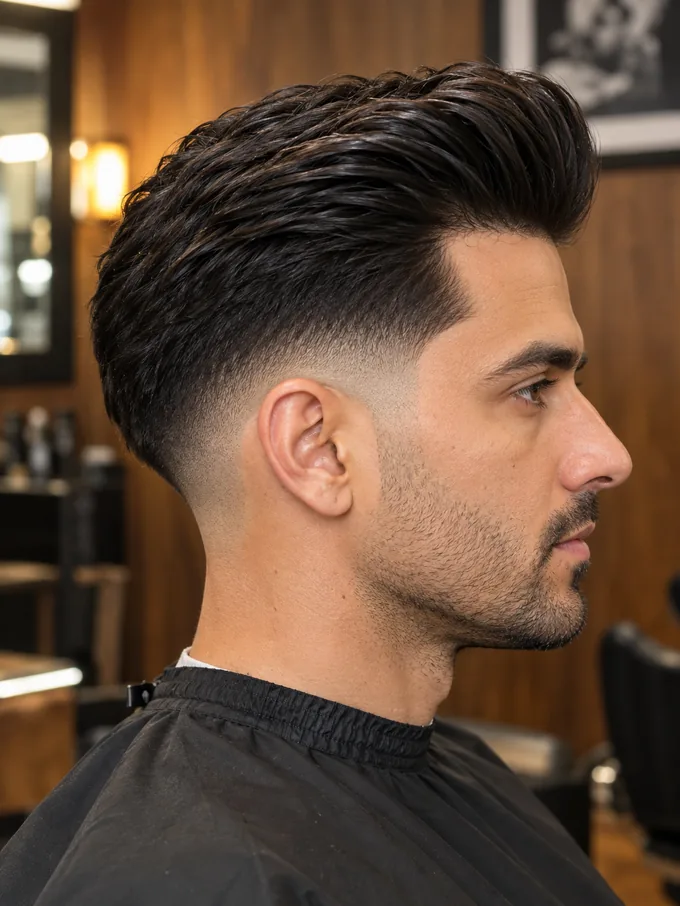
Slick-Back
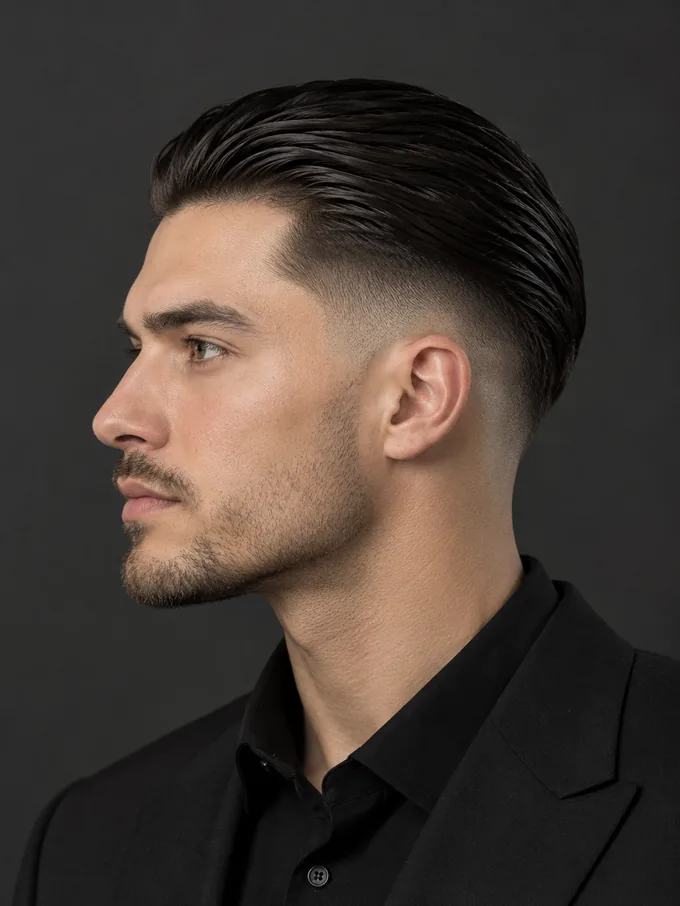
Hair combed straight back off the face, held flat with product, for a formal, polished finish that reads well in professional settings.
This needs enough length on top to actually lie flat once combed back, usually a few inches at minimum, and a strong-hold pomade or gel rather than a lighter cream. Fine hair holds a slick-back less predictably through the day than thicker hair, expect to touch it up if you're out for a long stretch.
"Leave enough length on top to comb straight back, and keep the fade tight enough that the slicked-back top has real contrast against the sides."
Frequently
asked
Does the mid drop fade work with any top style?
Can I switch between these styles without changing the fade?
Does a beard change which top style I should pick?
How often do I need a touch-up with these styles?
How do I make sure my barber understands which style I want?
Fade Line is an independent grooming resource, not a barbershop. For cutting advice specific to your own hair, a licensed barber is always the better call.