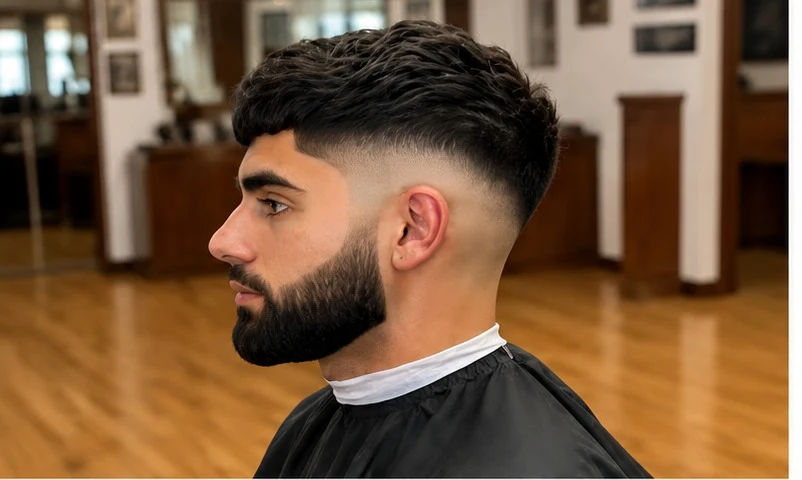
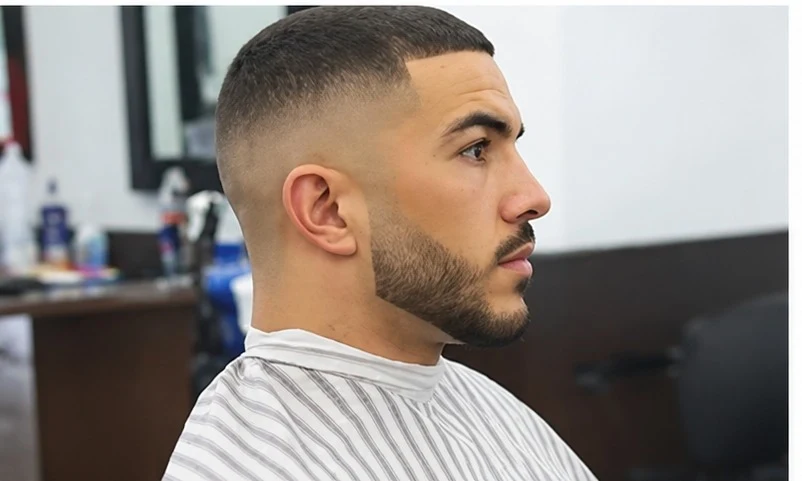
Mid Drop Fade
Black Men
A mid drop fade for Black men creates the sharpest possible contrast against tightly coiled or textured hair.

Why it
works
A mid drop fade on Black men's hair tends to produce the most dramatic version of this cut, simply because tightly coiled and textured hair creates the densest possible contrast against a faded or skin level side. The curve of the drop line shows up clearly even at very short lengths, which is part of why barbers often take the sides down to skin for this combination rather than leaving any guard length.
This hair type also opens up styling options that straight or wavy hair simply cannot replicate, like 360 waves, twists, or sponge curl patterns on top, all of which pair naturally with a clean drop fade on the sides.
The main consideration is moisture. Tightly coiled hair loses moisture faster than other textures, so keeping it looking sharp between cuts depends more on consistent care than it does for any other hair type covered in this guide. A daily leave in conditioner or hair butter goes a long way toward preventing the dryness and breakage that tightly coiled hair is naturally more prone to.
Recommended variations
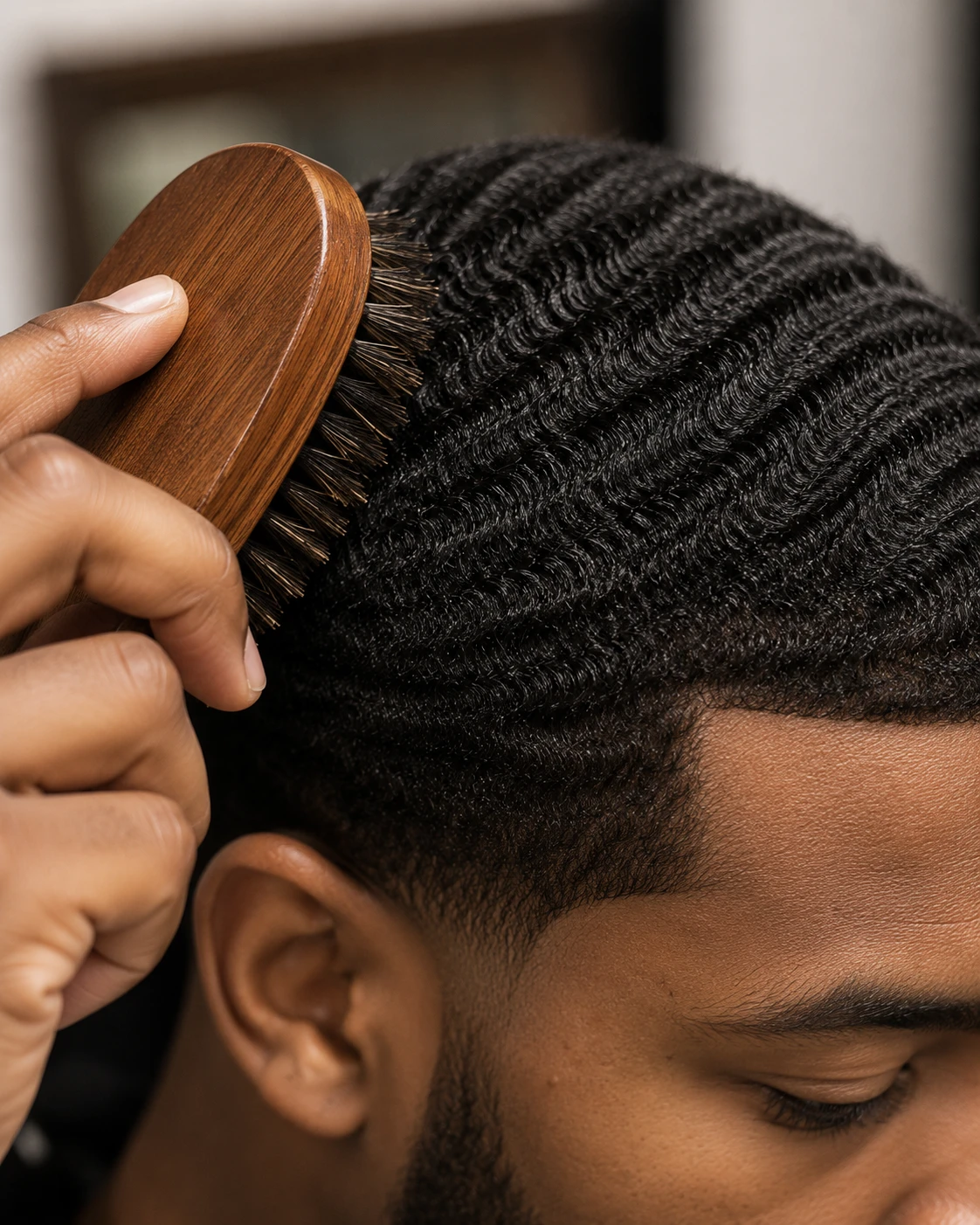
The classic pairing. A brushed 360 wave pattern against a clean drop fade reads instantly recognizable.
A full, well shaped beard balances the density on top and is one of the most requested combinations.
A crisp, sharp line up matters even more here, since it is a key part of the cut's overall definition.
Styling guide for this hair type
- Start with clean, product free hair. Whether you are going for waves, twists, or a natural curl pattern on top, styling holds better when the hair is freshly washed and fully dry, or at least towel dried, rather than damp.
- For a wave pattern: apply a light layer of wave pomade, then brush in one consistent direction for two to three minutes per section. Finish with a durag or wave cap, and repeat nightly. Waves are built up over days and weeks of consistent brushing, not created in a single session.
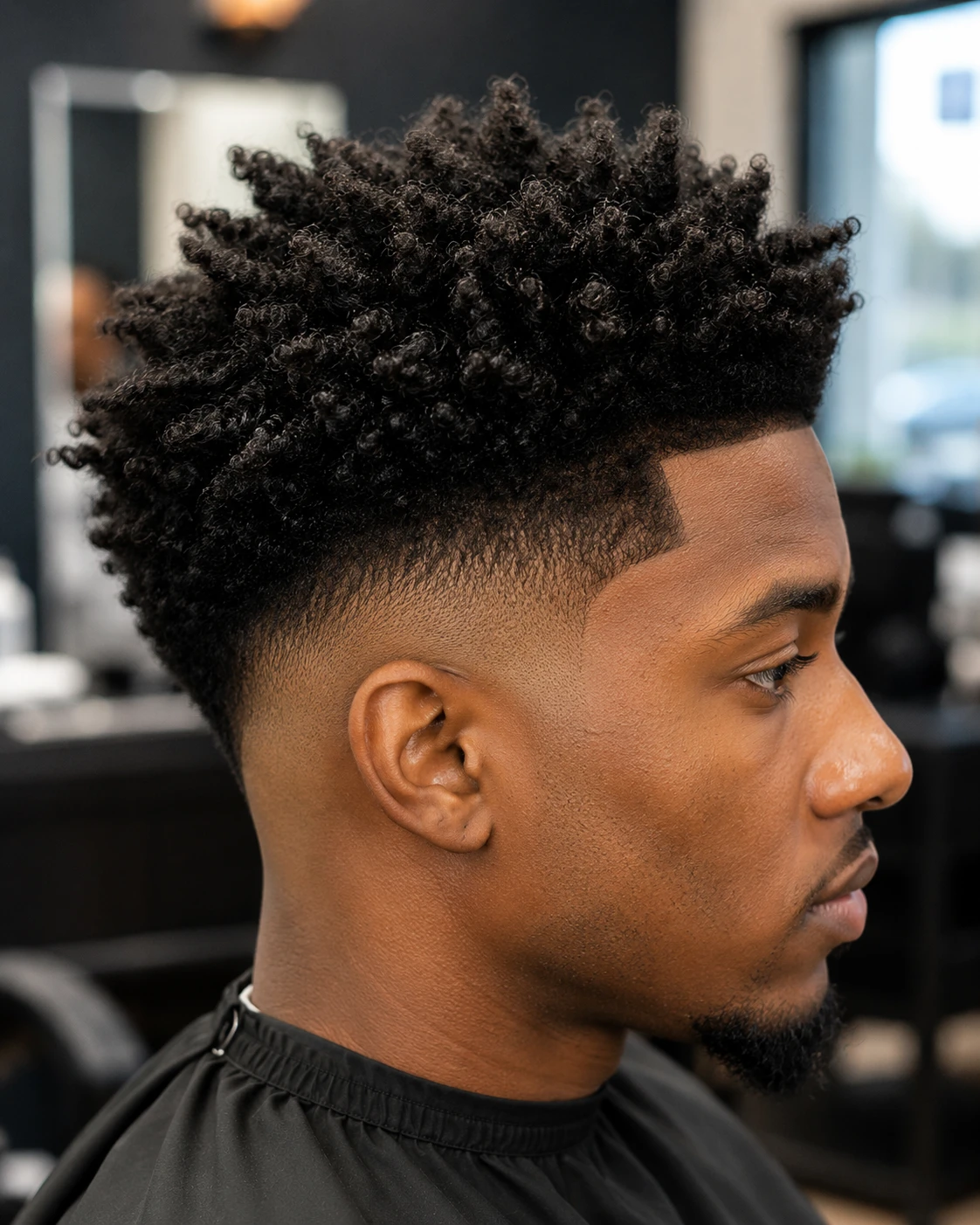
- For twists: section damp hair, apply a twisting cream or butter to each section, and twist from root to tip. Twists can be left in for several days between restyles and tend to hold up well against the fade underneath.
- For a natural curl or afro top: apply a curl defining cream while hair is still damp, then let it air dry or diffuse on low heat. This keeps the curl pattern intact rather than pulling it loose with a towel.
- Refresh the line up between cuts. A shape up at home, or a quick visit to the barber for just the hairline, keeps the front edge looking clean even if the rest of the cut is a week or two past due.
What to avoid
- Skipping moisturizing products. Tightly coiled hair dries out faster than other textures, and dry hair shows far more than it does on other hair types.
- Letting wave patterns lapse. If you are doing 360 waves, the pattern needs regular brushing and a durag to maintain, or it fades within days.
- Going too short without shape. Cutting everything to one uniform short length, with no defined drop, can look flat rather than intentional.
- Brushing too aggressively. Hard, forceful brushing to speed up a wave pattern can cause breakage over time. Consistent, gentle brushing works better than occasional heavy brushing.
- Using heat tools without protection. If diffusing or blow drying a curl pattern on top, a heat protectant reduces the dryness and breakage risk that tightly coiled hair is already prone to.
Myths vs facts
Myth: This cut only works if you already have waves.
Fact: The drop fade works with any top style on textured hair, including twists, an afro, or a simple short natural cut. Waves are one popular option, not a requirement.
Myth: Textured hair does not need as much product as other hair types.
Fact: The opposite is usually true. Tightly coiled hair tends to need more consistent moisturizing than straight or wavy hair, since natural oils travel down the hair shaft less easily.
Myth: A skin fade is required for this hair type.
Fact: A skin level fade is common because it maximizes contrast, but a short guard length works too. It is a preference, not a rule.
Myth: You need to visit the barber weekly to keep it sharp.
Fact: The standard 2 to 3 week schedule applies here too. What often needs more frequent attention is just the front hairline, not the whole cut.
Pros and cons
Pros
- Produces the sharpest possible contrast of any hair texture covered in this guide
- Opens up styling options unique to textured hair, like waves and twists
- Pairs especially well with a full beard
- Works on a normal 2 to 3 week maintenance schedule, same as any other fade
Cons
- Requires more consistent moisture care than straight or wavy hair to avoid dryness
- Wave patterns specifically need daily brushing and durag use to maintain
- The high contrast look is less forgiving of an uneven or inexperienced fade
Is this combination right for you?
Good fit if: you want the highest contrast version of this haircut, you are willing to keep up a daily moisture and styling routine, and you like the idea of pairing it with waves, twists, or a beard.
Consider a shorter top instead if: you want the lowest possible daily maintenance and are not interested in building a wave pattern.
See also: the general curly hair guide if your texture is looser and less tightly coiled, since the care routine differs slightly.
Mid Drop Fade Black Men Gallery