Mid Drop Fade
vs Skin Fade
A skin fade looks sharper on day one and worse on day five. See both on the same head, plus the middle option most guides never mention.
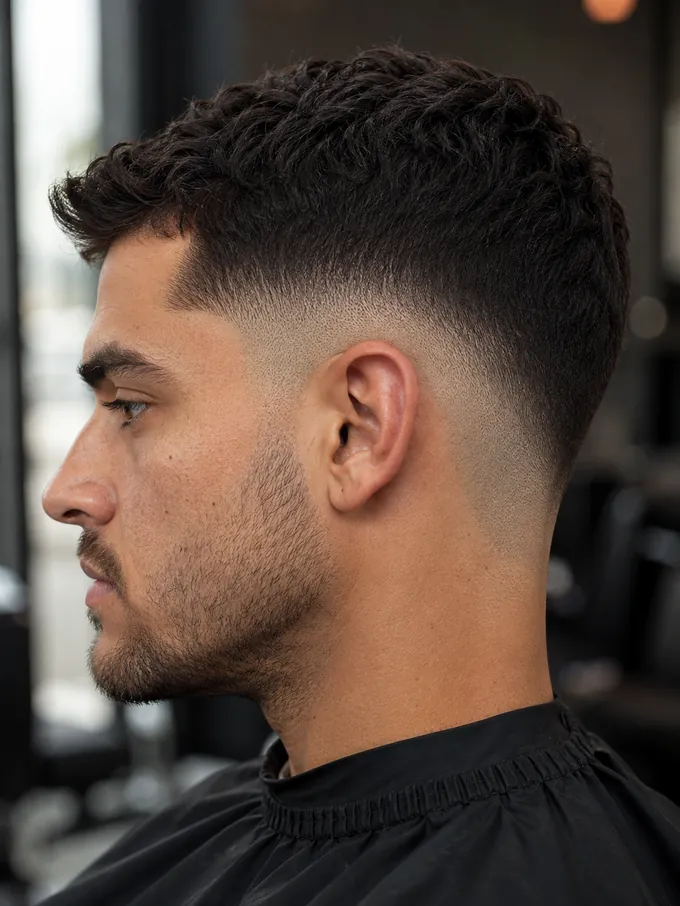
Mid drop fade vs skin fade: the difference
A mid drop fade finishes at a guard length, usually a #1 (3mm) or #0.5 (1.5mm), so a layer of hair still covers the scalp at the shortest point. A mid drop skin fade removes that last layer entirely, down to bare scalp, using no guard and finishing with a foil shaver or razor.
Everything else about the two cuts is identical. Same drop curve behind the ear, same blend, same height, same top. The only variable is whether the bottom of the fade is hair or skin.
What that one millimetre buys you: maximum contrast and the sharpest possible definition of the drop line. What it costs you: visible regrowth within days, a rebooking cycle of 1–2 weeks instead of 3, and a scalp that now needs looking after. Whether that trade is worth it is the whole decision.
Mid drop fade vs skin fade, side by side
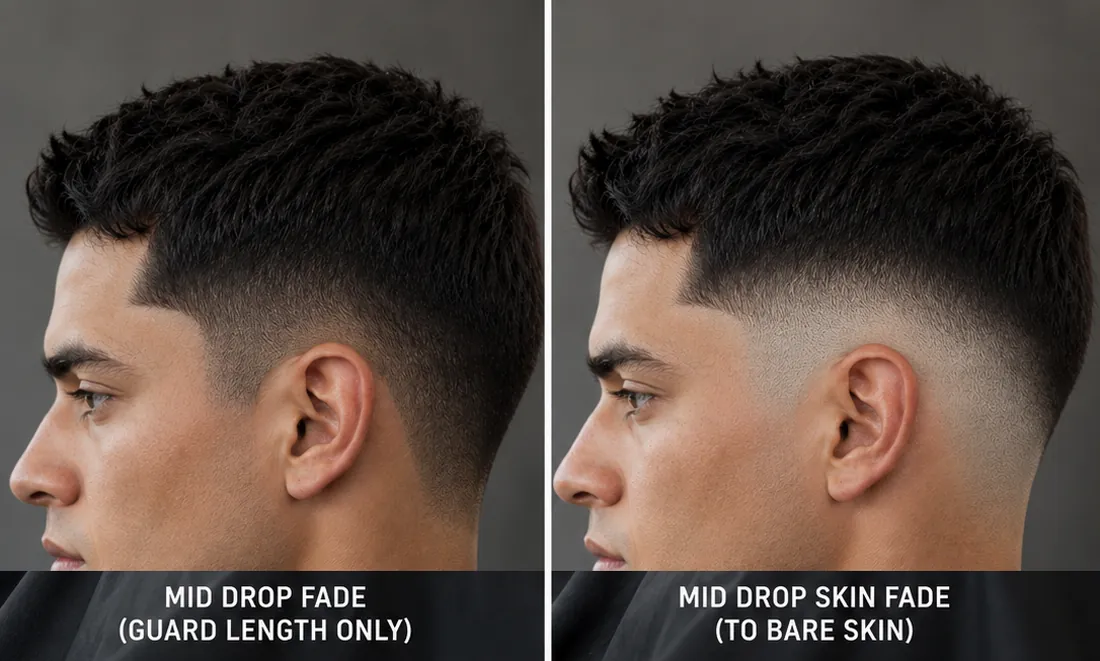
Worth saying honestly: in a photograph the difference looks smaller than it does in person. Standing next to someone, bare scalp catches light in a way that stubble doesn't, and the contrast reads much stronger. The image below is where the real difference shows.
What a skin fade looks like five days later
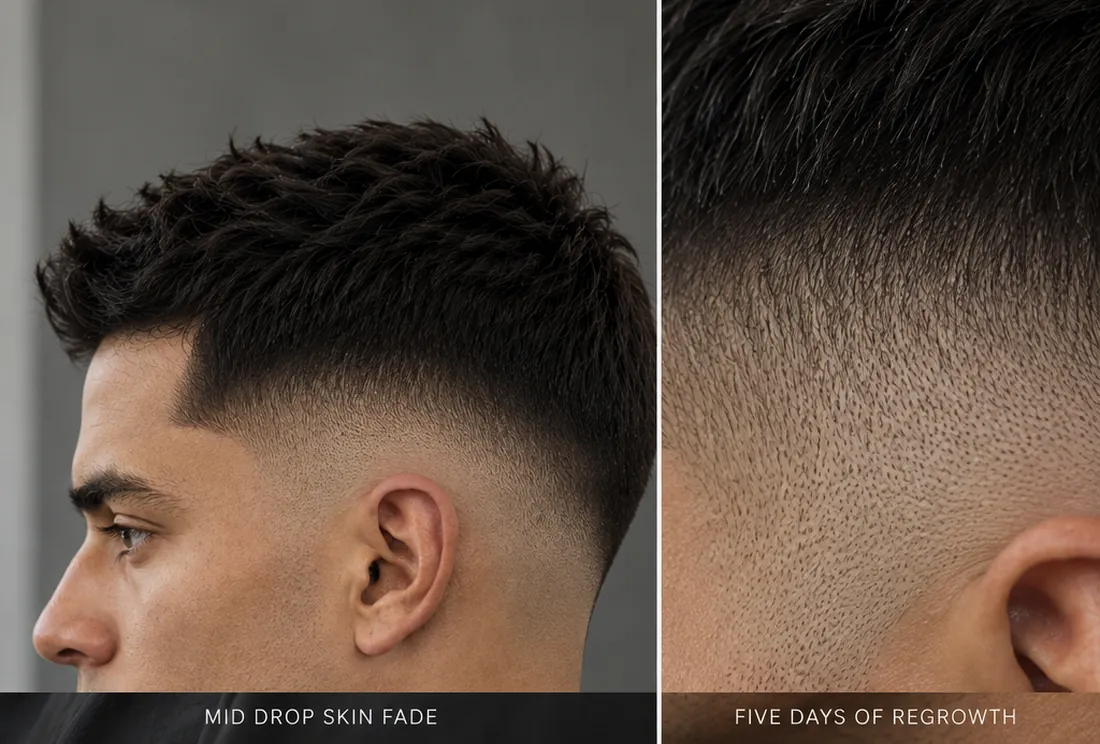
Why regrowth matters more on a skin fade
A fade is built on the difference between two lengths. Regrowth closes that gap — and when the bottom starts at zero, every millimetre of growth is proportionally enormous.
Go from 3mm to 4mm on a guard-length fade and almost nothing changes visually. Go from 0mm to 1mm on a skin fade and you've gone from bare scalp to visible stubble. That's not a subtle shift; it's a different look, and it happens in under a week.
This is why competitor guides quoting "2–3 weeks" for a skin fade are being generous. It stays genuinely crisp for about five days, looks fine for another week, and by day fourteen the thing that made it a skin fade has grown back. Barbers who cut them daily generally recommend 1–2 weeks.
The maintenance guide covers the full week-by-week for a standard fade, which holds noticeably longer.
There's a middle setting
You don't have to choose between skin and a #1. A #0.5 — sometimes called a zero fade or shadow fade — sits between them, and for a lot of people it's the right answer.
At 1.5mm you get a dark shadow at the base rather than bare scalp. The contrast is nearly as strong as a true skin fade, the drop line still reads sharply, but regrowth blends in instead of announcing itself. Rebooking goes from 1–2 weeks to 3–4.
It's also the safer option if you're new to close fades, have sensitive skin, or have scalp marks you'd rather not put on display. Most barbers will know exactly what you mean if you ask for "a zero rather than a skin — leave a shadow at the bottom."
Nearly every comparison guide treats this as a binary choice. It isn't, and the middle setting is the one most people actually want.
Mid drop fade vs skin fade compared
| Attribute | Mid Drop Fade (guard) | Mid Drop Skin Fade |
|---|---|---|
| Shortest length | #1 (3mm) or #0.5 (1.5mm) | Bare skin, 0mm |
| Tools used | Clippers and guards only | Clippers, then foil shaver or razor |
| Contrast | Strong | Maximum possible |
| Drop line definition | Clear | Sharpest — the bare scalp defines the curve |
| Stays crisp for | 2–3 weeks | About 5 days |
| Rebook every | 2–3 weeks | 1–2 weeks |
| Yearly cost at $40/cut | ~$680 before tips | ~$1,040 before tips |
| Often priced | Standard fade rate | $5–10 / £3–5 higher — see cost guide |
| Scalp care needed | Light | Real — sun, dryness, irritation all become factors |
| Suits thinning hair | Better — keeps coverage | Poorly — contrast highlights sparse areas |
| Dark hair on light skin | Good contrast | Most dramatic combination there is |
| Conservative workplaces | Fine almost anywhere | Can read as bold, depending on the office |
The detail that separates them
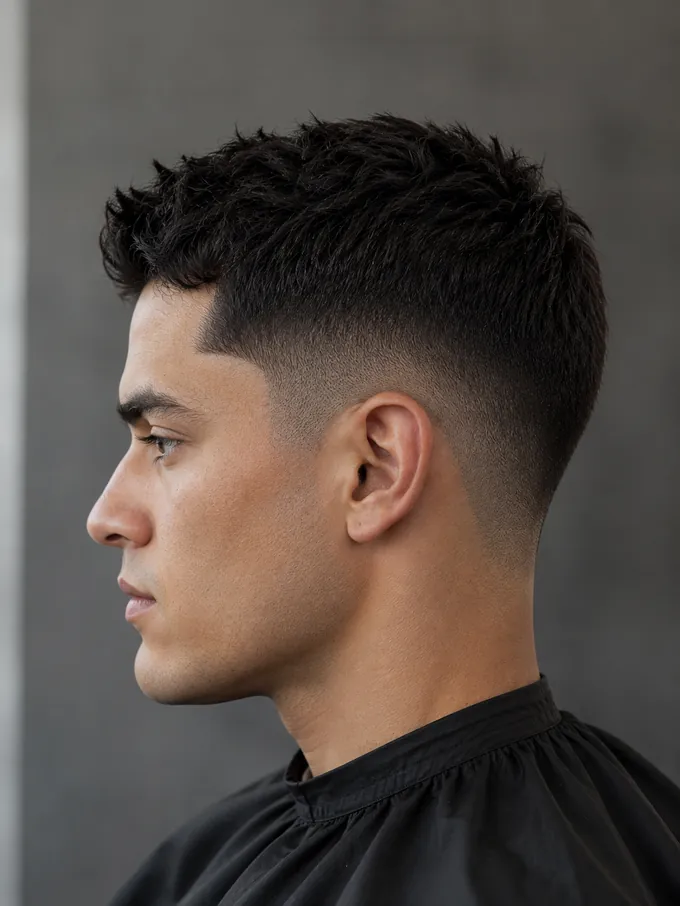
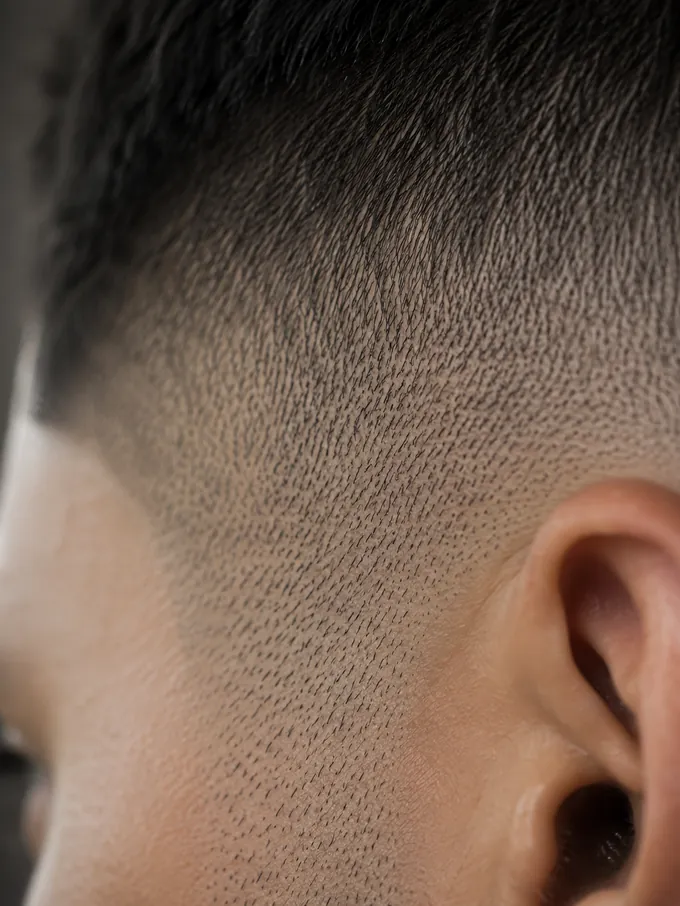
Does skin make the drop look better?
Yes — and this is the strongest argument for it. The drop is a curved boundary between two lengths. The more different those lengths are, the more clearly the curve reads. Bare scalp against longer hair is the biggest possible difference, so a skin finish gives you the sharpest, most defined drop line available.
If the curve is the reason you wanted this haircut — if you like that it's sculpted and visible — a skin fade shows it off better than anything else. That's a real point in its favour, and it's specific to drop fades in a way it isn't for a plain level fade.
The counterweight is that the sharpest version of the drop also has the shortest lifespan. You get a better-looking curve for five days, and a worse-looking one for the rest of the fortnight. A taper sits at the opposite end of that trade: no drop at all, but six weeks of looking fine.
What a skin fade actually costs you
- Razor bumps and ingrown hairs. Taking a blade to the scalp can irritate it, and coarse or curly hair is more prone to ingrowns. If you get bumps after shaving your face, expect the same at the neckline.
- Sunburn. Bare scalp has no protection. A hot afternoon without a hat and you'll feel it, and peeling skin on a fresh fade looks worse than the fade did.
- Everything on your scalp becomes visible. Scars, moles, uneven pigmentation, birthmarks. Hair hides these; skin doesn't. Worth knowing before rather than after.
- Dryness and flaking show badly. Dry scalp against dark hair reads as dandruff even when it isn't. Skin fades need moisturising in a way guard fades don't — the products guide covers what to use.
- It's harder to fix at home. Refreshing a guard-length fade is doable. Touching up a skin fade means a razor near your own scalp with limited visibility. The DIY guide explains why this one is a barber job.
- Roughly 50% more cost per year. More visits, often at a slightly higher rate. Around $1,040 a year against $680.
Mid drop fade vs skin fade: which should you get?
Go skin if: you have dark hair and lighter skin for maximum contrast, you can genuinely commit to a barber every 1–2 weeks, your scalp is even and not prone to irritation, and you want the drop curve as sharp as it gets.
Go guard length if: you want the cut to look good for three weeks rather than five days, you're managing a budget, your hair is thinning at the sides, or you'd rather not think about your scalp.
Go #0.5 — the middle setting — if: you want most of the contrast with a realistic maintenance schedule. For most people asking this question, this is the answer.
Still deciding? Try the fade finder quiz.
How to ask for each
For the guard-length version
"Mid drop fade, a #1 into a #3 — don't take it to skin. Start it around mid-temple and drop the line down behind my ear to the nape."
For the skin version
"Mid drop skin fade, bald at the bottom with a foil shaver, blending up into a #2 or #3. Keep the drop curve going down behind the ear."
For the middle setting
"Take it down to a zero rather than skin — leave a shadow at the bottom rather than going bald."