Mid Drop Fade
Curly Hair
A mid drop fade curly hair cut is not the same job as a straight-hair fade — curls shrink as much as 50% once they dry, and a barber who doesn't plan for that hands you a shape that looks nothing like the reference photo by the next morning.
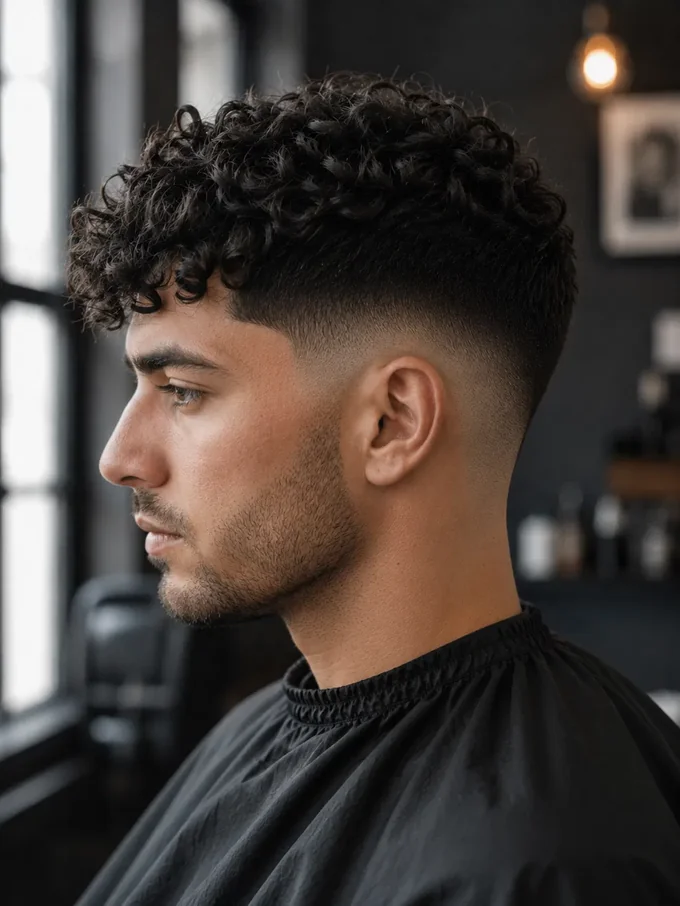
Why it's
different
A mid drop fade curly hair pairing gets recommended constantly, and for good reason — the short, faded sides give natural curl volume room to stand out instead of fighting bulk on every side of the head. But curly hair doesn't behave like straight or wavy hair once the clippers come out, and treating it the same way is the single biggest reason curly fades disappoint.
The difference comes down to shrinkage. Curls contract as they dry, and how much they contract depends on curl type: loose Type 2 waves barely shrink at all, Type 3 curls typically pull up 20–40% from their stretched length, and tight Type 4 coils can shrink 50–75%. A barber who cuts to a length that looks right while the hair is wet and stretched can end up with a top that's noticeably shorter — and shaped differently — than what was agreed on once it dries.
None of this makes curly hair harder to fade well. It just means the plan has to start with your curl type, not with a photo of someone else's.
Density plays a role too. Thick, dense curls hold more visible volume even after shrinkage, so they can carry a higher fade without looking top-heavy. Finer or sparser curls sometimes look better with the fade line kept a touch lower, so there's still enough curl mass on top to read as a clear, deliberate shape rather than thin, scattered texture.
Shrinkage by curl type
Every mid drop fade curly hair cut should be planned around your actual curl pattern, since two curl types can shrink by a 40-point margin apart. Here's roughly what to expect and how it should change what your barber does on top.
| Curl type | Typical shrinkage | What it means for this cut |
|---|---|---|
| Type 2 (Wavy) | Under 10% | Sides can go close to true length; cutting the top wet is usually fine. |
| Type 3A–3B | 20–30% | Leave more length on top than the finished look calls for — it will pull up. |
| Type 3C | 30–40%+ | Ask for a dry or curl-by-curl cut on top. Wet cutting here is guesswork. |
| Type 4A–4C (Coily) | 40–75% | Dry cut only. A wet-cut top rarely matches the reference photo once dry. |
Ranges are general guidance, not a guarantee — density, hair length, and product can all shift the result slightly.
If you're not sure where you land, check your hair freshly washed and completely air-dried with no product: loose, S-shaped bends are Type 2, springy corkscrew curls that hold their shape are Type 3, and tight, densely packed coils are Type 4. Telling your barber this upfront saves a lot of back-and-forth mid-cut.
The transition
zone
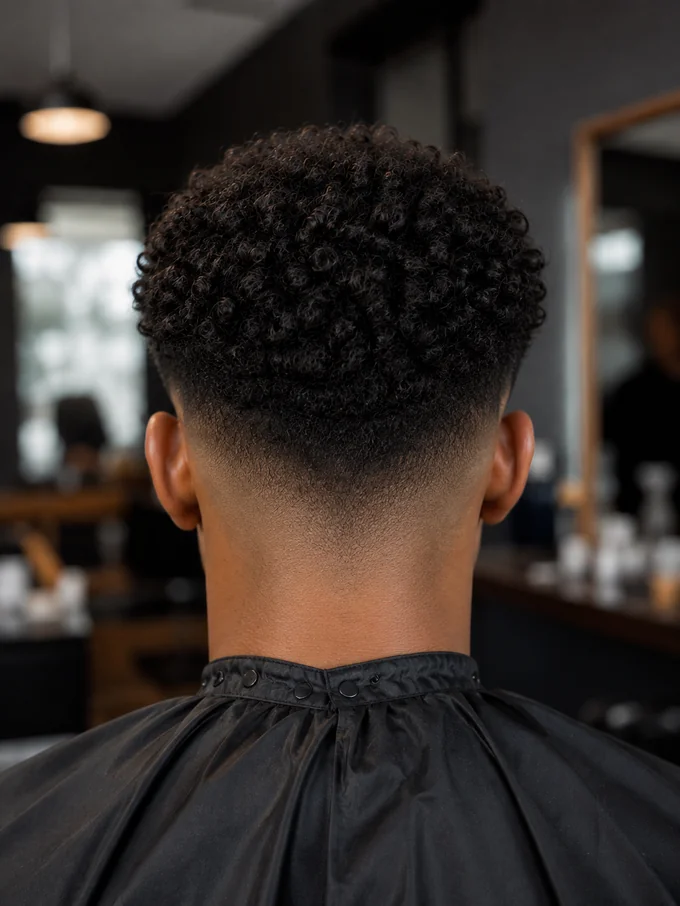
This is the part most guides skip: on a mid drop fade curly hair cut, the blend between the faded sides and the curly top needs to sit a little higher and looser than it would on straight or wavy hair. Curls don't lie flat against a fade line the way straight hair does, so a transition built for straight hair reads as a harsh, chopped edge once the curls spring up and settle around it.
Barbers who work with curly hair often build a softer, wider blend zone and finish the top edge with scissor-over-comb instead of a hard clipper line, letting the curl pattern fall naturally over the fade rather than stopping abruptly against it. It's the same reason a textured fade and a curly fade get shaped differently even at the same fade height.
The shape should also be checked dry, curl by curl, rather than in flat sections — cutting a uniform length across a curly head is the fastest way to end up with the triangle silhouette curly clients dislike most.
Growing out
between cuts
A mid drop fade curly hair cut also grows out differently than it does on straight or wavy hair. The sides fill in at a fairly normal rate, but because the top was cut with shrinkage in mind, the curls tend to relax slightly and lengthen a little over the first week or two as the cut settles — which is normal, not a sign the barber got it wrong.
Regrowth also tends to show up first as fuzz along the fade line rather than as obvious length on top, since new growth hasn't coiled into a full curl yet. Most guys with tighter curl types find they need a fresh fade touch-up every two to three weeks to keep the transition zone looking intentional, even if the curls on top could go longer between full cuts.
Recommended variations
The most direct fit — built specifically around showing off natural curl definition on top, with a length designed around shrinkage from the start.
Curly hair has the volume needed to hold a quiff shape without much extra product, though it needs a touch more length than a straight-hair quiff.
A full beard balances out the volume on top, a combination that shows up constantly in style guides and photographs well from every angle.
Mid Drop Fade Curly Hair Gallery


What to avoid
- Letting the top get cut wet without a shrinkage plan. Wet curls stretch under their own weight, so a length that looks right soaking wet can end up noticeably shorter and differently shaped once it dries — ask your barber how they're accounting for it before they start cutting.
- Cutting every section to the same length. Curl density and tightness aren't uniform across the head, so a flat, uniform cut is what produces the puffy triangle shape curly clients dislike most. A good curly cut is shaped section by section, not measured off one guide length.
- Heavy pomade or wax. These weigh curls down and kill the bounce that makes this combination work — a lightweight curl cream from your product routine holds shape without flattening it, and won't leave curls looking greasy or clumped by midday.
- Skipping the dry-down before judging the cut. Curly hair tends to frizz and shift shape as it air-dries, so the real result — and the right time to check it against the reference photo — is once it's fully dry, not right off the chair. A cut that looks slightly rough while damp often settles into shape within an hour.
- Trying to fix shrinkage yourself between visits. Curl length is genuinely harder to judge than straight hair, so this is one case where the usual DIY touch-up advice matters even more — leave shaping to your barber and stick to maintenance between cuts.
Styling it
day to day
Styling routine matters more here than for straight or wavy hair, and it changes with curl type. Looser 2C–3A curls usually just need a curl cream worked through damp hair and a quick scrunch upward before air-drying, which is enough to hold definition without much daily effort. Tighter 3C–4A curls generally need more moisture up front — apply product to soaking wet hair rather than towel-dried hair, since curls absorb far less once they've already started to dry.
A diffuser attachment on low heat speeds up drying without breaking up curl clumps the way regular airflow from a hair dryer does, and it's the closest most guys get to the shape a barber leaves the chair with. Skipping it and letting curls air-dry loose tends to soften the shape faster and can make the fade line look less deliberate within a day or two.
Between wash days, a light water-and-cream refresh on the top section — without touching the faded sides — brings clumped curls back to life without needing a full reset. It's a small habit, but it's the difference between a mid drop fade curly hair cut looking sharp for two weeks and looking sharp for two days.