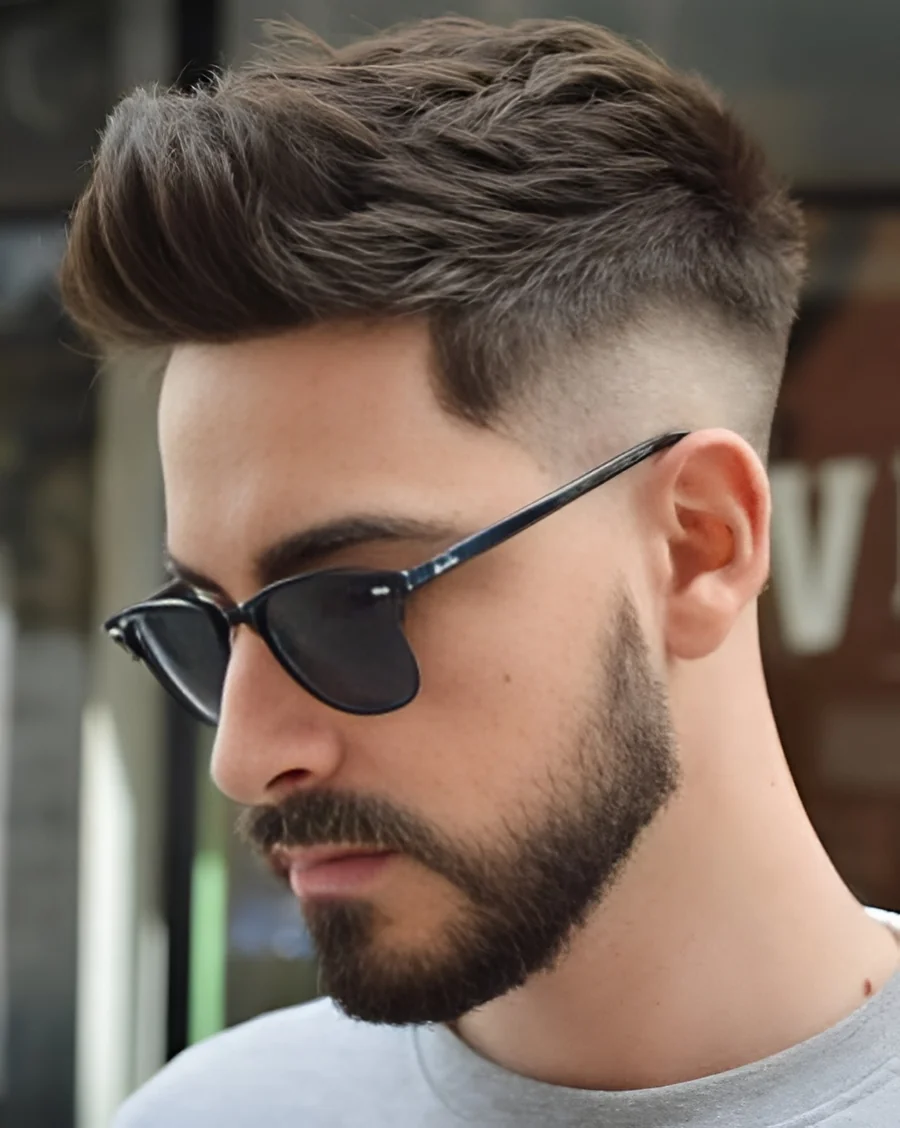
Mid Drop Fade Quiff
Styling Guide
A mid drop fade quiff pairs a curved fade with a swept-up top — but "quiff" means different things to different barbers, so getting the exact look takes more than just the name.
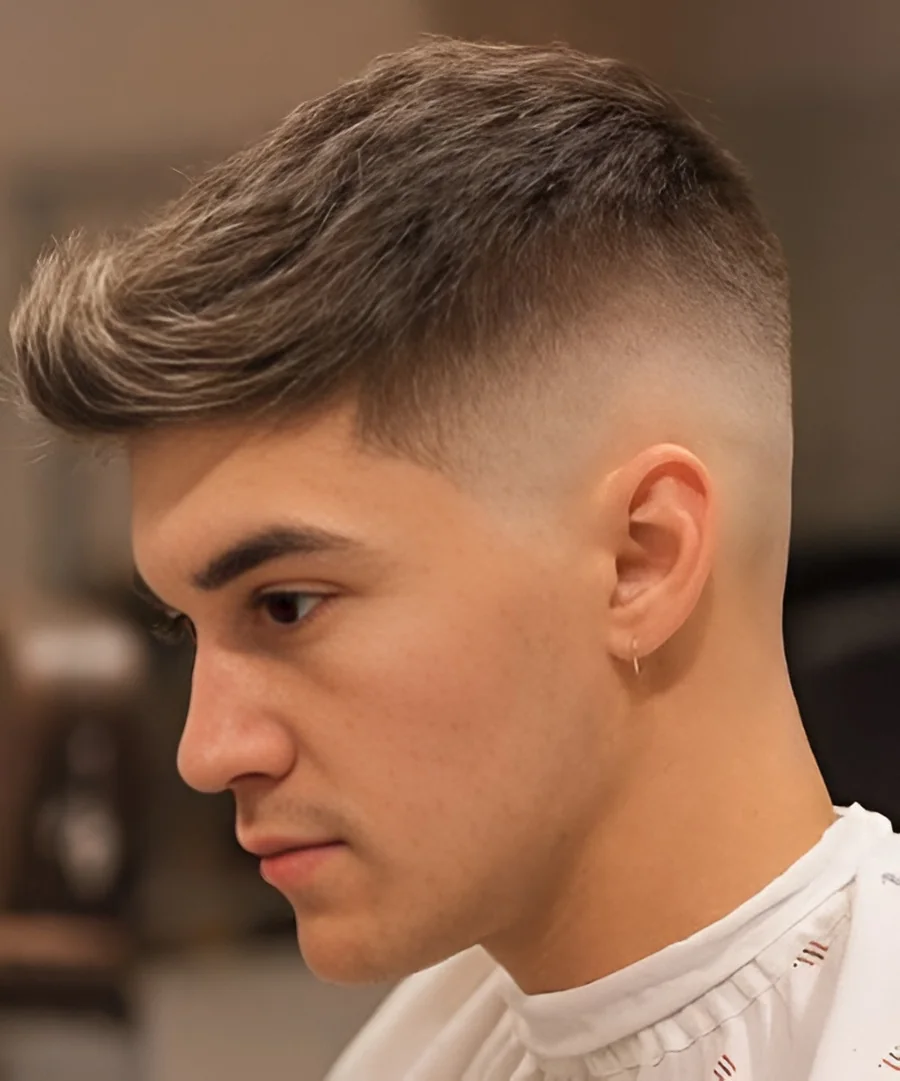
Mid Drop Fade Quiff Pairing
A mid drop fade quiff works by putting all the volume at the front and letting the sides do the opposite job entirely. The fade curves down behind the ear, narrowing the silhouette, while the top is left long enough to be swept upward and back, creating height right where it's most flattering — at the front hairline.
What makes this pairing work so well is the contrast in texture, not just length. The closely faded sides have almost no texture to speak of, which makes the volume and movement on top read as even bigger by comparison. A quiff on a fully buzzed or shaved-down head can look flat; a quiff sitting above a curved drop fade has somewhere to visually "land," which is part of why barbers reach for this combination so often.
Face shape plays a role too. The added height at the front tends to balance out a rounder or wider face by drawing the eye upward, which is why barbers often suggest this pairing for those exact face shapes. On a longer face, a slightly lower, less dramatic lift usually looks more proportionate than going for maximum height.
How to Ask For It
"Quiff" alone is ambiguous — say it without more detail and there's a real chance your barber pictures a pompadour instead. The two get confused constantly, and the fix is simple: be specific about length and finish before the clippers come out.
For a short, low-maintenance version, ask for roughly 2 to 3 inches at the front hairline. For more height and movement — closer to what most people mean by "textured quiff" — ask for 4 to 5 inches. Naming a number avoids the guesswork.
If you want to rule out a pompadour specifically, say so directly: a pompadour is built taller, glossier, and more structured, while a quiff sits shorter with a softer, matte finish. Since the fade and the quiff grow out on different schedules, mention both in the same breath — the drop height you want on the sides, and the length you want left on top — rather than letting the barber default to a standard fade that doesn't match what you're picturing. For more on describing the fade itself, see our full guide on how to ask your barber for a mid drop fade.
From Buzzed to Quiff-Ready
- 1Budget 4 to 5 months from a very short top. Starting under half an inch, average hair growth of about half an inch a month puts you at quiff-ready length in that window.
- 2The rough patch usually hits 6 to 10 weeks in. Too long to lie flat, too short to sweep and hold — a lightweight cream gets you through this stretch without it looking unintentional.
- 3Keep the fade sharp while the top grows. A clean drop fade makes an awkward-length top read as deliberate instead of just overdue for a cut.
- 4Not ready to commit to the full grow-out? Ask for a soft taper on top instead of a buzz during this stretch — it gets you a shorter fallback quiff sooner, without starting from zero.
Styling & maintenance tips
- 1Dry the front section upward with a round brush. Aim the airflow from underneath while lifting the roots — this is what builds the height before any product goes in.
- 2Match the product to your hair type. A lightweight sea salt spray gives straight or fine hair texture without weighing it down; a light cream suits wavy hair best; and curly hair holds its lift better with a curl cream and diffused heat. See the full product guide → for specifics.
- 3Keep the fade height consistent with the quiff's lift point. If the fade starts noticeably lower than where the quiff begins lifting, the two parts of the style stop looking connected.
- 4Rebook based on how sharp the fade is, not a fixed date. A skin-level fade shows growth fastest and needs a touch-up every 2 weeks; a softer, guard-length fade can usually stretch to 3.
- 5Comb through product while damp, then dry to set. Applying product to dry hair after styling tends to weigh the quiff down instead of holding its shape.
Receding Hairline & Other Considerations
A quiff still works with a receding hairline — it just needs an honest starting point. Sweeping the remaining length up and back from slightly further behind the natural hairline, rather than styling as if the hairline hasn't moved, tends to look more intentional and holds up better over time than fighting the recession head-on.
Mid drop fade quiff gallery